THE ADVENTURE COLLECTIVE® · Independent discovery and booking for outdoor travel

Hike Mount Ijen at midnight to witness the rare blue fire and acidic crater lake. This guided night trek involves steep volcanic trails, sulfur-mining activity, and pre-dawn views from the rim.
Hike Mount Ijen at midnight to witness the rare blue fire and acidic crater lake. This guided night trek involves steep volcanic trails, sulfur-mining activity, and pre-dawn views from the rim.
You arrive in the dark, engine hum soft and the road cutting through iron-black hills toward the volcano. By torchlight a handful of other trekkers gather at the trailhead, breath visible in the cool pre-dawn air. The path climbs steadily — volcanic steps, loose scree and a few narrow switchbacks — while the crater rim waits like a sleeping beast that will reveal its small, electric heartbeat: the blue fire.
Verified experiences and guided adventures in the surrounding area.
Operated by Bromotrail · Banyuwangi, East Java
You arrive in the dark, engine hum soft and the road cutting through iron-black hills toward the volcano. By torchlight a handful of other trekkers gather at the trailhead, breath visible in the cool pre-dawn air. The path climbs steadily — volcanic steps, loose scree and a few narrow switchbacks — while the crater rim waits like a sleeping beast that will reveal its small, electric heartbeat: the blue fire.
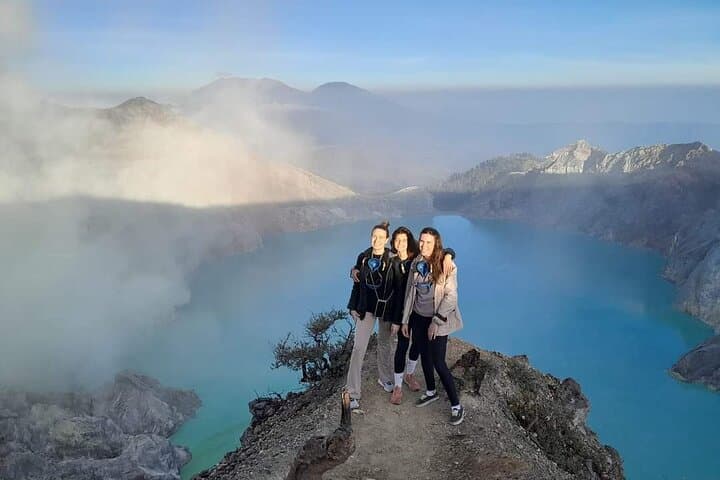
Geology here is raw. Ijen is a complex stratovolcanic massif rising to about 9,117 ft (2,778 m) with a deeply acidic turquoise lake and fumaroles that feed sulfuric gases. Miners have worked the rim for generations, chipping and carrying yellow sulfur in baskets; their presence is part of the landscape’s human story.
The blue flames (api biru) are visible only at night when sulfur gases ignite as they emerge from fissures — a fleeting, otherworldly glow that fades with daylight. The lake itself reaches scalding temperatures and is dangerously acidic, so viewing is always from designated rim sections.
Practical guidance: plan on a 2–2.5 hour ascent over roughly 3 km with 300–400 m of elevation gain, mostly on steep, uneven trail. Headlamps, sturdy boots and warm layers are essential; the operator provides gas masks and headlamps. Carry water, move deliberately on slippery sections, and allow extra time for photos at the rim. Respect miners and local regulations, keep distance from fumaroles, and follow your guide’s instructions — the blue fire is spectacular but transient, and safety is non-negotiable.
moderate.
10–12 hours (transfer + hike).
Moderate fitness required: regular walkers who can sustain a steady uphill pace for 2–3 hours will manage comfortably.
The blue fire is visible only in darkness, typically in the hours before sunrise; arrive early and be prepared for a pre-dawn ascent.
Guides and local safety measures minimize risk; use a gas mask, stay on designated routes and keep distance from fumaroles and the acidic lake.
Typical inclusions are round-trip transport from Banyuwangi, an English-speaking guide, headlamp, optional trekking pole, bottled water and gas masks—confirm details with the operator before booking.
People with serious respiratory, back or heart conditions, pregnant travelers, or those unable to manage steep uphill walking should not attempt the midnight ascent.
Local sulfur mining on Ijen has been practiced for decades; miners manually extract and carry sulfur across the rim in baskets, a visible link between geology and livelihood.
The crater lake is highly acidic and ecologically sensitive; stick to marked trails, avoid littering, and support licensed local guides who help manage visitor impact.
Bromotrail operates guided outdoor trips and adventures with an emphasis on safety, stewardship, and memorable experiences.
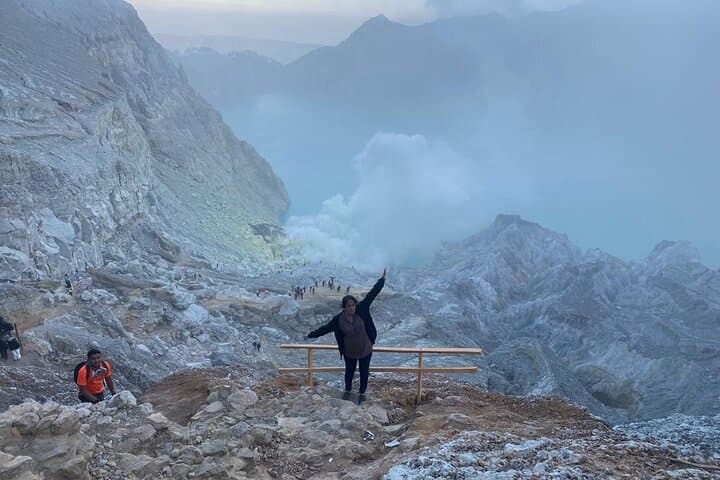
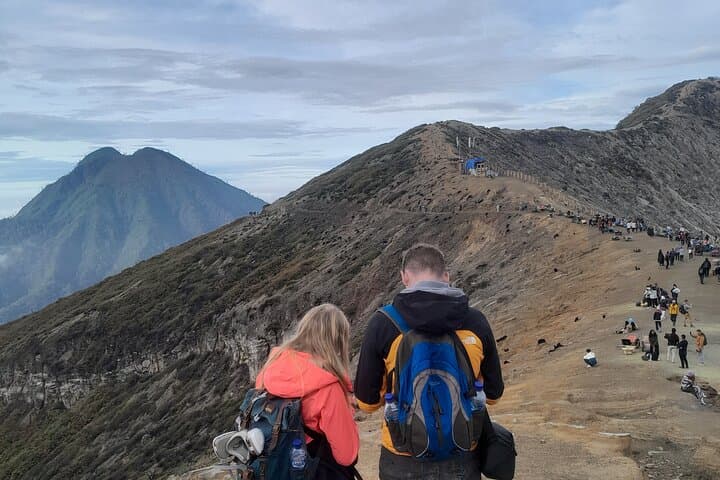
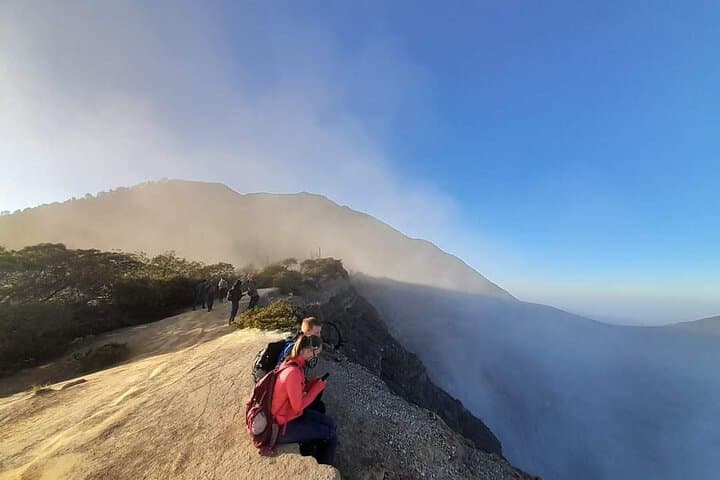
You arrive in the dark, engine hum soft and the road cutting through iron-black hills toward the volcano. By torchlight a handful of other trekkers gather at the trailhead, breath visible in the cool pre-dawn air. The path climbs steadily — volcanic steps, loose scree and a few narrow switchbacks — while the crater rim waits like a sleeping beast that will reveal its small, electric heartbeat: the blue fire.
You arrive in the dark, engine hum soft and the road cutting through iron-black hills toward the volcano. By torchlight a handful of other trekkers gather at the trailhead, breath visible in the cool pre-dawn air. The path climbs steadily — volcanic steps, loose scree and a few narrow switchbacks — while the crater rim waits like a sleeping beast that will reveal its small, electric heartbeat: the blue fire.
Geology here is raw. Ijen is a complex stratovolcanic massif rising to about 9,117 ft (2,778 m) with a deeply acidic turquoise lake and fumaroles that feed sulfuric gases. Miners have worked the rim for generations, chipping and carrying yellow sulfur in baskets; their presence is part of the landscape’s human story.
The blue flames (api biru) are visible only at night when sulfur gases ignite as they emerge from fissures — a fleeting, otherworldly glow that fades with daylight. The lake itself reaches scalding temperatures and is dangerously acidic, so viewing is always from designated rim sections.
Practical guidance: plan on a 2–2.5 hour ascent over roughly 3 km with 300–400 m of elevation gain, mostly on steep, uneven trail. Headlamps, sturdy boots and warm layers are essential; the operator provides gas masks and headlamps. Carry water, move deliberately on slippery sections, and allow extra time for photos at the rim. Respect miners and local regulations, keep distance from fumaroles, and follow your guide’s instructions — the blue fire is spectacular but transient, and safety is non-negotiable.