THE ADVENTURE COLLECTIVE® · Independent discovery and booking for outdoor travel

Hike through rainforest to the rim of Mount Ijen and witness sulfur’s eerie blue flames under a starlit sky, then watch sunrise paint the acidic crater lake. This overnight trek blends long transfers with a short, steep ascent—perfect for travelers who want nighttime spectacle and sunrise panoramas.
Hike through rainforest to the rim of Mount Ijen and witness sulfur’s eerie blue flames under a starlit sky, then watch sunrise paint the acidic crater lake. This overnight trek blends long transfers with a short, steep ascent—perfect for travelers who want nighttime spectacle and sunrise panoramas.
You arrive under a scatter of stars, the engine lullaby of an overnight transfer cutting through the island air as Java draws near. By the time the ferry slides into Ketapang the world is darker, and the rainforest on Ijen’s slopes waits like a living wall. The trail begins in cool shadow—ferns brushing shoulders, the path grading steeper—and the climb feels like negotiating a sleeping giant’s ribs.
Verified experiences and guided adventures in the surrounding area.
Operated by Bali SUN Tours · Banyuwangi, East Java
You arrive under a scatter of stars, the engine lullaby of an overnight transfer cutting through the island air as Java draws near. By the time the ferry slides into Ketapang the world is darker, and the rainforest on Ijen’s slopes waits like a living wall. The trail begins in cool shadow—ferns brushing shoulders, the path grading steeper—and the climb feels like negotiating a sleeping giant’s ribs.
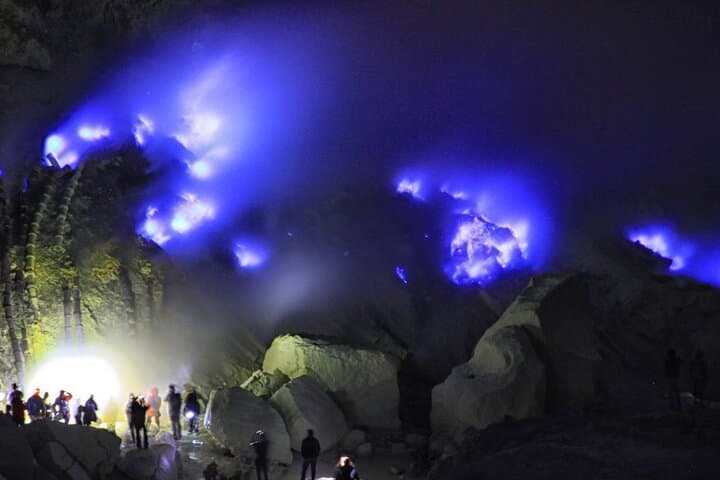
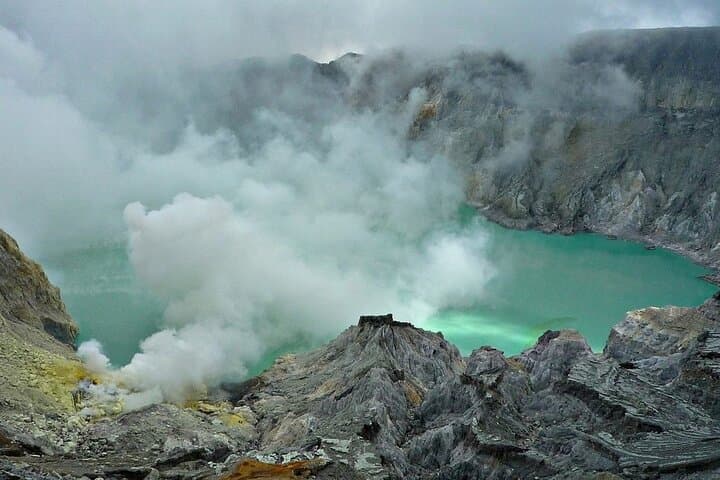
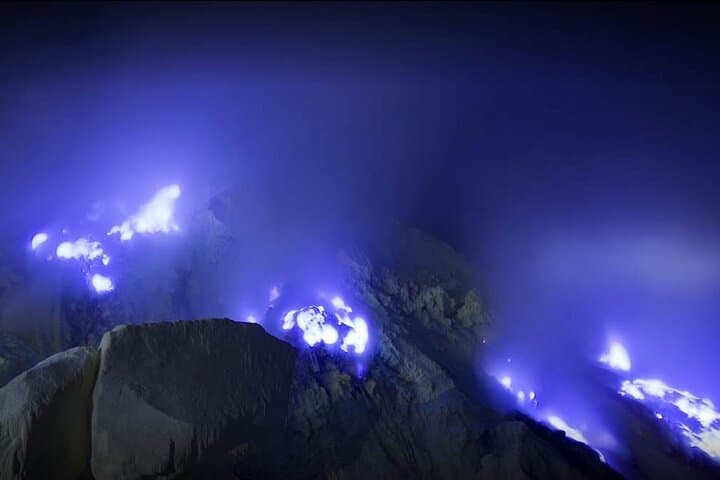
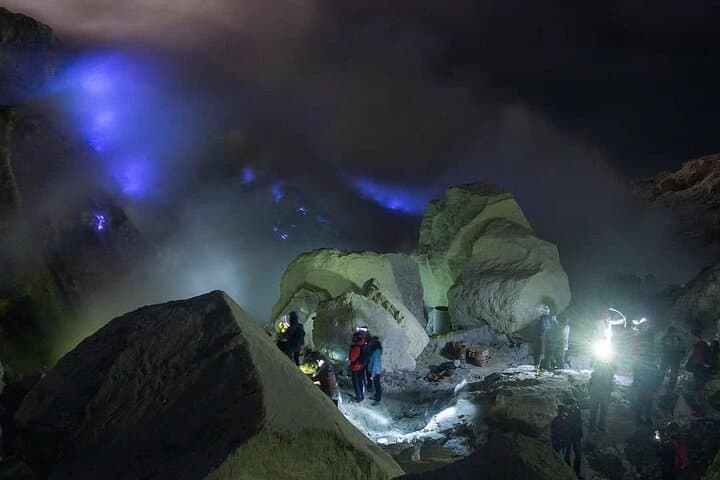
Ijen is both geological spectacle and working landscape: a 2,443 m stratovolcano with an acid turquoise crater lake and active sulfur vents. For generations miners have descended into the crater at night, chipping and shouldering raw sulfur under harsh fumes; the blue flames you hope to see are the combustion of sulfur gases meeting oxygen at night, visible only under clear, moonless skies.
Culturally and ecologically the region is layered—coffee farms and small villages in the lowlands, montane rainforest on the slopes, and endemic birds in the understory. Expect steep switchbacks, volcanic scree near the rim, and a cold wind that seems to push you onwards as dawn colors the crater.
Practically: the roundtrip hike is short in distance but steep—plan for 1.5–3 hours up and 1–2 hours down depending on pace. Carry a warm jacket, a reliable headlamp, a particulate mask for sulfur-laced air, and sturdy footwear. Start very early (pre-dawn) for the blue flame viewing, and budget time for local transfers and the ferry crossing. Respect warning signs and miners’ routes; the crater is beautiful but hazardous.
moderate.
30–32 hours (overnight trip including transit; 1.5–3 hours ascent).
Suitable for travelers with moderate fitness; expect steep sections and unstable volcanic scree—those with heart or back issues should not attempt it.
Blue flames are seasonal and visibility depends on sulfur gas emissions and clear, dark skies; guides take you to the best vantage points but sightings can’t be guaranteed.
Temperatures at the rim commonly fall near freezing before sunrise—plan for 0–10°C (32–50°F) and dress in layers.
Distance is relatively short (a few kilometers) but steep; most people take 1.5–3 hours to reach the rim depending on fitness and pace.
The trek is not recommended for those with heart, back problems, or pregnant travelers; children may struggle with steep sections and sulfur exposure—check operator guidance before booking.
Ijen’s crater has been mined for sulfur for decades; miners still extract and carry sulphur baskets down steep pathways, a demanding local livelihood.
The crater lake is highly acidic and fragile; follow marked trails, avoid littering, and use masks to reduce health impacts from sulfur exposure.
Bali SUN Tours operates guided outdoor trips and adventures with an emphasis on safety, stewardship, and memorable experiences.
You arrive under a scatter of stars, the engine lullaby of an overnight transfer cutting through the island air as Java draws near. By the time the ferry slides into Ketapang the world is darker, and the rainforest on Ijen’s slopes waits like a living wall. The trail begins in cool shadow—ferns brushing shoulders, the path grading steeper—and the climb feels like negotiating a sleeping giant’s ribs.
You arrive under a scatter of stars, the engine lullaby of an overnight transfer cutting through the island air as Java draws near. By the time the ferry slides into Ketapang the world is darker, and the rainforest on Ijen’s slopes waits like a living wall. The trail begins in cool shadow—ferns brushing shoulders, the path grading steeper—and the climb feels like negotiating a sleeping giant’s ribs.
Ijen is both geological spectacle and working landscape: a 2,443 m stratovolcano with an acid turquoise crater lake and active sulfur vents. For generations miners have descended into the crater at night, chipping and shouldering raw sulfur under harsh fumes; the blue flames you hope to see are the combustion of sulfur gases meeting oxygen at night, visible only under clear, moonless skies.
Culturally and ecologically the region is layered—coffee farms and small villages in the lowlands, montane rainforest on the slopes, and endemic birds in the understory. Expect steep switchbacks, volcanic scree near the rim, and a cold wind that seems to push you onwards as dawn colors the crater.
Practically: the roundtrip hike is short in distance but steep—plan for 1.5–3 hours up and 1–2 hours down depending on pace. Carry a warm jacket, a reliable headlamp, a particulate mask for sulfur-laced air, and sturdy footwear. Start very early (pre-dawn) for the blue flame viewing, and budget time for local transfers and the ferry crossing. Respect warning signs and miners’ routes; the crater is beautiful but hazardous.