THE ADVENTURE COLLECTIVE® · Independent discovery and booking for outdoor travel

A guided midnight hike to Mount Ijen delivers pre-dawn blue flames and sunrise over a vivid acidic lake. This practical guide explains the route, geology, and what to bring for the 8–9 hour round trip from Banyuwangi.
A guided midnight hike to Mount Ijen delivers pre-dawn blue flames and sunrise over a vivid acidic lake. This practical guide explains the route, geology, and what to bring for the 8–9 hour round trip from Banyuwangi.
Pre-dawn on East Java feels like a held breath as vans slip away from Banyuwangi and into black ridgelines. At Paltuding, hikers step onto a volcanic track that climbs through pine stands and loose ash toward the crater rim. The hike is mostly uphill and the trail narrows as the sulfurous wind begins to bite; guides lead small groups toward the blue flames that sometimes lick out of fumaroles below the rim.
Verified experiences and guided adventures in the surrounding area.
Operated by Java Expedition · Banyuwangi, East Java
Pre-dawn on East Java feels like a held breath as vans slip away from Banyuwangi and into black ridgelines. At Paltuding, hikers step onto a volcanic track that climbs through pine stands and loose ash toward the crater rim. The hike is mostly uphill and the trail narrows as the sulfurous wind begins to bite; guides lead small groups toward the blue flames that sometimes lick out of fumaroles below the rim.
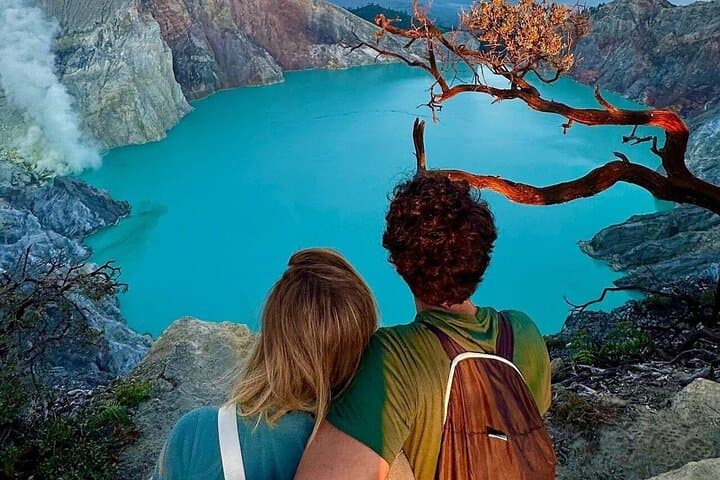
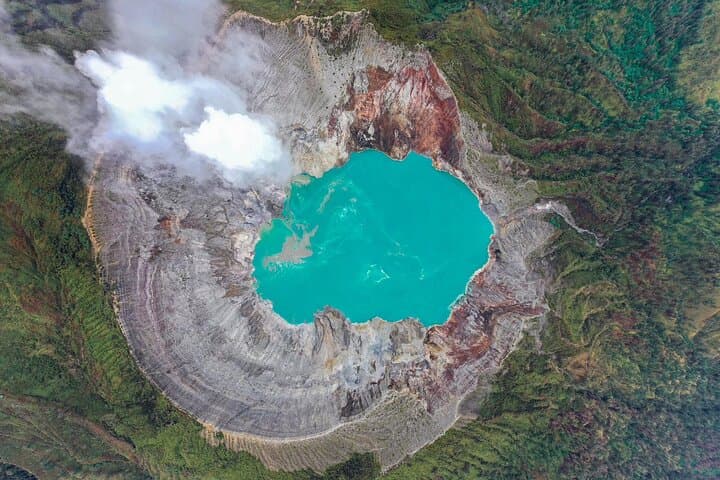
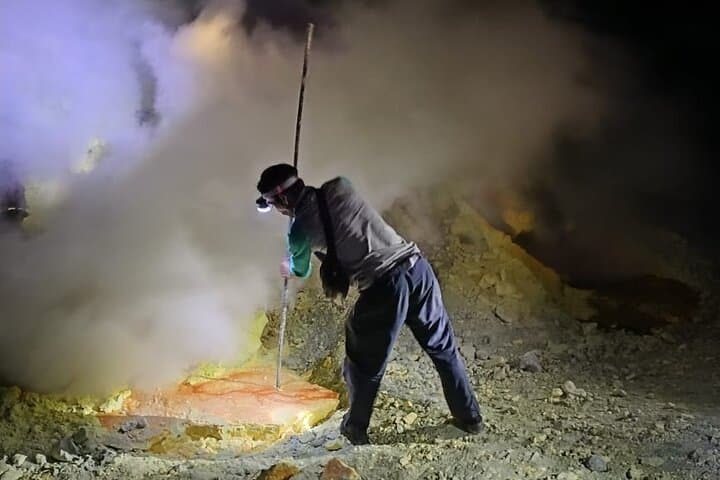
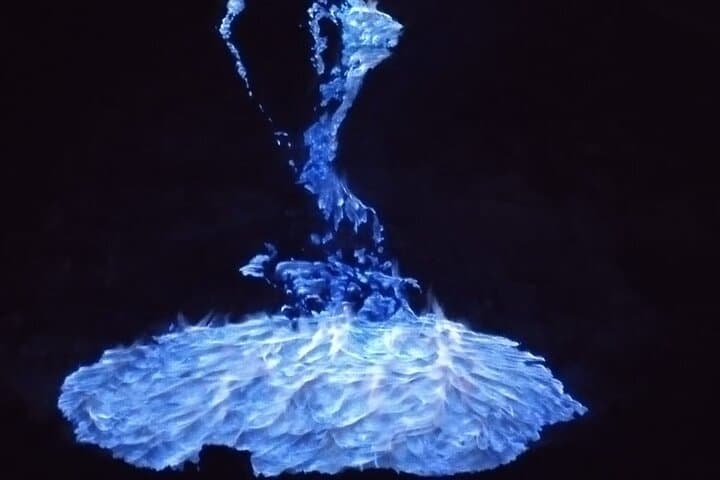
Geology here is direct: Ijen is a highly acidic caldera with a turquoise crater lake that reflects the rising sun. The blue fire is not flame from wood but sulfur gases combusting as they emerge from vents — a phenomenon rare on Earth. Culturally the site is defined by the miners who shoulder baskets of yellow sulfur from the vents to the rim, a human ledger of hardship and local economy.
Expect about 3–4 km one-way from Paltuding with 600–700 m of elevation gain, 2–3 hours up at a steady pace, and a similar descent. Night hiking requires a headlamp, steady footwear for loose volcanic scree, and respiratory protection for intermittent fumes; operators supply masks and headlamps. Blue fire is weather- and vent-dependent and cannot be guaranteed; sunrise over the crater lake is reliably spectacular.
Practical tips: start between 1:00–2:00 am for optimal timing, bring warm layers and 1–2 liters of water, and keep distance from mining activity. The route is fragile; stay on the trail, pack out waste, and follow guide instructions for a safe and memorable visit.
moderate.
8–9 hours.
Should be comfortable walking uphill for 2–3 hours with short breaks; basic cardio and steady legs required.
Blue fire is visible at night when sulfur gases ignite as they exit vents; it is most likely in the pre-dawn hours but visibility depends on volcanic activity and wind.
The ascent from Paltuding is roughly 3–4 km with about 600–700 m elevation gain, taking 2–3 hours up and 1.5–2 hours down; expect an 8–9 hour door-to-door tour from Banyuwangi.
Many guided tours supply basic gas masks; fumes can irritate eyes and lungs but masks reduce exposure—those with respiratory issues should avoid close proximity to vents.
Children can attend if physically able to manage steep, uneven terrain at night, but the operator may restrict very young children for safety; check the tour's age policies when booking.
Ijen has been an active volcanic complex for millennia; the crater and its sulfur deposits have shaped local livelihoods for generations.
The crater environment is fragile and acidic; visitors should stay on trails, avoid disturbing mining operations, and carry out all trash to minimize impact.
Java Expedition operates guided outdoor trips and adventures with an emphasis on safety, stewardship, and memorable experiences.
Pre-dawn on East Java feels like a held breath as vans slip away from Banyuwangi and into black ridgelines. At Paltuding, hikers step onto a volcanic track that climbs through pine stands and loose ash toward the crater rim. The hike is mostly uphill and the trail narrows as the sulfurous wind begins to bite; guides lead small groups toward the blue flames that sometimes lick out of fumaroles below the rim.
Pre-dawn on East Java feels like a held breath as vans slip away from Banyuwangi and into black ridgelines. At Paltuding, hikers step onto a volcanic track that climbs through pine stands and loose ash toward the crater rim. The hike is mostly uphill and the trail narrows as the sulfurous wind begins to bite; guides lead small groups toward the blue flames that sometimes lick out of fumaroles below the rim.
Geology here is direct: Ijen is a highly acidic caldera with a turquoise crater lake that reflects the rising sun. The blue fire is not flame from wood but sulfur gases combusting as they emerge from vents — a phenomenon rare on Earth. Culturally the site is defined by the miners who shoulder baskets of yellow sulfur from the vents to the rim, a human ledger of hardship and local economy.
Expect about 3–4 km one-way from Paltuding with 600–700 m of elevation gain, 2–3 hours up at a steady pace, and a similar descent. Night hiking requires a headlamp, steady footwear for loose volcanic scree, and respiratory protection for intermittent fumes; operators supply masks and headlamps. Blue fire is weather- and vent-dependent and cannot be guaranteed; sunrise over the crater lake is reliably spectacular.
Practical tips: start between 1:00–2:00 am for optimal timing, bring warm layers and 1–2 liters of water, and keep distance from mining activity. The route is fragile; stay on the trail, pack out waste, and follow guide instructions for a safe and memorable visit.