THE ADVENTURE COLLECTIVE® · Independent discovery and booking for outdoor travel

Catch sunrise on East Peak, test your nerve on the famed Plank Walk, and visit Jade Maiden Temple all in a full-day circuit on Mount Hua. This guide explains what to expect on trails, cultural sites to watch for, and practical gear and timing tips.
Catch sunrise on East Peak, test your nerve on the famed Plank Walk, and visit Jade Maiden Temple all in a full-day circuit on Mount Hua. This guide explains what to expect on trails, cultural sites to watch for, and practical gear and timing tips.
You start before dawn, stepping off the minivan into mountain air that bites and wakes the senses. Headlamps cut through mist as the East Peak waits above a ribbon of stone stairs; the sunrise spills golden across serrated ridgelines that dare you to follow them.
Verified experiences and guided adventures in the surrounding area.
Operated by A journey through histoty · Huayin, Shaanxi
You start before dawn, stepping off the minivan into mountain air that bites and wakes the senses. Headlamps cut through mist as the East Peak waits above a ribbon of stone stairs; the sunrise spills golden across serrated ridgelines that dare you to follow them.
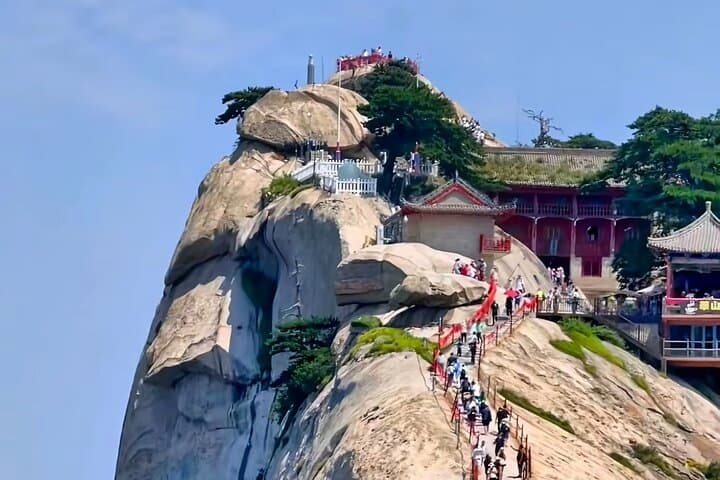
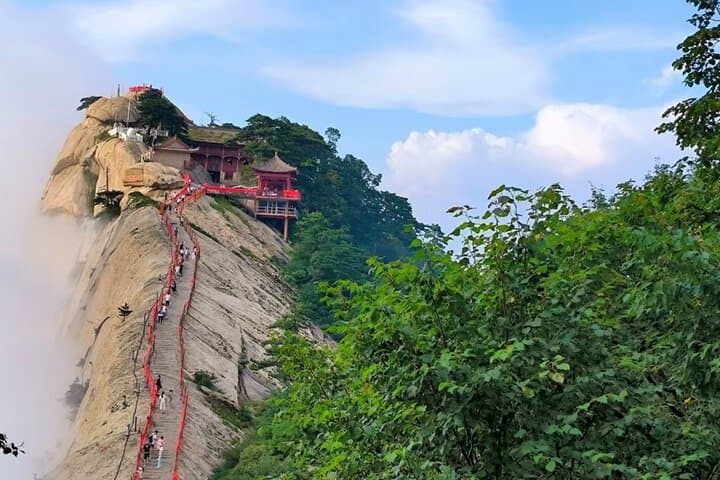
Mount Hua (Huashan) is one of China’s Five Great Mountains—a place of Daoist hermitages, steep granite spires, and human-made steps carved into near-vertical faces. The peaks sit roughly 2,000–2,160 meters above sea level, formed from uplifted Paleozoic granite that weathered into dramatic knives and ledges. Temples such as the Jade Maiden and small Taoist shrines anchor the cultural landscape; pilgrims and poets have moved these paths for centuries.
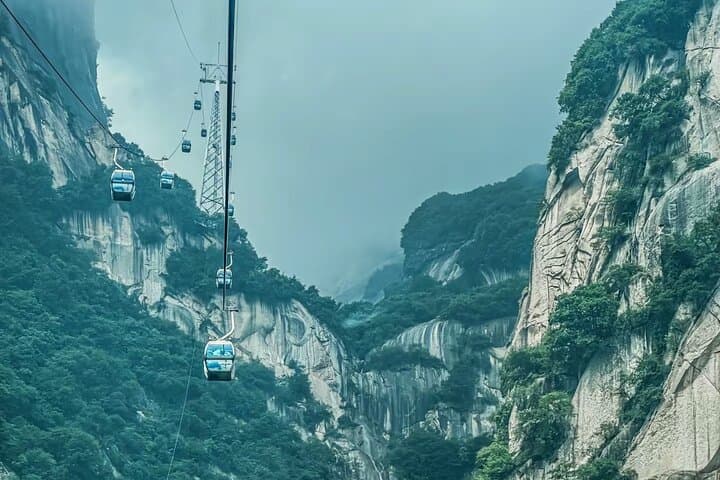
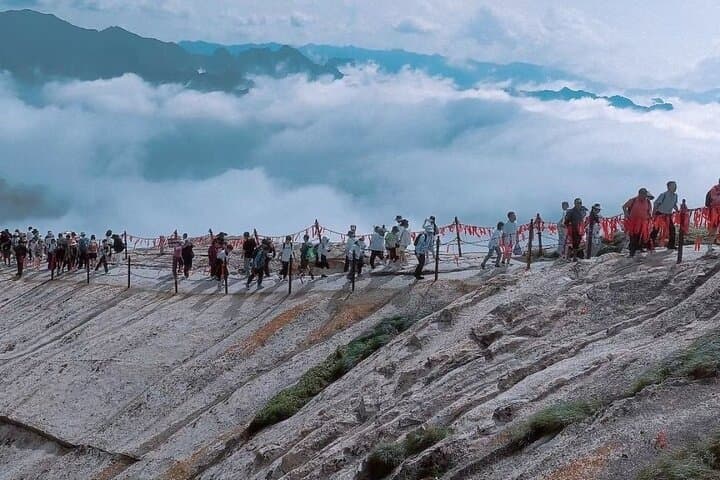
Expect a mix of steep stone staircases, narrow ridgelines (the Azure Dragon Ridge), and short exposed sections like the Plank Walk in the Sky. A cable car cuts the ascent, shortening what could be 1,200–1,700 meters of cumulative climb from the valley. Weather shifts fast—clouds can smother views or clear to reveal sheer drops and panoramic plateaus.
Practically: aim for sunrise at East Peak for soft light, then work across peaks toward West Peak for sunset if your schedule allows. Wear grippy footwear, bring 2 liters of water, and secure loose items for exposed stretches. Be prepared for crowds at popular viewpoints and follow posted safety rules on plank and chain sections.
This one-day route delivers both adrenaline—brief, exposed traverses—and deep cultural context: Daoist halls, ancient inscriptions, and the quiet of high granite that keeps calling you onward.
moderate.
8–9 hours.
Good cardiovascular fitness and balance recommended; comfortable with heights and stair climbs. Not suitable for serious cardiovascular issues or limited mobility.
No — the Plank Walk is an optional, short exposed section accessed by separate permissions in some areas; most tours offer alternative routes along chains and stone paths.
Yes — cable cars operate on main ascents and descents, making the route accessible for those who prefer to limit steep climbing; check seasonal schedules in advance.
Early morning in spring or autumn offers clear air and comfortable temperatures; arrive at the trailhead or cable car before first light to secure a good viewing spot.
Sections with exposure and many stairs make this unsuitable for pregnant travelers and young children unless they remain in lower, less exposed areas; consult a guide and follow site restrictions.
Mount Hua has been a center of Daoist practice for over a millennium, with temples and inscriptions left by pilgrims and officials documenting a long spiritual heritage.
High visitor numbers concentrate on narrow ridgelines—stay on marked trails, pack out waste, and use cable cars to reduce erosion from repeated foot traffic.
A journey through histoty operates guided outdoor trips and adventures with an emphasis on safety, stewardship, and memorable experiences.
You start before dawn, stepping off the minivan into mountain air that bites and wakes the senses. Headlamps cut through mist as the East Peak waits above a ribbon of stone stairs; the sunrise spills golden across serrated ridgelines that dare you to follow them.
You start before dawn, stepping off the minivan into mountain air that bites and wakes the senses. Headlamps cut through mist as the East Peak waits above a ribbon of stone stairs; the sunrise spills golden across serrated ridgelines that dare you to follow them.
Mount Hua (Huashan) is one of China’s Five Great Mountains—a place of Daoist hermitages, steep granite spires, and human-made steps carved into near-vertical faces. The peaks sit roughly 2,000–2,160 meters above sea level, formed from uplifted Paleozoic granite that weathered into dramatic knives and ledges. Temples such as the Jade Maiden and small Taoist shrines anchor the cultural landscape; pilgrims and poets have moved these paths for centuries.
Expect a mix of steep stone staircases, narrow ridgelines (the Azure Dragon Ridge), and short exposed sections like the Plank Walk in the Sky. A cable car cuts the ascent, shortening what could be 1,200–1,700 meters of cumulative climb from the valley. Weather shifts fast—clouds can smother views or clear to reveal sheer drops and panoramic plateaus.
Practically: aim for sunrise at East Peak for soft light, then work across peaks toward West Peak for sunset if your schedule allows. Wear grippy footwear, bring 2 liters of water, and secure loose items for exposed stretches. Be prepared for crowds at popular viewpoints and follow posted safety rules on plank and chain sections.
This one-day route delivers both adrenaline—brief, exposed traverses—and deep cultural context: Daoist halls, ancient inscriptions, and the quiet of high granite that keeps calling you onward.