THE ADVENTURE COLLECTIVE® · Independent discovery and booking for outdoor travel

A full-day panoramic tour from Tokyo that strings together Kawaguchiko’s lakeside vistas, the nostalgic Hikawa Clock Shop Street, the crystal ponds of Oshino Hakkai, and the iconic Chureito Pagoda. Perfect for photographers and first-time Fuji visitors seeking maximum views in one day.
A full-day panoramic tour from Tokyo that strings together Kawaguchiko’s lakeside vistas, the nostalgic Hikawa Clock Shop Street, the crystal ponds of Oshino Hakkai, and the iconic Chureito Pagoda. Perfect for photographers and first-time Fuji visitors seeking maximum views in one day.
You step off the coach into a cool, clear valley and Mount Fuji fills the horizon — its cone rising through a ribbon of cloud. The tour threads lakeside viewpoints, a small shrine, and retro streets where the mountain presents itself in staged frames: a convenience store with Fuji behind it, a red torii, and the five-story Chureito Pagoda stacked above the town.
Verified experiences and guided adventures in the surrounding area.
Operated by Trevopedia Wonders · Fujikawaguchiko, Yamanashi
You step off the coach into a cool, clear valley and Mount Fuji fills the horizon — its cone rising through a ribbon of cloud. The tour threads lakeside viewpoints, a small shrine, and retro streets where the mountain presents itself in staged frames: a convenience store with Fuji behind it, a red torii, and the five-story Chureito Pagoda stacked above the town.
The route follows the north flank of Fuji, an area shaped by repeated volcanic eruptions over millennia. Kawaguchiko and the Fuji Five Lakes formed when lava flows dammed valleys; Oshino Hakkai’s ponds are fed by Fuji’s spring water filtered through volcanic rock. Culturally, the region has been a site of pilgrimage and artistic reverence for centuries — Arakura Sengen Shrine dates to the 8th century and anchors local festivals.
Expect short, paved walks, photo stops, and a climb of roughly 400 steps at Chureito to reach the pagoda outlook. The stops (Lawson Fujikawaguchiko, Oishi Park, Kawaguchiko Natural Living Center, Oshino Hakkai, Hikawa Clock Shop Street, Arakurayama Sengen Park) are mostly self-guided; guides handle transfers and timing. Timing matters: clear morning light yields the best Fuji reflections; afternoons can bring haze.
Plan for a full 9–10 hour day with multiple short walks, stair climbs, and basic food stalls for snacks. Bring layered clothing for variable mountain air, a good camera or phone with extra battery, and cash for small vendors. Be respectful around sacred sites, stay on paths, and pack out litter — the area’s water clarity and views depend on careful stewardship.
easy.
9–10 hours.
Suitable for most fitness levels; participants should be comfortable with a full day of walking, short uphill climbs and stairs.
The tour runs about 9–10 hours and includes round-trip transfers from the meet-up points and an English/Chinese/Korean-speaking guide; entry fees are generally not required for the listed self-guided stops.
Visibility depends on weather — mornings are best for clear views; the operator can cancel in poor weather, and there’s no guaranteed sighting.
The itinerary is classified as easy but includes stairs and walking; infants must sit on laps and participants must be under age 68 per operator rules — check booking terms for age restrictions.
Meals are not included; there are cafes and street-food vendors at stops like Oshino Hakkai and Kawaguchiko where you can buy snacks or lunch.
The Arakura Sengen Shrine has roots back over a millennium and the Fuji Five Lakes region developed where volcanic flows reshaped valleys and trapped meltwater from Mount Fuji.
Local water clarity and scenic quality rely on limited development and visitor care — stick to paths, avoid single-use plastics, and don’t disturb spring-fed ponds like Oshino Hakkai.
Trevopedia Wonders operates guided outdoor trips and adventures with an emphasis on safety, stewardship, and memorable experiences.
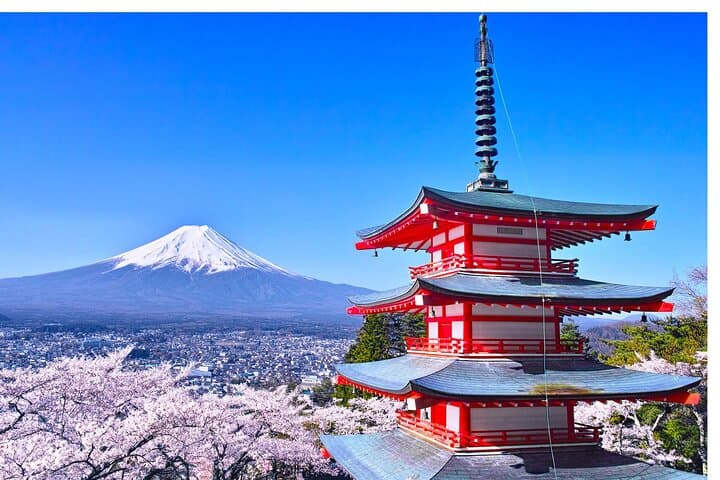
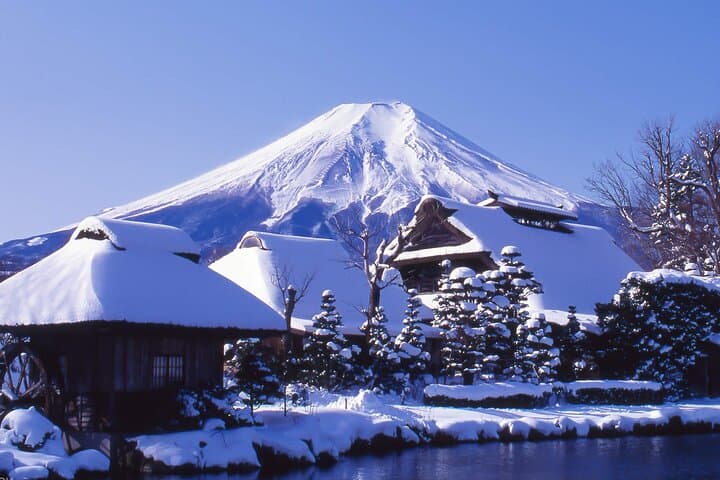
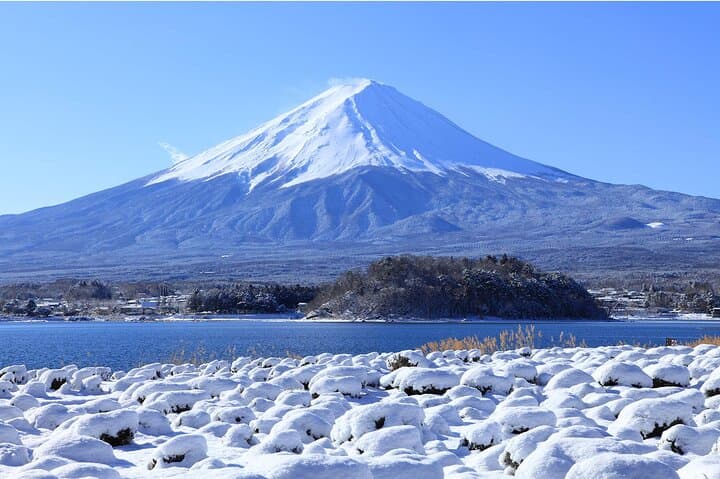
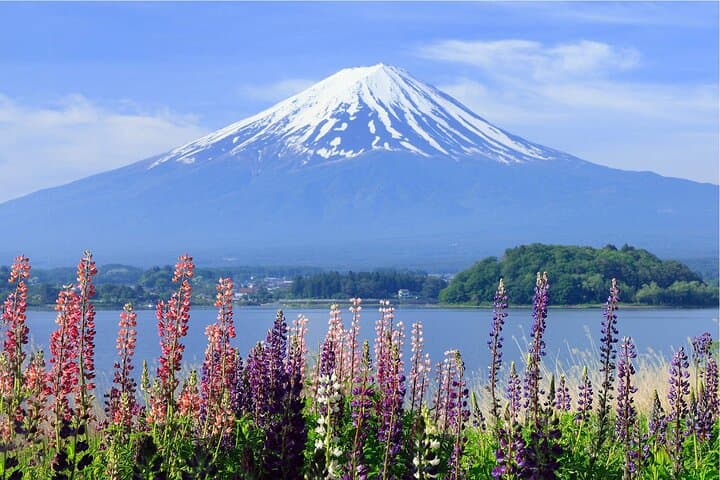
You step off the coach into a cool, clear valley and Mount Fuji fills the horizon — its cone rising through a ribbon of cloud. The tour threads lakeside viewpoints, a small shrine, and retro streets where the mountain presents itself in staged frames: a convenience store with Fuji behind it, a red torii, and the five-story Chureito Pagoda stacked above the town.
You step off the coach into a cool, clear valley and Mount Fuji fills the horizon — its cone rising through a ribbon of cloud. The tour threads lakeside viewpoints, a small shrine, and retro streets where the mountain presents itself in staged frames: a convenience store with Fuji behind it, a red torii, and the five-story Chureito Pagoda stacked above the town.
The route follows the north flank of Fuji, an area shaped by repeated volcanic eruptions over millennia. Kawaguchiko and the Fuji Five Lakes formed when lava flows dammed valleys; Oshino Hakkai’s ponds are fed by Fuji’s spring water filtered through volcanic rock. Culturally, the region has been a site of pilgrimage and artistic reverence for centuries — Arakura Sengen Shrine dates to the 8th century and anchors local festivals.
Expect short, paved walks, photo stops, and a climb of roughly 400 steps at Chureito to reach the pagoda outlook. The stops (Lawson Fujikawaguchiko, Oishi Park, Kawaguchiko Natural Living Center, Oshino Hakkai, Hikawa Clock Shop Street, Arakurayama Sengen Park) are mostly self-guided; guides handle transfers and timing. Timing matters: clear morning light yields the best Fuji reflections; afternoons can bring haze.
Plan for a full 9–10 hour day with multiple short walks, stair climbs, and basic food stalls for snacks. Bring layered clothing for variable mountain air, a good camera or phone with extra battery, and cash for small vendors. Be respectful around sacred sites, stay on paths, and pack out litter — the area’s water clarity and views depend on careful stewardship.