THE ADVENTURE COLLECTIVE® · Independent discovery and booking for outdoor travel

Spend a full day exploring Mount Fuji’s 5th Station and Hakone’s volcanic landscapes with a Spanish-speaking guide. This weather-dependent tour pairs fumaroles, a cable car, and a Lake Ashi cruise, with an optional Shinkansen return from Odawara.
Spend a full day exploring Mount Fuji’s 5th Station and Hakone’s volcanic landscapes with a Spanish-speaking guide. This weather-dependent tour pairs fumaroles, a cable car, and a Lake Ashi cruise, with an optional Shinkansen return from Odawara.
A thin, cold wind meets the coach as it climbs toward Mount Fuji’s 5th Station, 2,300 meters above sea level. Travelers step out into a high-clear air where clouds often play referee to the mountain’s silhouette; when visibility cooperates, Fuji dominates the horizon with a quiet, enormous presence. The day moves like a set of scenes — volcanic steam at Ōwakudani, a cable-car glide over sulfur-scented vents, and a brief pirate-ship cruise across Lake Ashi where the pine-fringed shore pushes a fresh breeze toward the hull.
Verified experiences and guided adventures in the surrounding area.
Operated by H.I.S.Co., Ltd. · Hakone, Kanagawa
A thin, cold wind meets the coach as it climbs toward Mount Fuji’s 5th Station, 2,300 meters above sea level. Travelers step out into a high-clear air where clouds often play referee to the mountain’s silhouette; when visibility cooperates, Fuji dominates the horizon with a quiet, enormous presence. The day moves like a set of scenes — volcanic steam at Ōwakudani, a cable-car glide over sulfur-scented vents, and a brief pirate-ship cruise across Lake Ashi where the pine-fringed shore pushes a fresh breeze toward the hull.
The route threads together layered history: Hakone was a major post town on the Tōkaidō and a gateway for pilgrims who revered Fuji as both a sacred mountain and a geological giant. Ōwakudani’s fumaroles are the visible breath of the region’s volcanic plumbing, while the torii on Lake Ashi points to Shinto traditions that still shape local life.
Practicalities guide the pace. Expect an 11-hour outing, weather-dependent views, and fixed meeting points in Tokyo; the itinerary includes stops for photos, a visit to a local eatery (remove shoes indoors), and the option to return by unreserved Shinkansen from Odawara (35 minutes) or by bus to Shinjuku (~2.5 hours). Accessibility is good on the coach and at major stops, but road closures can reroute the day to museums or shrines.
Bring layered clothing for rapid temperature swings, sturdy shoes for short walks on uneven ground, cash for small purchases, and patience—this is a tour of contrasts where geology, culture, and transport logistics meet in a single long, memorable day.
moderate.
10–11 hours.
Moderate fitness for short walks at altitude and boarding transfers; able to stand and walk short distances on uneven ground.
No — visibility depends entirely on weather. The tour proceeds regardless and will substitute other cultural sites if the 5th Station or cable car are closed.
Yes — an option includes an unreserved-seat Shinkansen ticket from Odawara to Tokyo; the guide does not accompany you on the train.
A Japanese-style lunch is available if selected at booking; if you opt out, bring food as stops for shopping can be limited.
The coach and many main stops are wheelchair accessible, but some viewpoints and short walking areas may be uneven or have steps.
Hakone served as a key post town on the historic Tōkaidō route and pilgrimage corridor to Mount Fuji; the region blends volcanic geology with longstanding Shinto practices.
Visitors are asked to respect marked paths and signage in volcanic areas; limiting waste and staying on designated trails helps protect fragile alpine flora and local water quality.
H.I.S.Co., Ltd. operates guided outdoor trips and adventures with an emphasis on safety, stewardship, and memorable experiences.
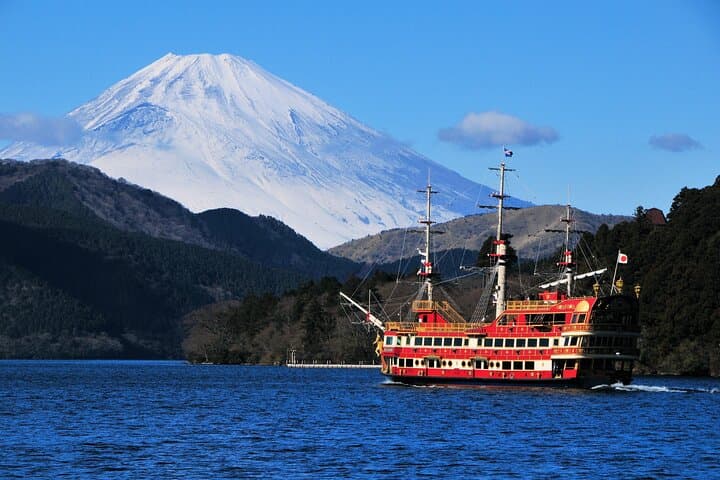
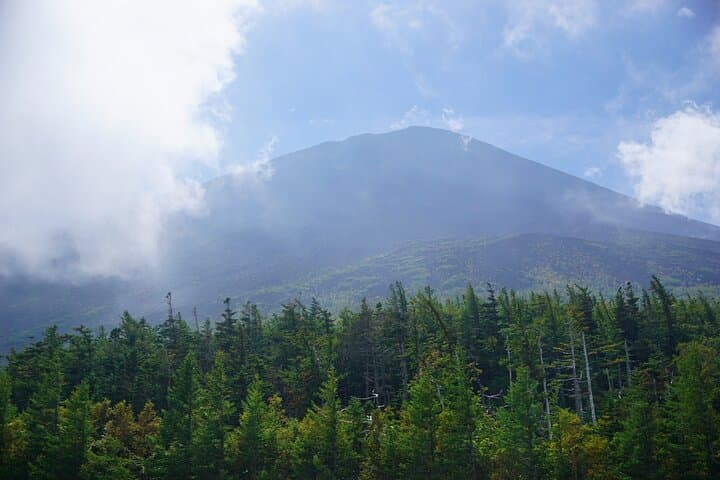
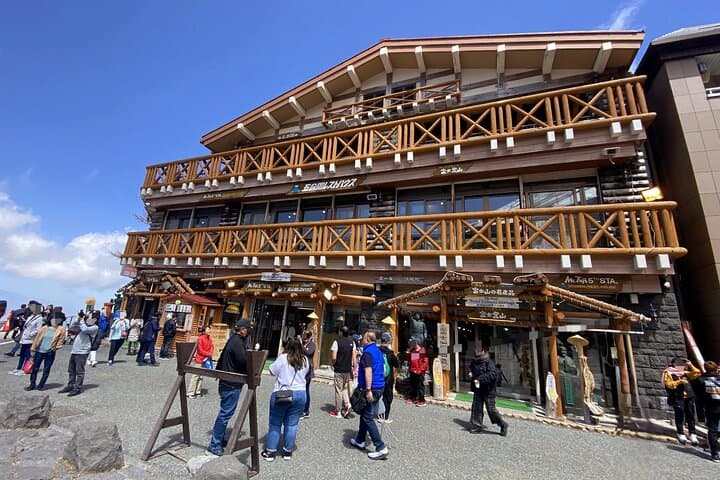
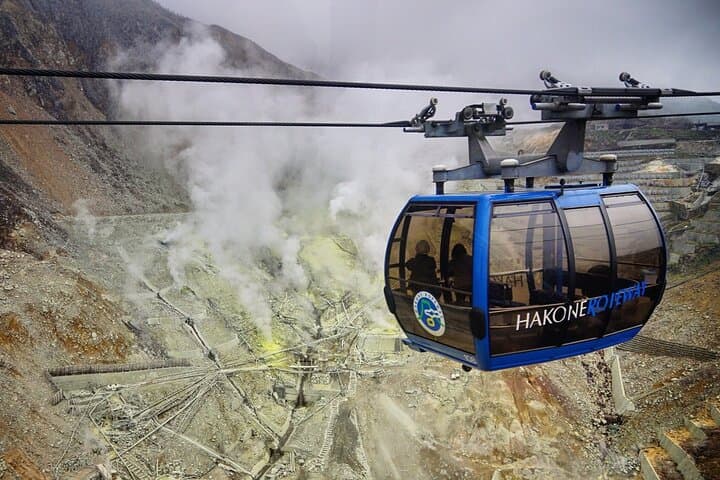
A thin, cold wind meets the coach as it climbs toward Mount Fuji’s 5th Station, 2,300 meters above sea level. Travelers step out into a high-clear air where clouds often play referee to the mountain’s silhouette; when visibility cooperates, Fuji dominates the horizon with a quiet, enormous presence. The day moves like a set of scenes — volcanic steam at Ōwakudani, a cable-car glide over sulfur-scented vents, and a brief pirate-ship cruise across Lake Ashi where the pine-fringed shore pushes a fresh breeze toward the hull.
A thin, cold wind meets the coach as it climbs toward Mount Fuji’s 5th Station, 2,300 meters above sea level. Travelers step out into a high-clear air where clouds often play referee to the mountain’s silhouette; when visibility cooperates, Fuji dominates the horizon with a quiet, enormous presence. The day moves like a set of scenes — volcanic steam at Ōwakudani, a cable-car glide over sulfur-scented vents, and a brief pirate-ship cruise across Lake Ashi where the pine-fringed shore pushes a fresh breeze toward the hull.
The route threads together layered history: Hakone was a major post town on the Tōkaidō and a gateway for pilgrims who revered Fuji as both a sacred mountain and a geological giant. Ōwakudani’s fumaroles are the visible breath of the region’s volcanic plumbing, while the torii on Lake Ashi points to Shinto traditions that still shape local life.
Practicalities guide the pace. Expect an 11-hour outing, weather-dependent views, and fixed meeting points in Tokyo; the itinerary includes stops for photos, a visit to a local eatery (remove shoes indoors), and the option to return by unreserved Shinkansen from Odawara (35 minutes) or by bus to Shinjuku (~2.5 hours). Accessibility is good on the coach and at major stops, but road closures can reroute the day to museums or shrines.
Bring layered clothing for rapid temperature swings, sturdy shoes for short walks on uneven ground, cash for small purchases, and patience—this is a tour of contrasts where geology, culture, and transport logistics meet in a single long, memorable day.