THE ADVENTURE COLLECTIVE® · Independent discovery and booking for outdoor travel

Spend a day exploring Mount Fuji’s lakes, lava caves, and forest trails on a private tour from Tokyo. Expect varied terrain, cultural stops, and local insight from an English-speaking guide.
Spend a day exploring Mount Fuji’s lakes, lava caves, and forest trails on a private tour from Tokyo. Expect varied terrain, cultural stops, and local insight from an English-speaking guide.
You arrive from Tokyo with the mountain growing taller in your windshield—gray shoulders capped with snow or a clean cone against a blue sky, depending on the season. The guide leads you out of the village plaza and the day unfolds: lakes flashing like mirrors, a pagoda framed against Fuji, a lava-formed cave whose air feels like a cellar, and forest trails that hush the city from memory.
Verified experiences and guided adventures in the surrounding area.
Operated by Shoma from Japan · Fujikawaguchiko, Yamanashi Prefecture
You arrive from Tokyo with the mountain growing taller in your windshield—gray shoulders capped with snow or a clean cone against a blue sky, depending on the season. The guide leads you out of the village plaza and the day unfolds: lakes flashing like mirrors, a pagoda framed against Fuji, a lava-formed cave whose air feels like a cellar, and forest trails that hush the city from memory.
Geology here is blunt and immediate: Mount Fuji is a stratovolcano built by repeated eruptions, its basalt and ash shaping Aokigahara’s rough lava terrain and the caves that cool at a steady temperature year-round. Culturally the mountain has been a pilgrimage site and subject of art for centuries; the neighboring villages preserve folk crafts and thatched-roof houses that recall Edo-period rural life.
Expect a mix of short walks, a climb of roughly 400 carved steps to an observation deck, and easy boardwalks at lakeshores—nothing technical, but varied footing and some sudden elevation. The guide will point out seasonal highlights: cherry blossoms in spring, verdant forests in summer, fiery maples in fall and crisp, clear vistas in winter.
Practical guidance: wear sturdy footwear, layer for quick temperature shifts, and bring a refillable water bottle. Plan for roughly a 10-hour day with private transport and restroom breaks; the tour is flexible but not a summit attempt. Respect trail signs, avoid straying in Aokigahara, and arrive with modest expectations—this is an immersive, accessible exploration of Mt. Fuji’s foothills rather than a climb to the peak.
moderate.
10 hours (full day).
Moderate fitness; able to walk on uneven ground and climb stairs intermittently.
No; this full-day tour explores lakes, viewpoints, caves and forests around Mt. Fuji rather than a summit ascent, which requires a separate, seasonal climb.
The meeting point is a plaza in front of a café in Tokyo where the guide will wear a blue hat—pickup logistics are confirmed at booking and can be arranged from central locations.
Yes for those with moderate mobility; infants may ride in strollers but anyone with spinal or serious heart problems should avoid strenuous portions—confirm special requirements when booking.
The operator’s cancellation policy allows refunds up to 24 hours before departure; tours generally proceed in light poor weather but may change the itinerary for safety.
Mount Fuji is a relatively young stratovolcano with a long history of eruptions and has been a sacred site and pilgrimage destination in Shinto and Japanese art.
High visitor numbers pressure fragile lava fields and forests—stick to trails, pack out waste, and support local conservation initiatives and museums.
Shoma from Japan operates guided outdoor trips and adventures with an emphasis on safety, stewardship, and memorable experiences.


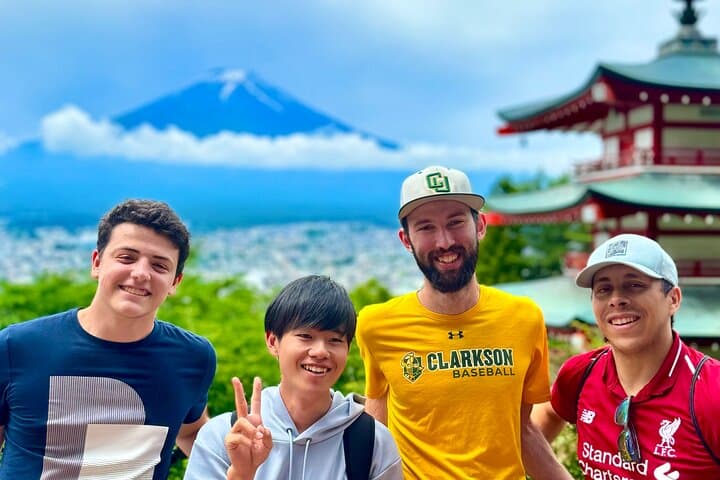

You arrive from Tokyo with the mountain growing taller in your windshield—gray shoulders capped with snow or a clean cone against a blue sky, depending on the season. The guide leads you out of the village plaza and the day unfolds: lakes flashing like mirrors, a pagoda framed against Fuji, a lava-formed cave whose air feels like a cellar, and forest trails that hush the city from memory.
You arrive from Tokyo with the mountain growing taller in your windshield—gray shoulders capped with snow or a clean cone against a blue sky, depending on the season. The guide leads you out of the village plaza and the day unfolds: lakes flashing like mirrors, a pagoda framed against Fuji, a lava-formed cave whose air feels like a cellar, and forest trails that hush the city from memory.
Geology here is blunt and immediate: Mount Fuji is a stratovolcano built by repeated eruptions, its basalt and ash shaping Aokigahara’s rough lava terrain and the caves that cool at a steady temperature year-round. Culturally the mountain has been a pilgrimage site and subject of art for centuries; the neighboring villages preserve folk crafts and thatched-roof houses that recall Edo-period rural life.
Expect a mix of short walks, a climb of roughly 400 carved steps to an observation deck, and easy boardwalks at lakeshores—nothing technical, but varied footing and some sudden elevation. The guide will point out seasonal highlights: cherry blossoms in spring, verdant forests in summer, fiery maples in fall and crisp, clear vistas in winter.
Practical guidance: wear sturdy footwear, layer for quick temperature shifts, and bring a refillable water bottle. Plan for roughly a 10-hour day with private transport and restroom breaks; the tour is flexible but not a summit attempt. Respect trail signs, avoid straying in Aokigahara, and arrive with modest expectations—this is an immersive, accessible exploration of Mt. Fuji’s foothills rather than a climb to the peak.