THE ADVENTURE COLLECTIVE® · Independent discovery and booking for outdoor travel

Step onto ancient lava, explore a flashlight-lit tube and stand on extinct craters with the Ionian Sea below. This half-day morning tour from Catania delivers geology, legend and hands-on volcanic terrain without a summit climb.
Step onto ancient lava, explore a flashlight-lit tube and stand on extinct craters with the Ionian Sea below. This half-day morning tour from Catania delivers geology, legend and hands-on volcanic terrain without a summit climb.
A cool wind from the upper slopes meets the minivan as it curls away from Catania; within an hour the city drops behind and black lava fields open like iron sheets. Participants step out at roughly 1,700–2,000 m onto gritty volcanic sand, helmets in hand, flashlights carving into a lava tube where stone presses close and the air tastes faintly of sulfur. The guide points to layered flows — each band a chapter in Etna's eruptions — and leads the party toward a ring of extinct craters where the Ionian Sea glitters below.
Verified experiences and guided adventures in the surrounding area.
Operated by Red Etna · Catania, Sicily
A cool wind from the upper slopes meets the minivan as it curls away from Catania; within an hour the city drops behind and black lava fields open like iron sheets. Participants step out at roughly 1,700–2,000 m onto gritty volcanic sand, helmets in hand, flashlights carving into a lava tube where stone presses close and the air tastes faintly of sulfur. The guide points to layered flows — each band a chapter in Etna's eruptions — and leads the party toward a ring of extinct craters where the Ionian Sea glitters below.
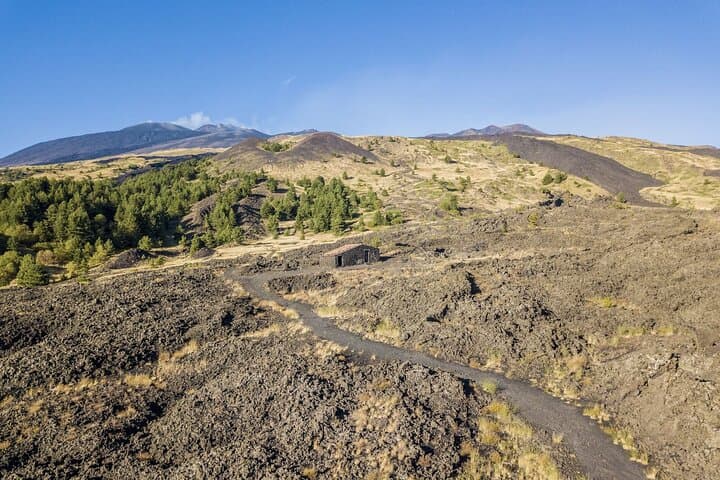
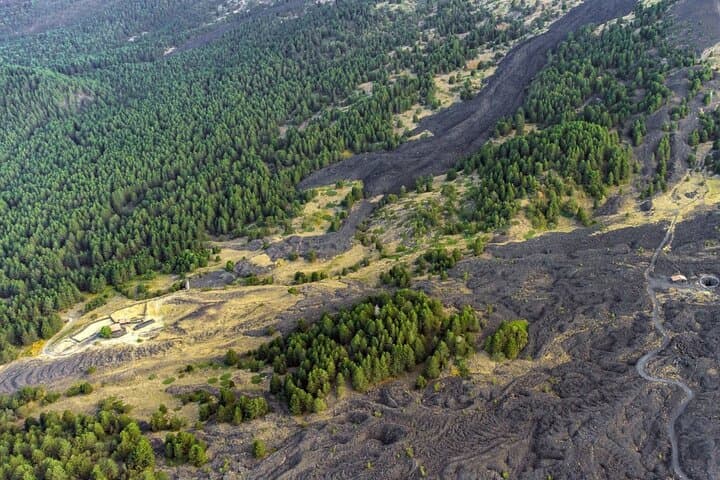
Etna is Europe’s most active volcano, a basaltic engine that has shaped local culture for millennia: vineyards cling to its lower slopes, towns rebuilt on ash, and legends that mark eruption years on parish records. Geologically, the terrain is young and raw — pahoehoe and aa flows, collapsed tubes and loose scoria. Locals read the mountain like weather: winds, plume direction and crust color signal what’s moving beneath.
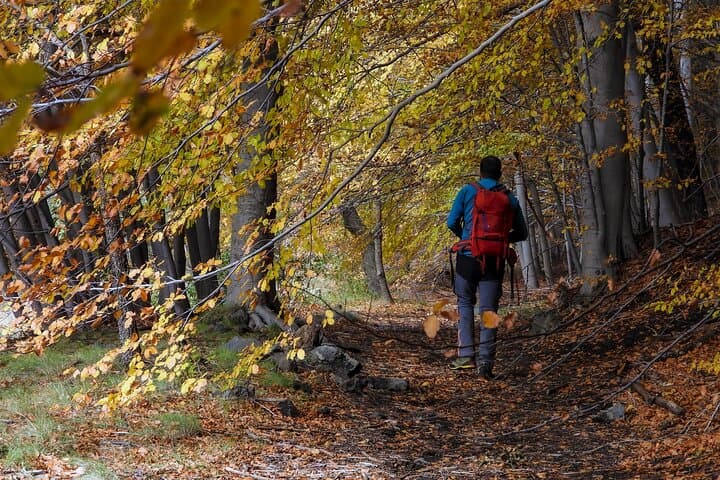
Practically, the morning tour is a half-day trek (about 5 hours total including transport), rated easy to moderate on rough, uneven ground. There’s no cable car or summit ascent on this route; instead expect walking on steep gravel, short scrambles and a headlamp-lit cave visit. Helmets and flashlights are provided; bring sturdy boots, layered clothing for variable temperatures, 1–2 liters of water and sun protection. The itinerary can change for safety or weather—listen to the guide and keep movements compact in the lava tube. On clear mornings the climb rewards explorers with sweeping coast views and the sensation that the mountain is quietly testing each step forward.
moderate.
5 hours.
Suitable for people with basic fitness who can handle uneven ground and short, steep sections; not technical.
No — this morning route visits extinct craters up to about 1,700–2,000 m and a lava tube; summit crater access requires a different, permit-based excursion.
The walking is classified easy–moderate: uneven ground and short steep sections require good balance but no technical climbing skills.
Pick-up starts from Catania; for Taormina guests the meeting point is at the entrance of Bar del Sole (morning tour). Exact meeting details are provided upon booking.
Yes — helmets and flashlights are supplied as part of the tour, though many guests bring a personal headlamp for hands-free illumination.
Mount Etna’s eruptions have shaped local settlements and agriculture for centuries; lava flows are recorded in municipal annals and many villages rebuilt on youthful basalt soils.
The volcanic landscape is fragile — stick to established routes, avoid collecting volcanic rock and carry out all waste to protect thin soils and endemic plant communities.
Red Etna operates guided outdoor trips and adventures with an emphasis on safety, stewardship, and memorable experiences.
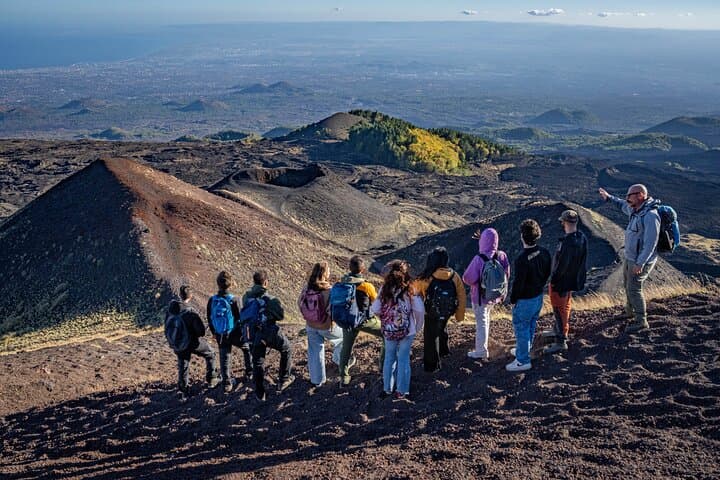
A cool wind from the upper slopes meets the minivan as it curls away from Catania; within an hour the city drops behind and black lava fields open like iron sheets. Participants step out at roughly 1,700–2,000 m onto gritty volcanic sand, helmets in hand, flashlights carving into a lava tube where stone presses close and the air tastes faintly of sulfur. The guide points to layered flows — each band a chapter in Etna's eruptions — and leads the party toward a ring of extinct craters where the Ionian Sea glitters below.
A cool wind from the upper slopes meets the minivan as it curls away from Catania; within an hour the city drops behind and black lava fields open like iron sheets. Participants step out at roughly 1,700–2,000 m onto gritty volcanic sand, helmets in hand, flashlights carving into a lava tube where stone presses close and the air tastes faintly of sulfur. The guide points to layered flows — each band a chapter in Etna's eruptions — and leads the party toward a ring of extinct craters where the Ionian Sea glitters below.
Etna is Europe’s most active volcano, a basaltic engine that has shaped local culture for millennia: vineyards cling to its lower slopes, towns rebuilt on ash, and legends that mark eruption years on parish records. Geologically, the terrain is young and raw — pahoehoe and aa flows, collapsed tubes and loose scoria. Locals read the mountain like weather: winds, plume direction and crust color signal what’s moving beneath.
Practically, the morning tour is a half-day trek (about 5 hours total including transport), rated easy to moderate on rough, uneven ground. There’s no cable car or summit ascent on this route; instead expect walking on steep gravel, short scrambles and a headlamp-lit cave visit. Helmets and flashlights are provided; bring sturdy boots, layered clothing for variable temperatures, 1–2 liters of water and sun protection. The itinerary can change for safety or weather—listen to the guide and keep movements compact in the lava tube. On clear mornings the climb rewards explorers with sweeping coast views and the sensation that the mountain is quietly testing each step forward.