THE ADVENTURE COLLECTIVE® · Independent discovery and booking for outdoor travel

Take a small-group guided trek to Mount Etna’s upper limits, walking lunar lava fields, peering into fumaroles and exploring a lava tube. This Catania departure reaches the highest public altitudes for an intense, authentic volcano experience.
Take a small-group guided trek to Mount Etna’s upper limits, walking lunar lava fields, peering into fumaroles and exploring a lava tube. This Catania departure reaches the highest public altitudes for an intense, authentic volcano experience.
You step off the cable car into thin air and a landscape that feels older than maps: black pumice underfoot, wind shoving warm vapors from fumaroles, and a horizon cut by jagged crater rims. The trail climbs away from the cultivated slopes where vineyards and chestnut woods give way to the volcano’s raw language — ash, scoria and braided lava flows.
Verified experiences and guided adventures in the surrounding area.
Operated by Etnarock · Catania, Sicily
You step off the cable car into thin air and a landscape that feels older than maps: black pumice underfoot, wind shoving warm vapors from fumaroles, and a horizon cut by jagged crater rims. The trail climbs away from the cultivated slopes where vineyards and chestnut woods give way to the volcano’s raw language — ash, scoria and braided lava flows.
Etna is the most active volcano in Europe, its profile shaped by repeated eruptions over millennia. Geologically, the summit zone is a patchwork of recent lava fields and fumarolic vents; culturally, it looms over eastern Sicily, feeding local folklore and soils that grow unique wines and nuts in the foothills. A visit to a lava tube offers a different portrait of the mountain — cooled magma corridors that tell the story of fire moving underground.
Practically, this is a high-altitude trek aimed at fit hikers. The guided route reaches the maximum public altitude allowed (typically up to about 3,000–3,400 m) and includes sections of loose volcanic scree and steaming fumaroles. Cable car access reduces approach time, but the upper slopes remain exposed; temperatures can swing sharply and wind can be strong. Expect 4–8 hours depending on logistics, and note cable car tickets are paid separately onsite. Guides provide helmets, poles and protective jackets, and groups are small to minimize impact and improve safety.
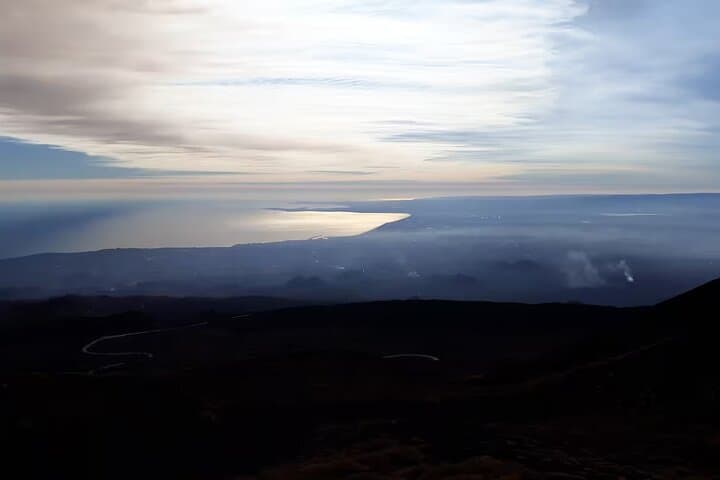
Bring layered clothing, sturdy boots, sun protection and water; move deliberately over loose rock and keep distance from active vents. The reward is stark: crater rims that look out across Sicily and, on clear days, the Aeolian Islands far at sea.
challenging.
4–8 hours.
High level of cardiovascular fitness and previous experience on long uphill hikes recommended
No technical mountaineering skills are required, but participants should be comfortable with long uphill hiking at altitude and on loose volcanic terrain.
No, cable car tickets are paid separately onsite; availability can vary by season and weather.
This excursion is not recommended for pregnant travelers or those with serious spinal or heart conditions; minors should be able to hike challenging terrain and follow guide directions.
Tours may be canceled or rerouted for safety in high winds, heavy fog, or unsafe volcanic activity; operators typically offer refunds if canceled within policy windows.
Etna has shaped local culture for millennia; towns around its flanks evolved around fertile volcanic soils and an ongoing relationship with eruptions.
The summit area is part of a protected park with regulations to limit erosion and disturbance—stay on trails, avoid collecting rocks and follow guide instructions to reduce impact.
Etnarock operates guided outdoor trips and adventures with an emphasis on safety, stewardship, and memorable experiences.
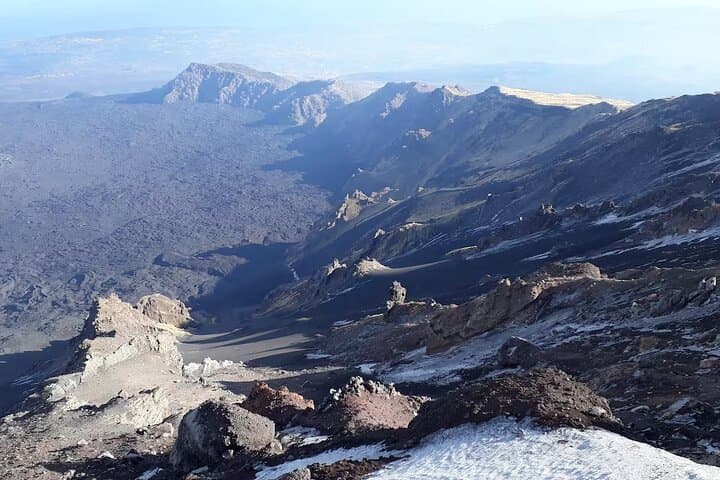
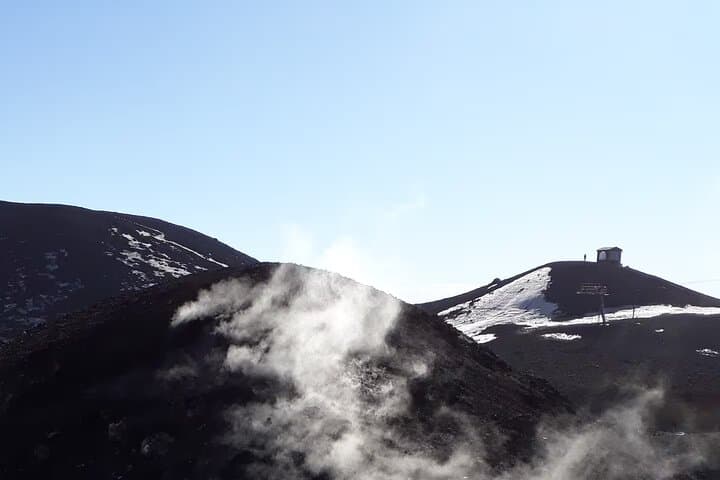
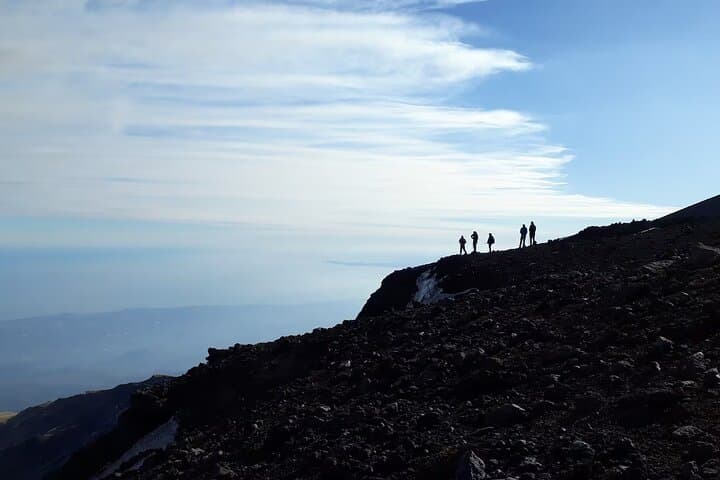
You step off the cable car into thin air and a landscape that feels older than maps: black pumice underfoot, wind shoving warm vapors from fumaroles, and a horizon cut by jagged crater rims. The trail climbs away from the cultivated slopes where vineyards and chestnut woods give way to the volcano’s raw language — ash, scoria and braided lava flows.
You step off the cable car into thin air and a landscape that feels older than maps: black pumice underfoot, wind shoving warm vapors from fumaroles, and a horizon cut by jagged crater rims. The trail climbs away from the cultivated slopes where vineyards and chestnut woods give way to the volcano’s raw language — ash, scoria and braided lava flows.
Etna is the most active volcano in Europe, its profile shaped by repeated eruptions over millennia. Geologically, the summit zone is a patchwork of recent lava fields and fumarolic vents; culturally, it looms over eastern Sicily, feeding local folklore and soils that grow unique wines and nuts in the foothills. A visit to a lava tube offers a different portrait of the mountain — cooled magma corridors that tell the story of fire moving underground.
Practically, this is a high-altitude trek aimed at fit hikers. The guided route reaches the maximum public altitude allowed (typically up to about 3,000–3,400 m) and includes sections of loose volcanic scree and steaming fumaroles. Cable car access reduces approach time, but the upper slopes remain exposed; temperatures can swing sharply and wind can be strong. Expect 4–8 hours depending on logistics, and note cable car tickets are paid separately onsite. Guides provide helmets, poles and protective jackets, and groups are small to minimize impact and improve safety.
Bring layered clothing, sturdy boots, sun protection and water; move deliberately over loose rock and keep distance from active vents. The reward is stark: crater rims that look out across Sicily and, on clear days, the Aeolian Islands far at sea.