THE ADVENTURE COLLECTIVE® · Independent discovery and booking for outdoor travel

A hands-on half-day ascent from Taormina brings you onto Etna’s volcanic slopes to walk crater rims, explore a lava cave and finish with snacks and a local wine tasting. Practical guidance and on-site gear make this an accessible way to experience Sicily’s active volcano.
A hands-on half-day ascent from Taormina brings you onto Etna’s volcanic slopes to walk crater rims, explore a lava cave and finish with snacks and a local wine tasting. Practical guidance and on-site gear make this an accessible way to experience Sicily’s active volcano.
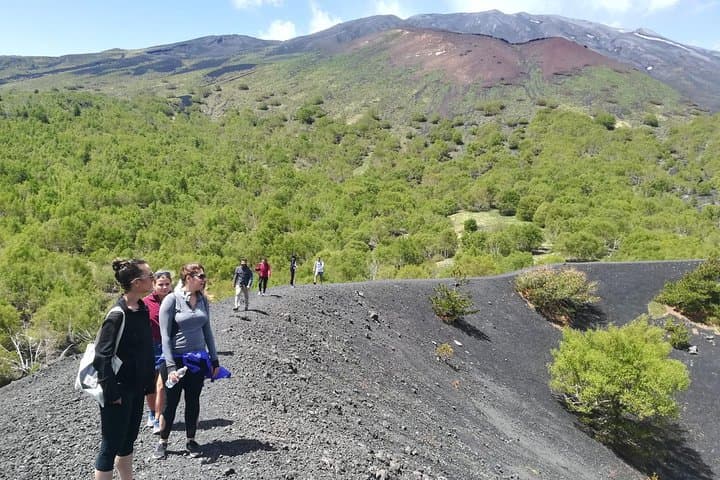
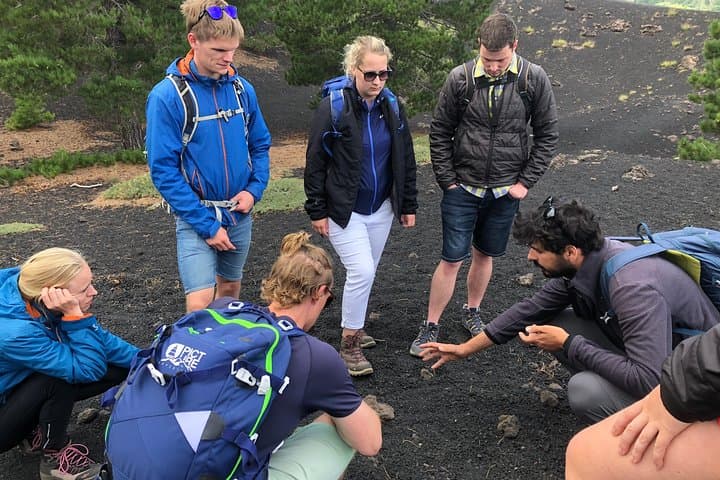
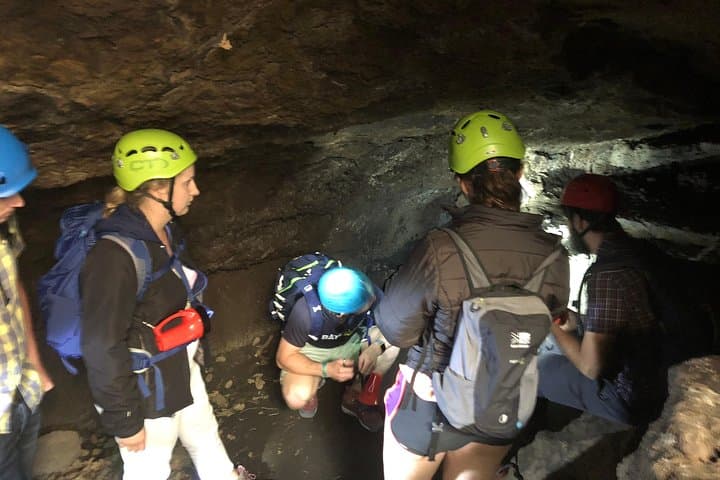
A dry wind pushes volcanic dust across a black slope as the minivan curls up toward Mount Etna. By mid-morning the air cools and the landscape uncloaks—fields of jagged pahoehoe and aa lava roll like frozen rivers, craters yawning above the trail. Small-group guides cut through the hush with clear, practical direction; helmets and headlamps are handed out, jackets zipped for the thinner air.
Verified experiences and guided adventures in the surrounding area.
Operated by Etna People s.n.c. · Taormina, Sicily
A dry wind pushes volcanic dust across a black slope as the minivan curls up toward Mount Etna. By mid-morning the air cools and the landscape uncloaks—fields of jagged pahoehoe and aa lava roll like frozen rivers, craters yawning above the trail. Small-group guides cut through the hush with clear, practical direction; helmets and headlamps are handed out, jackets zipped for the thinner air.
Etna’s story is written in layers: ancient eruptions shaped lava plateaus, medieval chronicles recorded frequent activity, and contemporary science maps its ever-changing summit. Geology students and farmers share the mountain’s rhythms — volcanic soils create fertile vineyards on the lower slopes, while the summit’s basaltic scars reveal recent explosive episodes. Local culture leans into the volcano: roadside stands sell honey and wine grown from the ash-rich ground, and small towns maintain a close eye on the mountain’s moods.
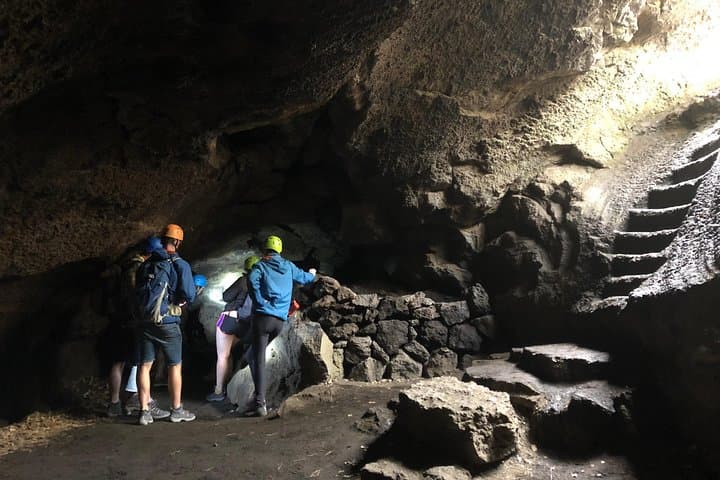
Expect a mix of packed volcanic scree and compacted ash underfoot, short steep sections and a network of crater edges to explore. The itinerary concentrates on accessible craters and a walk through a lava tube; guides translate volcanic features into clear signs and stories. Snacks and a small wine tasting round the experience.
Practical guidance: wear sturdy boots with good traction, layer for wind and rapid temperature change, bring at least 1–1.5 liters of water and sunscreen. The tour suits hikers of moderate fitness; let the operator know shoe sizes for rental boots and any health restrictions. Timing favors morning departures for steadier conditions and clearer views.
moderate.
6 hours.
Suitable for travelers with moderate fitness—comfortable walking for 1–3 hours over uneven volcanic terrain and short steep sections.
The walk includes uneven volcanic terrain and short steep stretches; beginners with reasonable fitness can participate but should disclose any mobility or cardiovascular concerns.
Boot rentals and jackets are available free of charge by the operator, but bringing your own properly fitting boots is recommended for comfort and performance.
Children may join but check age limits with the operator; the tour is not recommended for pregnant women after the 4th month or those with serious heart conditions.
Tours can be canceled for bad weather or insufficient participants; dress for cooler summit temperatures and expect operator updates the day before departure.
Etna has been active for millennia; historical records from Greek and Roman writers and local chronicles document frequent eruptions that shaped the island’s settlements and agriculture.
The Etna Regional Park enforces trail restrictions to protect fragile volcanic soils and native vegetation—stay on marked routes, avoid removing rocks, and follow guide instructions to limit erosion and disturbance.
Etna People s.n.c. operates guided outdoor trips and adventures with an emphasis on safety, stewardship, and memorable experiences.
A dry wind pushes volcanic dust across a black slope as the minivan curls up toward Mount Etna. By mid-morning the air cools and the landscape uncloaks—fields of jagged pahoehoe and aa lava roll like frozen rivers, craters yawning above the trail. Small-group guides cut through the hush with clear, practical direction; helmets and headlamps are handed out, jackets zipped for the thinner air.
A dry wind pushes volcanic dust across a black slope as the minivan curls up toward Mount Etna. By mid-morning the air cools and the landscape uncloaks—fields of jagged pahoehoe and aa lava roll like frozen rivers, craters yawning above the trail. Small-group guides cut through the hush with clear, practical direction; helmets and headlamps are handed out, jackets zipped for the thinner air.
Etna’s story is written in layers: ancient eruptions shaped lava plateaus, medieval chronicles recorded frequent activity, and contemporary science maps its ever-changing summit. Geology students and farmers share the mountain’s rhythms — volcanic soils create fertile vineyards on the lower slopes, while the summit’s basaltic scars reveal recent explosive episodes. Local culture leans into the volcano: roadside stands sell honey and wine grown from the ash-rich ground, and small towns maintain a close eye on the mountain’s moods.
Expect a mix of packed volcanic scree and compacted ash underfoot, short steep sections and a network of crater edges to explore. The itinerary concentrates on accessible craters and a walk through a lava tube; guides translate volcanic features into clear signs and stories. Snacks and a small wine tasting round the experience.
Practical guidance: wear sturdy boots with good traction, layer for wind and rapid temperature change, bring at least 1–1.5 liters of water and sunscreen. The tour suits hikers of moderate fitness; let the operator know shoe sizes for rental boots and any health restrictions. Timing favors morning departures for steadier conditions and clearer views.