THE ADVENTURE COLLECTIVE® · Independent discovery and booking for outdoor travel

Climb the active slopes of Mount Etna from Nicolosi on a half- or full-day guided tour. Explore craters at Rifugio Sapienza, taste local honey, and peer into the Valle del Bove while learning the volcano’s geological and cultural story.
Climb the active slopes of Mount Etna from Nicolosi on a half- or full-day guided tour. Explore craters at Rifugio Sapienza, taste local honey, and peer into the Valle del Bove while learning the volcano’s geological and cultural story.
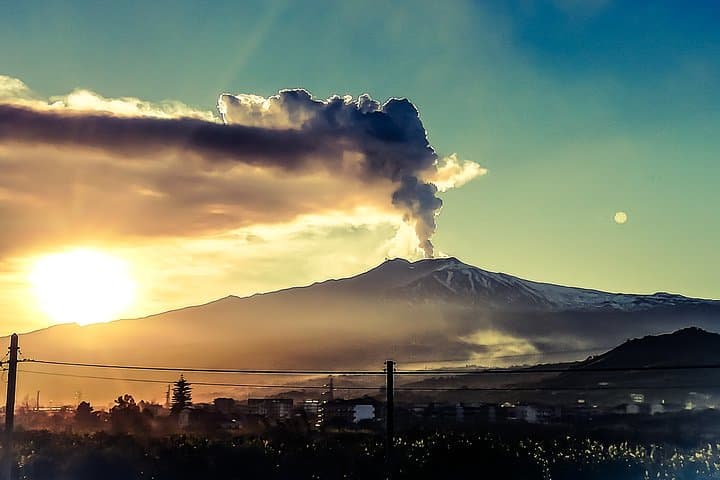
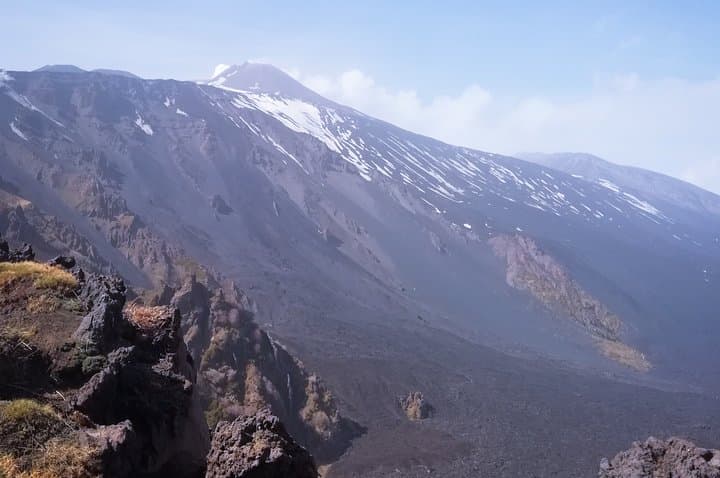
Mornings on Etna begin with a wind that feels like the mountain checking your boots before you step further — dry, sharp air that carries the distant hiss of fumaroles. The tour gathers in Nicolosi, then winds up the south flank where ancient lava fields open like a raw, black sea. At 2,000 m the landscape changes: ash and scoria give way to sculpted craters and sparse pines clinging to cooled flows.
Verified experiences and guided adventures in the surrounding area.
Operated by Sizilien Kultours · Nicolosi, Sicily
Mornings on Etna begin with a wind that feels like the mountain checking your boots before you step further — dry, sharp air that carries the distant hiss of fumaroles. The tour gathers in Nicolosi, then winds up the south flank where ancient lava fields open like a raw, black sea. At 2,000 m the landscape changes: ash and scoria give way to sculpted craters and sparse pines clinging to cooled flows.
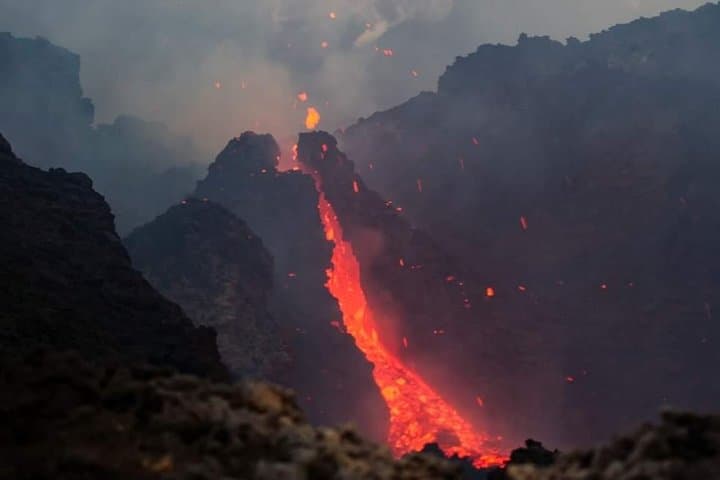
Geology here is direct and loud: Etna is one of Europe’s highest and most active volcanoes, its repeated eruptions layering basalt and ash into the slopes visitors now cross. Human history is braided with that geology — farms and villages rebuilt from lava, and traditions of honey and liqueur born from volcanic soils.
Guests typically visit Rifugio Sapienza and may take the cable car toward 3,000 m to see steaming craters and the vast incision of the Valle del Bove, where past flows pooled and rushed. Guides point out lava tubes and, when accessible, a cooled grotto formed by flowing magma.
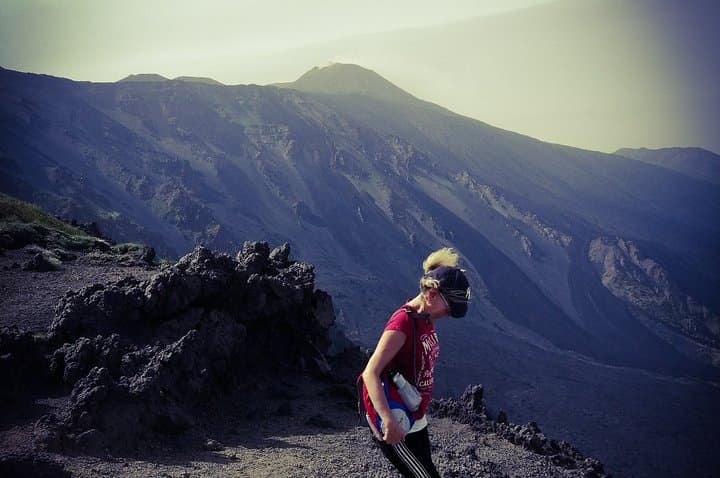
Practically speaking, expect uneven volcanic rock, loose scree and sudden wind. The half-day option focuses on the lower slopes and viewpoints; a full-day adds higher ridgelines and optional cable-car access (extra fee). Bring sturdy boots, layered clothing for rapid temperature shifts, at least 1–2 liters of water, and sunscreen — shade is scarce. Timing matters: aim for morning for clearer air and better visibility, and allow flexibility for weather or volcanic activity delays. Respect marked paths, follow your guide, and you’ll leave with a clearer sense of how Etna still shapes Sicily’s land and lives.
moderate.
4–8 hours.
Good baseline fitness for short hikes on loose volcanic terrain; ability to walk on uneven ground and tolerate altitude changes.
No—the cable car to around 3,000 m is optional and typically costs extra (check current rate and availability with the operator).
Parts of the route up to about 2,000 m are accessible by vehicle and suitable for many visitors, but higher slopes and crater edges require walking on uneven ground.
Guides take visitors to designated safe viewpoints; proximity depends on volcanic activity and official safety restrictions on the day.
Tours can be altered or canceled for safety; bring flexible travel plans and contact the operator for rebooking or refunds if conditions close access.
Etna’s eruptions have shaped local settlement, agriculture and folklore for millennia; the area is a UNESCO World Heritage Site since 2013.
Stick to marked paths and avoid removing rock or plant material; volcanic soils are fragile and local guides help minimize visitor impact.
Sizilien Kultours operates guided outdoor trips and adventures with an emphasis on safety, stewardship, and memorable experiences.
Mornings on Etna begin with a wind that feels like the mountain checking your boots before you step further — dry, sharp air that carries the distant hiss of fumaroles. The tour gathers in Nicolosi, then winds up the south flank where ancient lava fields open like a raw, black sea. At 2,000 m the landscape changes: ash and scoria give way to sculpted craters and sparse pines clinging to cooled flows.
Mornings on Etna begin with a wind that feels like the mountain checking your boots before you step further — dry, sharp air that carries the distant hiss of fumaroles. The tour gathers in Nicolosi, then winds up the south flank where ancient lava fields open like a raw, black sea. At 2,000 m the landscape changes: ash and scoria give way to sculpted craters and sparse pines clinging to cooled flows.
Geology here is direct and loud: Etna is one of Europe’s highest and most active volcanoes, its repeated eruptions layering basalt and ash into the slopes visitors now cross. Human history is braided with that geology — farms and villages rebuilt from lava, and traditions of honey and liqueur born from volcanic soils.
Guests typically visit Rifugio Sapienza and may take the cable car toward 3,000 m to see steaming craters and the vast incision of the Valle del Bove, where past flows pooled and rushed. Guides point out lava tubes and, when accessible, a cooled grotto formed by flowing magma.
Practically speaking, expect uneven volcanic rock, loose scree and sudden wind. The half-day option focuses on the lower slopes and viewpoints; a full-day adds higher ridgelines and optional cable-car access (extra fee). Bring sturdy boots, layered clothing for rapid temperature shifts, at least 1–2 liters of water, and sunscreen — shade is scarce. Timing matters: aim for morning for clearer air and better visibility, and allow flexibility for weather or volcanic activity delays. Respect marked paths, follow your guide, and you’ll leave with a clearer sense of how Etna still shapes Sicily’s land and lives.