THE ADVENTURE COLLECTIVE® · Independent discovery and booking for outdoor travel

Take a full-day guided ascent of Mount Etna from Taormina with licensed CAI guides. Explore summit craters, recent lava fields, and learn the geology and human stories that define Europe’s most active volcano.
Take a full-day guided ascent of Mount Etna from Taormina with licensed CAI guides. Explore summit craters, recent lava fields, and learn the geology and human stories that define Europe’s most active volcano.
You step off the silver-and-red SAT bus and the air changes — mineral and faintly sulfurous, with the volcano’s scale folding the sky into steely light. The route climbs out of Taormina’s coastal green and into a landscape where black lava fields and scrub take over; your CAI Alpine Guide points out old flows and the steaming lip of an active crater as wind presses across the slopes.
Verified experiences and guided adventures in the surrounding area.
Operated by AVI Travel · Taormina, Sicily
You step off the silver-and-red SAT bus and the air changes — mineral and faintly sulfurous, with the volcano’s scale folding the sky into steely light. The route climbs out of Taormina’s coastal green and into a landscape where black lava fields and scrub take over; your CAI Alpine Guide points out old flows and the steaming lip of an active crater as wind presses across the slopes.
Etna is Europe’s highest and one of its most active volcanoes, topping roughly 3,350 meters depending on recent eruptions. Designated a UNESCO site in 2013, the mountain’s geology is readable at every step: pahoehoe and a’a lava textures, fresh scoria cones, and terraces where volcanic soils feed citrus groves below. Culturally, Etna shapes local life — vineyards planted in ash, towns rebuilt multiple times after eruptions, and guides whose families have worked the slopes for generations.
On this full-day tour from Taormina you’ll spend about two hours on the bus each way and several hours at the Etna station and summit area with licensed CAI guides who manage route choice and safety. Expect uneven volcanic scree, short steep pitches, and occasional steam vents; weather can shift rapidly with altitude.
Practical guidance: wear sturdy hiking boots, layer for wind and sun, carry 1–2 liters of water and a light shell. If you suffer from altitude sensitivity or respiratory issues, discuss limits with the guide before ascent. Aim for morning departures to avoid afternoon wind and to see the crater rims with clearer light. The experience blends geology, living culture and the tangible force of an active mountain — visceral, educational, and manageable with basic hiking experience.
moderate.
8 hours.
Comfortable with several hours of walking on uneven volcanic terrain; expect short steep sections and loose scree.
Guides typically take groups to the summit area near the active craters when conditions allow; exact altitude varies with volcanic activity and route chosen, but Mount Etna's main summit sits around 3,350 m.
The tour is designed to be accessible with licensed guides and can suit families, but uneven terrain and altitude make sturdy footwear and supervision essential; check with the operator about age limits and pace adjustments.
Guides and the operator monitor volcanic activity and weather; routes are adjusted or the tour can be canceled for safety, typically with refunds if conditions force cancellation.
Expect about a two-hour round-trip bus transfer each way depending on traffic and the chosen meeting point at Etna station, included in the tour timing.
Etna has shaped human settlement for millennia; repeated eruptions influenced local agriculture, architecture and myth, and the mountain became a UNESCO World Heritage site in 2013 for its geological and cultural significance.
Stay on marked trails to protect fragile endemic vegetation and prevent erosion of young lava surfaces; guided groups help minimize impact and support local stewardship efforts.
AVI Travel operates guided outdoor trips and adventures with an emphasis on safety, stewardship, and memorable experiences.
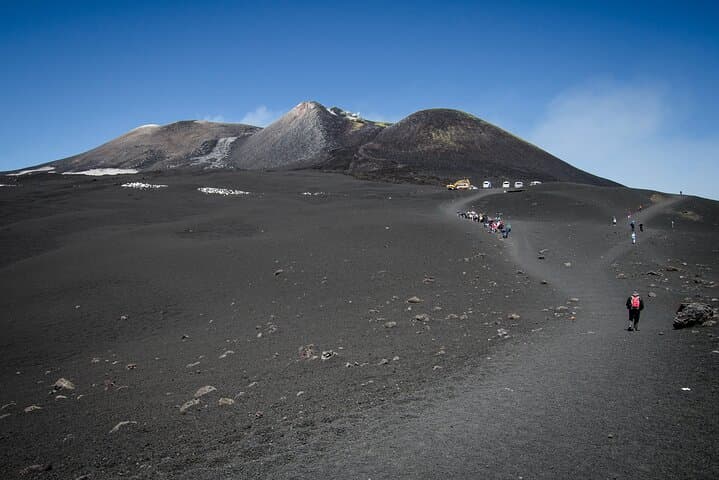
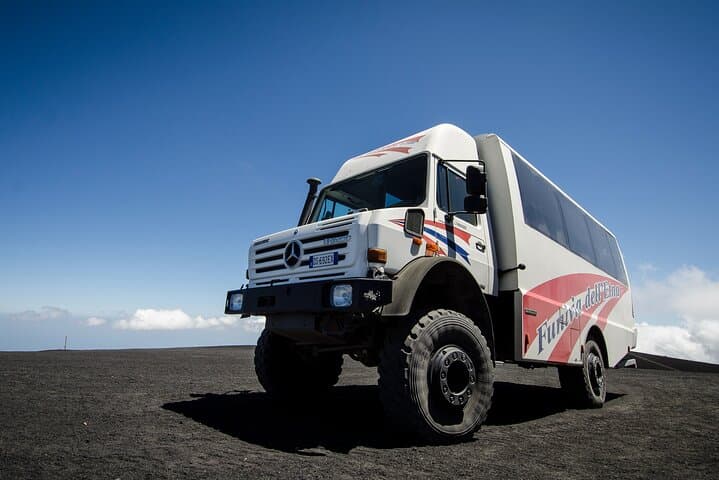
You step off the silver-and-red SAT bus and the air changes — mineral and faintly sulfurous, with the volcano’s scale folding the sky into steely light. The route climbs out of Taormina’s coastal green and into a landscape where black lava fields and scrub take over; your CAI Alpine Guide points out old flows and the steaming lip of an active crater as wind presses across the slopes.
You step off the silver-and-red SAT bus and the air changes — mineral and faintly sulfurous, with the volcano’s scale folding the sky into steely light. The route climbs out of Taormina’s coastal green and into a landscape where black lava fields and scrub take over; your CAI Alpine Guide points out old flows and the steaming lip of an active crater as wind presses across the slopes.
Etna is Europe’s highest and one of its most active volcanoes, topping roughly 3,350 meters depending on recent eruptions. Designated a UNESCO site in 2013, the mountain’s geology is readable at every step: pahoehoe and a’a lava textures, fresh scoria cones, and terraces where volcanic soils feed citrus groves below. Culturally, Etna shapes local life — vineyards planted in ash, towns rebuilt multiple times after eruptions, and guides whose families have worked the slopes for generations.
On this full-day tour from Taormina you’ll spend about two hours on the bus each way and several hours at the Etna station and summit area with licensed CAI guides who manage route choice and safety. Expect uneven volcanic scree, short steep pitches, and occasional steam vents; weather can shift rapidly with altitude.
Practical guidance: wear sturdy hiking boots, layer for wind and sun, carry 1–2 liters of water and a light shell. If you suffer from altitude sensitivity or respiratory issues, discuss limits with the guide before ascent. Aim for morning departures to avoid afternoon wind and to see the crater rims with clearer light. The experience blends geology, living culture and the tangible force of an active mountain — visceral, educational, and manageable with basic hiking experience.