THE ADVENTURE COLLECTIVE® · Independent discovery and booking for outdoor travel

Ride a vintage mountain railway, walk between basalt flutes, and stand on Etna’s fertile flanks on a full-day excursion from Taormina. This guided tour pairs the dramatic Alcantara Gorges with the volcanic landscapes of Mount Etna — optional cable-car and jeep ascents reach the higher craters (seasonal).
Ride a vintage mountain railway, walk between basalt flutes, and stand on Etna’s fertile flanks on a full-day excursion from Taormina. This guided tour pairs the dramatic Alcantara Gorges with the volcanic landscapes of Mount Etna — optional cable-car and jeep ascents reach the higher craters (seasonal).
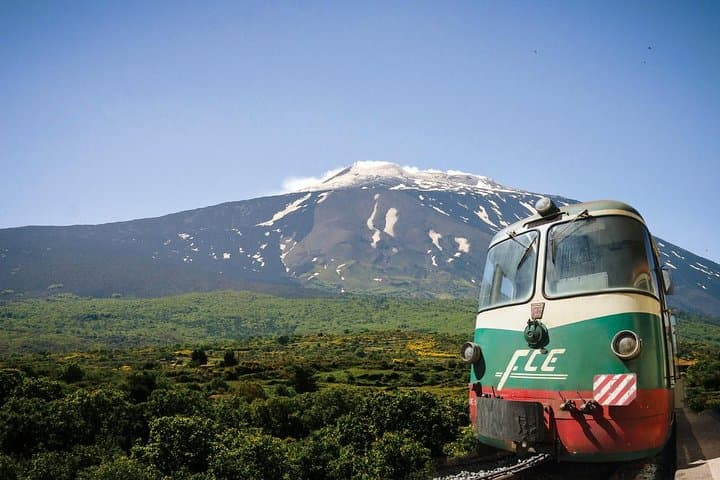
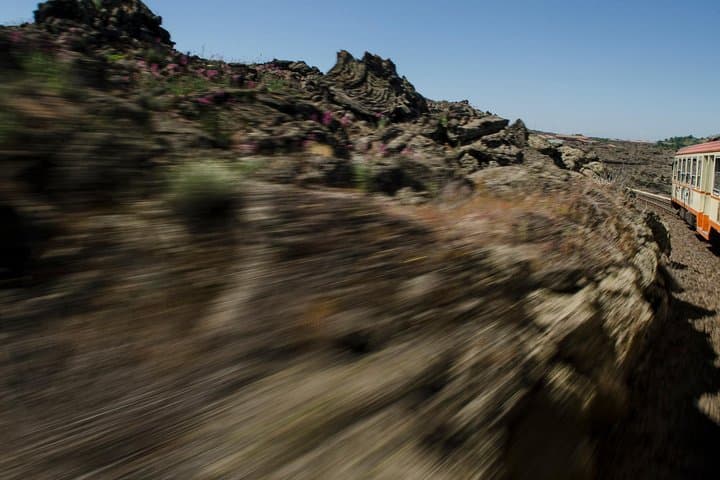
The coach hums away from Taormina’s cliff-edge promenade and soon the blue of the Ionian shrinks into a ribbon below. You feel the island’s tilt change under the tires as the road climbs into Etna’s foothills — vineyards give way to dark, jagged lava fields that still smell faintly of sulfur. The Circumetnea Railway, a 1950s-era narrow-gauge line, curls along the mountain’s lower slopes like a vintage postcard; when it’s running the hour-long ride is a slow-motion photo op, windows framing terraces, stone hamlets and vineyards stitched across old lava.
Verified experiences and guided adventures in the surrounding area.
Operated by SAT Group · Taormina, Sicily
The coach hums away from Taormina’s cliff-edge promenade and soon the blue of the Ionian shrinks into a ribbon below. You feel the island’s tilt change under the tires as the road climbs into Etna’s foothills — vineyards give way to dark, jagged lava fields that still smell faintly of sulfur. The Circumetnea Railway, a 1950s-era narrow-gauge line, curls along the mountain’s lower slopes like a vintage postcard; when it’s running the hour-long ride is a slow-motion photo op, windows framing terraces, stone hamlets and vineyards stitched across old lava.
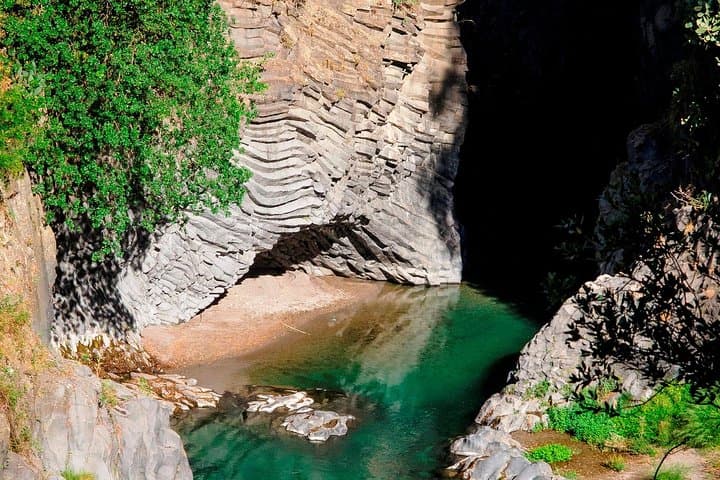
By mid-morning you’re standing at the Alcantara Gorges, where a river that has been plotting a route through basalt for millennia dares you to ignore its carved channels. The basalt columns are geometric and grave, the water a constant presence — sometimes a mirror, sometimes a white-lipped rush through tight canyons and rock pools. Guides explain how cooling flows fractured into hexagons and how agricultural terraces on Etna’s flanks owe their fertility to mineral-rich eruptions.
This is an area written by fire and water. Etna’s frequent eruptions built the island’s highest peak while shaping local culture: grape varieties with volcanic minerality, ancient lava stone walls, and towns like Randazzo that grew from medieval defenses against ash and lava. The Circumetnea Railway itself is a piece of social history, built to connect rural communities around the volcano long before roads were reliable.
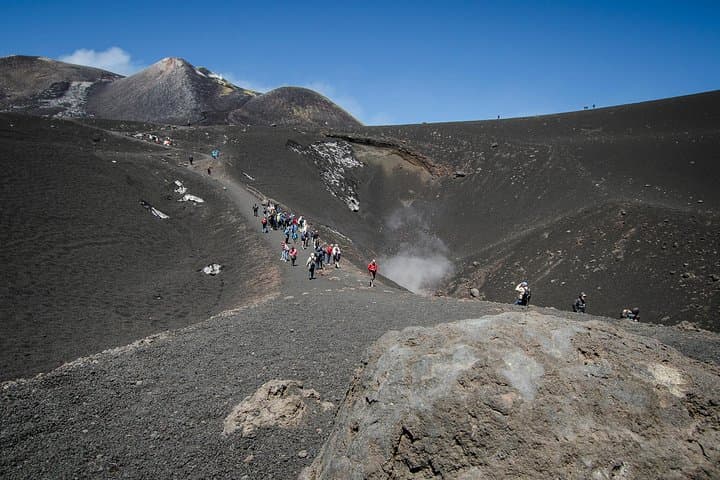
Practical planning matters on a day like this. The full tour runs about 10 hours and leaves from Via Luigi Pirandello in Taormina; pick-ups along the coast are possible with advance notice. In winter months (November–March) the train ride is replaced by coach travel and the optional cable-car-and-jeep ascent to Etna’s upper craters isn’t available; instead you’ll visit the medieval town of Randazzo. The optional summit upgrade (available outside winter) takes you higher via cable car and 4x4, then on a guided walk toward the summit craters — it exposes you to colder temperatures and rough ground, so bring layers and sturdy boots.
Expect uneven paths at the gorges and potentially wet surfaces near the river; the tour is suitable for most fitness levels but not recommended for travelers with serious heart or spine problems or for pregnant guests. Bring water, sun protection and shoes with grip. If you want to shoot photos, aim for early morning light on the train and late afternoon for warm tones across the lava fields. Whether you go for the train, the gorges, or the summit, the day is an elemental lesson: Sicily keeps changing — and this trip puts you face-to-face with the forces that shaped it.
moderate.
10 hours.
Suitable for reasonably fit travelers who can walk on uneven ground and manage short uphill sections; not strenuous but long day.
The train runs typically from spring through autumn; from November to March the ride is replaced by coach travel and a visit to Randazzo.
Yes — outside winter you can pay an optional supplement for cable car and jeep transport plus a guided walk toward the summit craters; availability and price can vary.
No — the Alcantara Gorges has an entrance fee that is usually paid on-site; bring cash in euros or ask your guide about payment options.
Infants and small children can be accommodated and strollers are accessible in some sections, but expect uneven ground at the gorges and limited space on the train.
There are opportunities for refreshments in small towns and at designated stops; restrooms are available but can be basic in rural areas.
The tour operates in English, German and Italian, with guides alternating languages during the day.
Mount Etna has been shaping human life for millennia; fertile volcanic soils supported ancient settlements and the Circumetnea Railway was built to bind communities around the volcano.
The Alcantara river and Etna’s slopes are ecologically sensitive; stick to marked paths, avoid disturbing flora, and support local conservation by paying entrance fees and following guide instructions.
SAT Group operates guided outdoor trips and adventures with an emphasis on safety, stewardship, and memorable experiences.
The coach hums away from Taormina’s cliff-edge promenade and soon the blue of the Ionian shrinks into a ribbon below. You feel the island’s tilt change under the tires as the road climbs into Etna’s foothills — vineyards give way to dark, jagged lava fields that still smell faintly of sulfur. The Circumetnea Railway, a 1950s-era narrow-gauge line, curls along the mountain’s lower slopes like a vintage postcard; when it’s running the hour-long ride is a slow-motion photo op, windows framing terraces, stone hamlets and vineyards stitched across old lava.
The coach hums away from Taormina’s cliff-edge promenade and soon the blue of the Ionian shrinks into a ribbon below. You feel the island’s tilt change under the tires as the road climbs into Etna’s foothills — vineyards give way to dark, jagged lava fields that still smell faintly of sulfur. The Circumetnea Railway, a 1950s-era narrow-gauge line, curls along the mountain’s lower slopes like a vintage postcard; when it’s running the hour-long ride is a slow-motion photo op, windows framing terraces, stone hamlets and vineyards stitched across old lava.
By mid-morning you’re standing at the Alcantara Gorges, where a river that has been plotting a route through basalt for millennia dares you to ignore its carved channels. The basalt columns are geometric and grave, the water a constant presence — sometimes a mirror, sometimes a white-lipped rush through tight canyons and rock pools. Guides explain how cooling flows fractured into hexagons and how agricultural terraces on Etna’s flanks owe their fertility to mineral-rich eruptions.
This is an area written by fire and water. Etna’s frequent eruptions built the island’s highest peak while shaping local culture: grape varieties with volcanic minerality, ancient lava stone walls, and towns like Randazzo that grew from medieval defenses against ash and lava. The Circumetnea Railway itself is a piece of social history, built to connect rural communities around the volcano long before roads were reliable.
Practical planning matters on a day like this. The full tour runs about 10 hours and leaves from Via Luigi Pirandello in Taormina; pick-ups along the coast are possible with advance notice. In winter months (November–March) the train ride is replaced by coach travel and the optional cable-car-and-jeep ascent to Etna’s upper craters isn’t available; instead you’ll visit the medieval town of Randazzo. The optional summit upgrade (available outside winter) takes you higher via cable car and 4x4, then on a guided walk toward the summit craters — it exposes you to colder temperatures and rough ground, so bring layers and sturdy boots.
Expect uneven paths at the gorges and potentially wet surfaces near the river; the tour is suitable for most fitness levels but not recommended for travelers with serious heart or spine problems or for pregnant guests. Bring water, sun protection and shoes with grip. If you want to shoot photos, aim for early morning light on the train and late afternoon for warm tones across the lava fields. Whether you go for the train, the gorges, or the summit, the day is an elemental lesson: Sicily keeps changing — and this trip puts you face-to-face with the forces that shaped it.