THE ADVENTURE COLLECTIVE® · Independent discovery and booking for outdoor travel

Drive from Chengdu to Leidongping and stand atop Mount Emei’s Golden Summit in a single, private day. This guided tour blends efficient transport, temple visits, and high-altitude views — ideal for travelers short on time but keen on cultural depth.
Drive from Chengdu to Leidongping and stand atop Mount Emei’s Golden Summit in a single, private day. This guided tour blends efficient transport, temple visits, and high-altitude views — ideal for travelers short on time but keen on cultural depth.
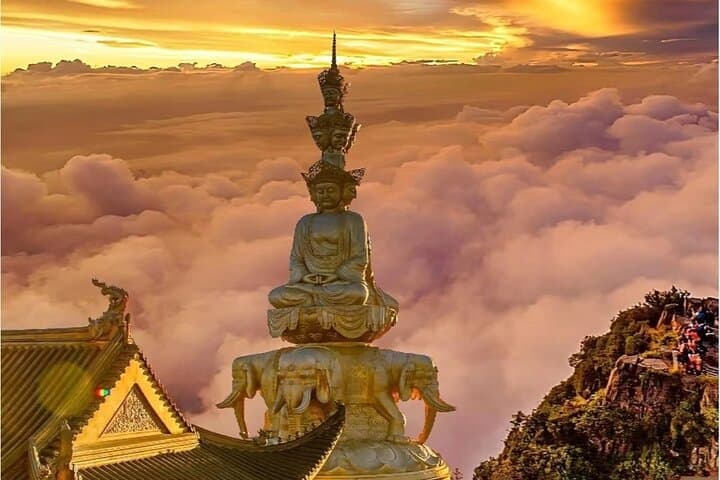
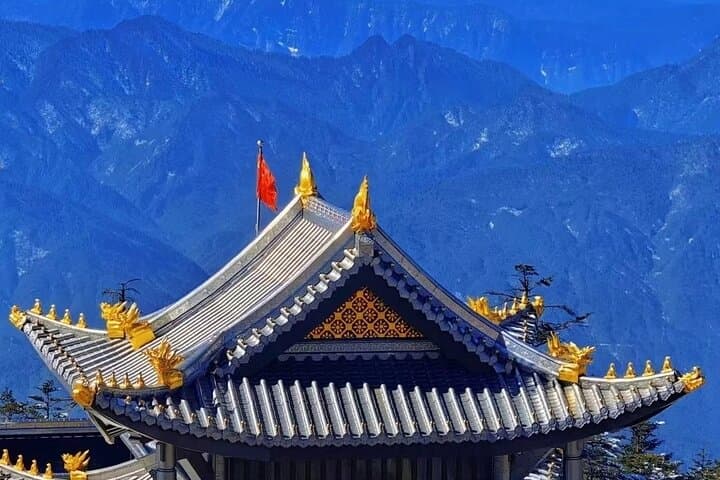
You leave Chengdu before dawn, the city blurring into tea terraces and rising mist as the road climbs toward Mount Emei. By Leidongping the air turns cool and clear; the summit hovers above like a weathered crown. Small temples appear along the approach, prayer flags snapping like punctuation in the wind.
Verified experiences and guided adventures in the surrounding area.
Operated by Yunnan Tours · Emeishan, Sichuan
You leave Chengdu before dawn, the city blurring into tea terraces and rising mist as the road climbs toward Mount Emei. By Leidongping the air turns cool and clear; the summit hovers above like a weathered crown. Small temples appear along the approach, prayer flags snapping like punctuation in the wind.
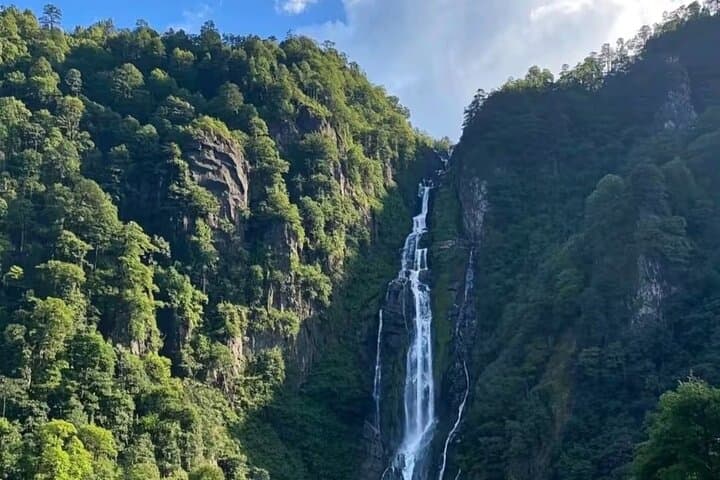
Mount Emei has been central to Chinese Buddhism for two millennia — the first temples date to the 1st century CE and later complexes such as Wannian and Huazang shaped the mountain’s religious landscape. Geologically the range is carved from older sedimentary layers uplifted by tectonic forces of the Sichuan Basin, producing steep trails, granite outcrops and cloud-clinging ridgelines. Local culture blends monastic ritual with mountain forestry traditions; pilgrims still ring bells at the summit and tea from nearby farms flavors the trailside stalls.
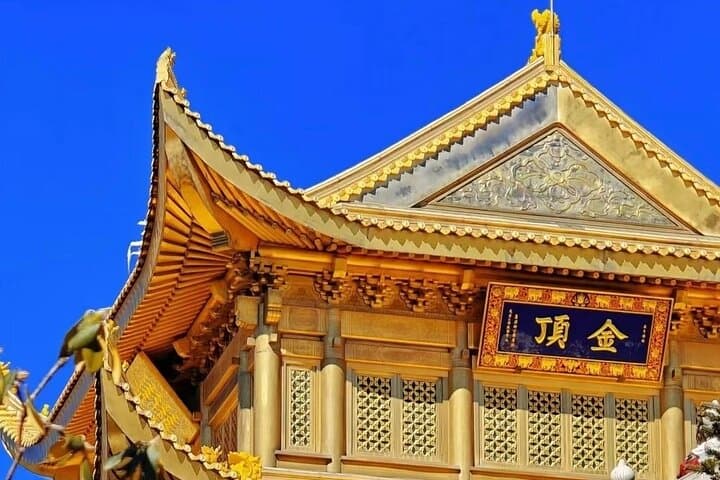
Expect a full day: private transport from Chengdu to Leidongping, a climb or cable-car hop toward Jinding (Golden Summit), time for temples and panoramic photos, then a return drive. Trails vary from paved temple steps to rocky footholds; altitude near the summit sits around 3,077 m so plan for thinner air and swift weather changes. Bring layers, waterproofs and comfortable footwear; allow extra time for monastic sites and macaque sightings.
Practical tip: start early to avoid busier midday crowds, confirm whether cable car tickets are included, and carry cash for small temple offerings. The route rewards steady pacing with dramatic sunrise light and a sense of standing on a place that helped shape East Asian Buddhism.
moderate.
8–10 hours.
Suitable for travelers with basic fitness who can handle staircases and stretches of uphill walking; not technically demanding but expect altitude and uneven steps.
Expect roughly 2–3 hours each way by private vehicle depending on traffic and the chosen pickup location.
Confirm with the tour operator—some itineraries include rides to Leidongping or the summit, others leave tickets as an add-on.
The route is generally suitable for all ages since transport reduces strenuous hiking, but the summit’s altitude and steps may be challenging for some; consult the operator about mobility concerns.
Conditions can change quickly: cool, windy, and often shrouded in cloud; bring layers and rain protection even on sunny mornings.
Mount Emei is one of the Four Sacred Buddhist Mountains of China; temples trace back to the 1st century CE and the site influenced the spread of Buddhism across East Asia.
The area is a UNESCO World Heritage Site with trail management to limit erosion and protect temple complexes—stay on marked paths and avoid feeding wildlife.
Yunnan Tours operates guided outdoor trips and adventures with an emphasis on safety, stewardship, and memorable experiences.
You leave Chengdu before dawn, the city blurring into tea terraces and rising mist as the road climbs toward Mount Emei. By Leidongping the air turns cool and clear; the summit hovers above like a weathered crown. Small temples appear along the approach, prayer flags snapping like punctuation in the wind.
You leave Chengdu before dawn, the city blurring into tea terraces and rising mist as the road climbs toward Mount Emei. By Leidongping the air turns cool and clear; the summit hovers above like a weathered crown. Small temples appear along the approach, prayer flags snapping like punctuation in the wind.
Mount Emei has been central to Chinese Buddhism for two millennia — the first temples date to the 1st century CE and later complexes such as Wannian and Huazang shaped the mountain’s religious landscape. Geologically the range is carved from older sedimentary layers uplifted by tectonic forces of the Sichuan Basin, producing steep trails, granite outcrops and cloud-clinging ridgelines. Local culture blends monastic ritual with mountain forestry traditions; pilgrims still ring bells at the summit and tea from nearby farms flavors the trailside stalls.
Expect a full day: private transport from Chengdu to Leidongping, a climb or cable-car hop toward Jinding (Golden Summit), time for temples and panoramic photos, then a return drive. Trails vary from paved temple steps to rocky footholds; altitude near the summit sits around 3,077 m so plan for thinner air and swift weather changes. Bring layers, waterproofs and comfortable footwear; allow extra time for monastic sites and macaque sightings.
Practical tip: start early to avoid busier midday crowds, confirm whether cable car tickets are included, and carry cash for small temple offerings. The route rewards steady pacing with dramatic sunrise light and a sense of standing on a place that helped shape East Asian Buddhism.