THE ADVENTURE COLLECTIVE® · Independent discovery and booking for outdoor travel

Fly both a ski plane and helicopter on a single 45‑minute tour that lands on the Tasman Glacier. Expect braided rivers, ice silence, and strict weather and weight rules—perfect for photographers and short-window alpine experiences.
Fly both a ski plane and helicopter on a single 45‑minute tour that lands on the Tasman Glacier. Expect braided rivers, ice silence, and strict weather and weight rules—perfect for photographers and short-window alpine experiences.
The rumble starts low, then lifts—steel wings cutting alpine air as the Tasman Valley unrolls beneath. From the window you watch braided glacial rivers thread moraine and the white shoulders of Aoraki / Mount Cook push clouds aside, daring you closer.
Verified experiences and guided adventures in the surrounding area.
Operated by Inflite Ski Planes Limited · Mount Cook Village, Canterbury
The rumble starts low, then lifts—steel wings cutting alpine air as the Tasman Valley unrolls beneath. From the window you watch braided glacial rivers thread moraine and the white shoulders of Aoraki / Mount Cook push clouds aside, daring you closer.
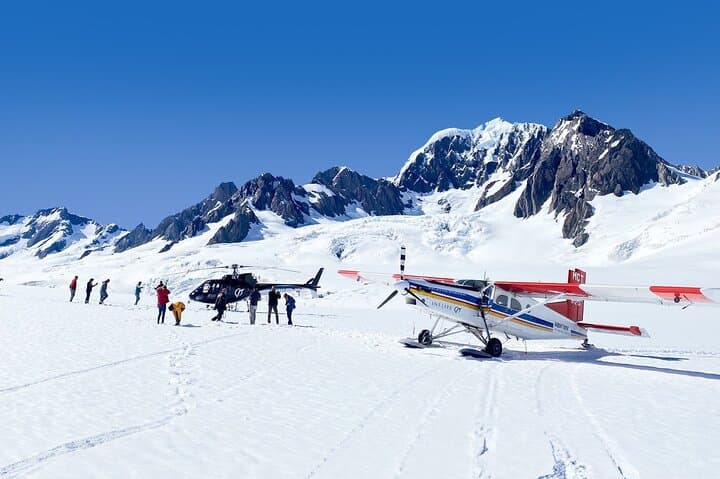
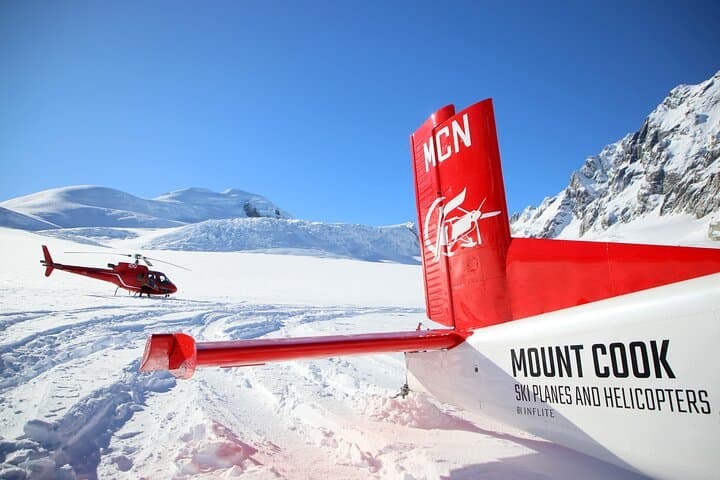
This 45-minute combination flight pairs a ski-equipped fixed-wing plane with a helicopter, a rare double-aircraft experience that includes a 10–15 minute Tasman Glacier landing. Geologically, you’re witnessing a living landscape: the Southern Alps are young, thrust up by the Pacific–Australian plate boundary and sculpted by repeated glaciation. The Tasman Glacier is New Zealand’s longest, its silt-laden meltwater carving the braided channels below.
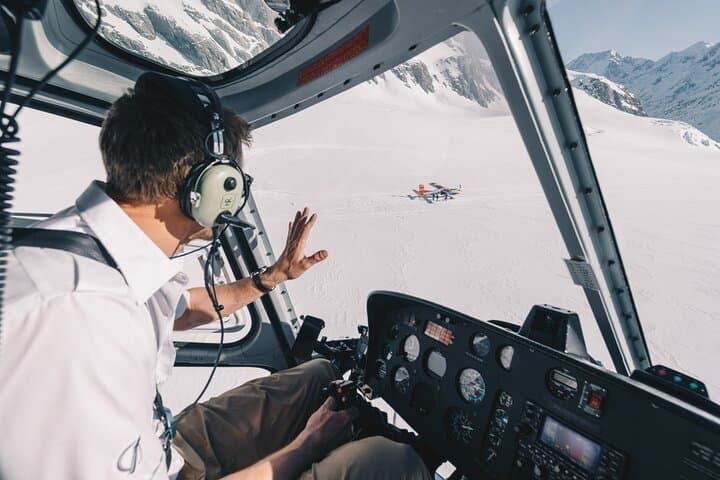
Māori name Aoraki carries ancestral significance here; the peak and valley sit inside Te Wahipounamu, a UNESCO World Heritage area protected for its wilderness values. Local guides add cultural and technical context on board via headsets, pointing out moraine ridges, icefalls and where the glacier’s terminal lake is expanding.
Practicalities are straightforward: check in early at the small Mount Cook airport on State Highway 80, expect aircraft weight limits, and be ready for sudden weather changes that may cancel flights. Dress in warm layers and sturdy, waterproof footwear for short glacier steps; sunglasses and a shutter-ready camera are essential. Operators shut down engines on the ice so you can experience true silence and crisp alpine air—brief but unforgettable. For photographers and first-time alpine visitors, this flight compresses a day’s worth of landscape into a high-octane 45-minute encounter.
easy.
45 minutes.
Minimal fitness required for the flight itself; brief snow steps on the glacier require basic mobility and stable footing
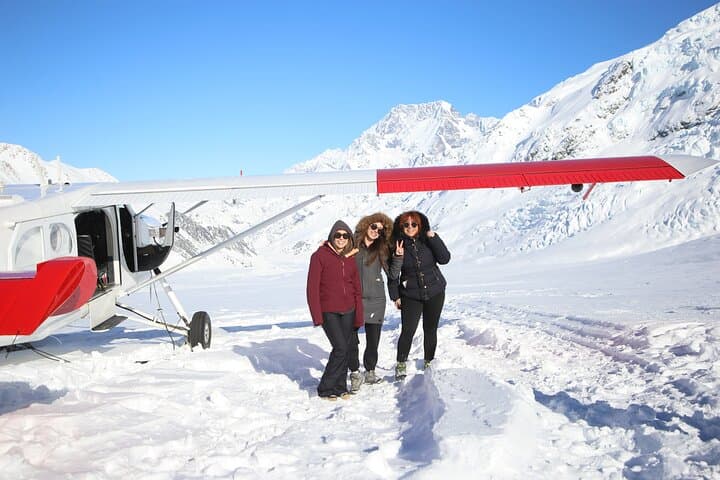
The landing on the Tasman Glacier is typically 10–15 minutes—enough time to step out, feel the silence, and take photos before switching aircraft.
Yes—infants may be required to sit on an adult’s lap and infant seats are sometimes available; check operator policies at booking.
Flights may be cancelled for safety due to weather or insufficient passengers; refunds are usually available if cancelled at least 24 hours in advance or per operator terms.
No technical experience is required, but you should be able to walk on uneven, icy surfaces for a short period and follow crew safety briefings.
Aoraki / Mount Cook carries deep Māori significance and the park is part of Te Wahipounamu, recognized for its glacially carved peaks and alpine ecology.
Operators follow Department of Conservation guidelines to minimize footprint on the glacier and surrounding alpine habitats; visitors should stay with guides and pack out all waste.
Inflite Ski Planes Limited operates guided outdoor trips and adventures with an emphasis on safety, stewardship, and memorable experiences.
The rumble starts low, then lifts—steel wings cutting alpine air as the Tasman Valley unrolls beneath. From the window you watch braided glacial rivers thread moraine and the white shoulders of Aoraki / Mount Cook push clouds aside, daring you closer.
The rumble starts low, then lifts—steel wings cutting alpine air as the Tasman Valley unrolls beneath. From the window you watch braided glacial rivers thread moraine and the white shoulders of Aoraki / Mount Cook push clouds aside, daring you closer.
This 45-minute combination flight pairs a ski-equipped fixed-wing plane with a helicopter, a rare double-aircraft experience that includes a 10–15 minute Tasman Glacier landing. Geologically, you’re witnessing a living landscape: the Southern Alps are young, thrust up by the Pacific–Australian plate boundary and sculpted by repeated glaciation. The Tasman Glacier is New Zealand’s longest, its silt-laden meltwater carving the braided channels below.
Māori name Aoraki carries ancestral significance here; the peak and valley sit inside Te Wahipounamu, a UNESCO World Heritage area protected for its wilderness values. Local guides add cultural and technical context on board via headsets, pointing out moraine ridges, icefalls and where the glacier’s terminal lake is expanding.
Practicalities are straightforward: check in early at the small Mount Cook airport on State Highway 80, expect aircraft weight limits, and be ready for sudden weather changes that may cancel flights. Dress in warm layers and sturdy, waterproof footwear for short glacier steps; sunglasses and a shutter-ready camera are essential. Operators shut down engines on the ice so you can experience true silence and crisp alpine air—brief but unforgettable. For photographers and first-time alpine visitors, this flight compresses a day’s worth of landscape into a high-octane 45-minute encounter.