THE ADVENTURE COLLECTIVE® · Independent discovery and booking for outdoor travel

A tough, guided three-day ascent of Mount Cameroon with two nights in mountain cottages. Expect steep elevation gain, early summit starts, and dramatic volcanic terrain—only for well-trained hikers.
A tough, guided three-day ascent of Mount Cameroon with two nights in mountain cottages. Expect steep elevation gain, early summit starts, and dramatic volcanic terrain—only for well-trained hikers.
Morning mist clings to the foothills as the trail slips from humid farmland into a cathedral of tall, dripping trees. Over three days you move upward through layered ecosystems—lowland forest giving way to mossy montane woods, then shaved grass and wind-buffed volcanic rock—each step ratcheting altitude toward the crater rim at roughly 4,095 meters. The wind dares you at the summit; clouds push and peel around the crater, revealing a raw, black scar of lava and panoramic views that can include the Gulf of Guinea on clear days.
Verified experiences and guided adventures in the surrounding area.
Operated by CamerTour.org · Buea, Southwest Region
Morning mist clings to the foothills as the trail slips from humid farmland into a cathedral of tall, dripping trees. Over three days you move upward through layered ecosystems—lowland forest giving way to mossy montane woods, then shaved grass and wind-buffed volcanic rock—each step ratcheting altitude toward the crater rim at roughly 4,095 meters. The wind dares you at the summit; clouds push and peel around the crater, revealing a raw, black scar of lava and panoramic views that can include the Gulf of Guinea on clear days.
Geology and history are written in the trail: Mount Cameroon is an active stratovolcano, its eruptions and lava fields shaping local terrain and livelihoods. The mountain sits in the Southwest Region where Bakweri and Buea communities have long used the lower slopes for agriculture; today the mountain hosts the annual Mount Cameroon Race of Hope and falls within Mount Cameroon National Park, patrolled by rangers and security forces.
Practically, this is a steep, technical three-day itinerary with about 3,000 meters of cumulative positive elevation gain. Hikers sleep in renovated mountain cottages with basic hot-water and power, and ascend very early on day two to reach the summit before weather changes. Expect rocky scree near the top, cold temperatures at night, and strenuous, sustained climbs. Bring layered clothing, a reliable pair of hiking boots, ample water and snacks, and practice on long alpine days beforehand. Guided groups provide transfers from Douala, meals, and local support—experience and fitness are non-negotiable here.
difficult.
3 days (approx. 72 hours).
High level of cardiovascular fitness and prior mountain trekking experience; capable of sustained uphill hiking and rapid altitude change.
This is a difficult, technical trek best suited to experienced hikers in excellent physical condition; prior multi-day mountain experience is strongly recommended.
Two nights are spent in renovated mountain cottages that provide bedding, basic showers, restaurant service and electricity—expect rustic but comfortable facilities.
The schedule gains significant elevation quickly; while there is no extended acclimatization day, the itinerary spaces ascent over three days—monitor symptoms and communicate with guides immediately if you feel unwell.
Transfers are typically provided from Douala with pick-up/drop-off; the trailhead approach passes through Buea, the usual staging town.
Mount Cameroon has shaped local Bakweri culture and agriculture for generations and hosts the annual Mount Cameroon Race of Hope, a long-standing sporting tradition.
The mountain lies within Mount Cameroon National Park; stick to trails, avoid collecting plants, and follow ranger guidance to reduce erosion and habitat disturbance.
CamerTour.org operates guided outdoor trips and adventures with an emphasis on safety, stewardship, and memorable experiences.

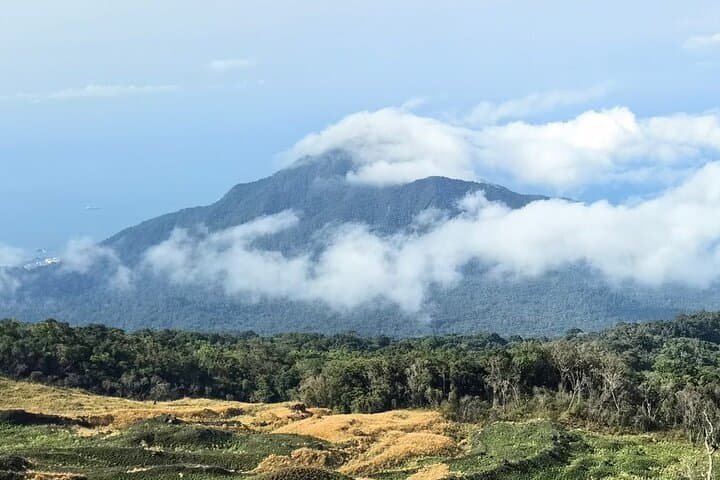
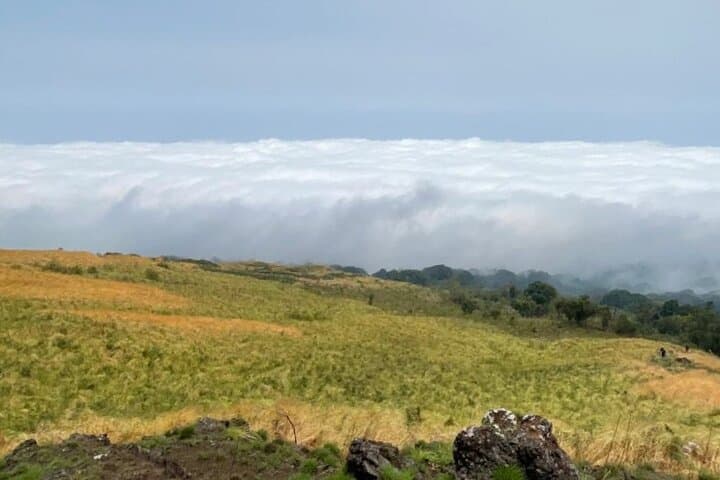
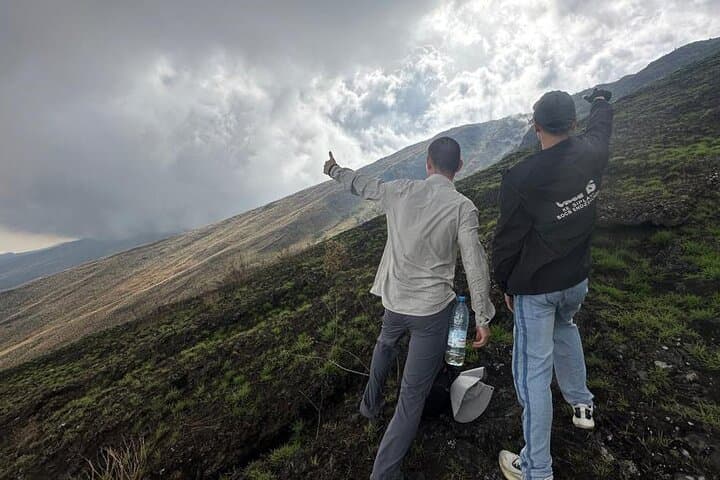
Morning mist clings to the foothills as the trail slips from humid farmland into a cathedral of tall, dripping trees. Over three days you move upward through layered ecosystems—lowland forest giving way to mossy montane woods, then shaved grass and wind-buffed volcanic rock—each step ratcheting altitude toward the crater rim at roughly 4,095 meters. The wind dares you at the summit; clouds push and peel around the crater, revealing a raw, black scar of lava and panoramic views that can include the Gulf of Guinea on clear days.
Morning mist clings to the foothills as the trail slips from humid farmland into a cathedral of tall, dripping trees. Over three days you move upward through layered ecosystems—lowland forest giving way to mossy montane woods, then shaved grass and wind-buffed volcanic rock—each step ratcheting altitude toward the crater rim at roughly 4,095 meters. The wind dares you at the summit; clouds push and peel around the crater, revealing a raw, black scar of lava and panoramic views that can include the Gulf of Guinea on clear days.
Geology and history are written in the trail: Mount Cameroon is an active stratovolcano, its eruptions and lava fields shaping local terrain and livelihoods. The mountain sits in the Southwest Region where Bakweri and Buea communities have long used the lower slopes for agriculture; today the mountain hosts the annual Mount Cameroon Race of Hope and falls within Mount Cameroon National Park, patrolled by rangers and security forces.
Practically, this is a steep, technical three-day itinerary with about 3,000 meters of cumulative positive elevation gain. Hikers sleep in renovated mountain cottages with basic hot-water and power, and ascend very early on day two to reach the summit before weather changes. Expect rocky scree near the top, cold temperatures at night, and strenuous, sustained climbs. Bring layered clothing, a reliable pair of hiking boots, ample water and snacks, and practice on long alpine days beforehand. Guided groups provide transfers from Douala, meals, and local support—experience and fitness are non-negotiable here.