THE ADVENTURE COLLECTIVE® · Independent discovery and booking for outdoor travel

Start before dawn and climb Mount Batur to watch sunrise spill over Lake Batur and Mount Agung. This guided group trek blends a manageable workout with dramatic volcanic scenery and a simple summit breakfast.
Start before dawn and climb Mount Batur to watch sunrise spill over Lake Batur and Mount Agung. This guided group trek blends a manageable workout with dramatic volcanic scenery and a simple summit breakfast.
You leave hotel shutters closed and a cool, star-heavy sky as your van slides uphill through small villages toward the caldera. The trailhead is dim; your guide taps a headlamp on and the path ahead materializes in patches. As you climb, volcanic scree crunches underfoot and the air thins; behind you, lights from Kintamani scatter across the floor of the caldera while the first pale band of dawn begins to warm the rim.
Verified experiences and guided adventures in the surrounding area.
Operated by Mount Batur Sunset Trekking · Kintamani, Bali
You leave hotel shutters closed and a cool, star-heavy sky as your van slides uphill through small villages toward the caldera. The trailhead is dim; your guide taps a headlamp on and the path ahead materializes in patches. As you climb, volcanic scree crunches underfoot and the air thins; behind you, lights from Kintamani scatter across the floor of the caldera while the first pale band of dawn begins to warm the rim.
Mount Batur sits on the edge of a large caldera and overlooks Lake Batur—a lake born of collapse during Pleistocene eruptions and shaped by repeated activity. The mountain’s dark basalt and pumice fields speak to its relatively recent volcanic life; villagers around Kintamani practice dry-season farming and maintain small temples that mark sacred spots on the slopes. Local guides have led these pre-dawn treks for years, often finishing with a simple breakfast and coffee at the crater rim while Mount Agung stands in silhouette beyond the lake.
Expect a steady 1.5–2 hour ascent covering roughly 2–3 km with 700–800 m of elevation gain; round-trip is typically 4–6 km on steep switchbacks, loose volcanic gravel, and occasional stone steps. Pace yourself, use trekking poles for balance on scree sections, and layer for changing temperatures—cold at the summit, humid at the parking area. Transfers, a headlamp, pole, bottled water and breakfast are commonly included in group tours. Leave no trace on the fragile slopes, follow your licensed guide, and plan for an early start—this is sunrise trekking, and timing is everything.
moderate.
4–6 hours.
Suitable for travelers with moderate fitness who can manage steep, sustained uphill hiking for 1.5–2 hours.
Guided groups typically ascend in 1.5–2 hours; total tour time including transfers and breakfast runs about 4–6 hours.
Yes for those in moderate fitness—trail guides manage pace and route, but the steep ascent and loose scree require steady footing and basic stamina.
Most include hotel pickup, headlamp, trekking pole, bottled water, licensed guide, and a simple breakfast at the summit.
Tours usually advise against participation for pregnant travelers and those with serious back or heart conditions; check age limits with the operator.
The Batur caldera formed through large prehistoric eruptions; the current cone has produced repeated activity over the past few centuries and shaped local settlement patterns.
Stay on established trails to limit erosion on fragile volcanic soil; support licensed local guides who help manage visitor impact.
Mount Batur Sunset Trekking operates guided outdoor trips and adventures with an emphasis on safety, stewardship, and memorable experiences.

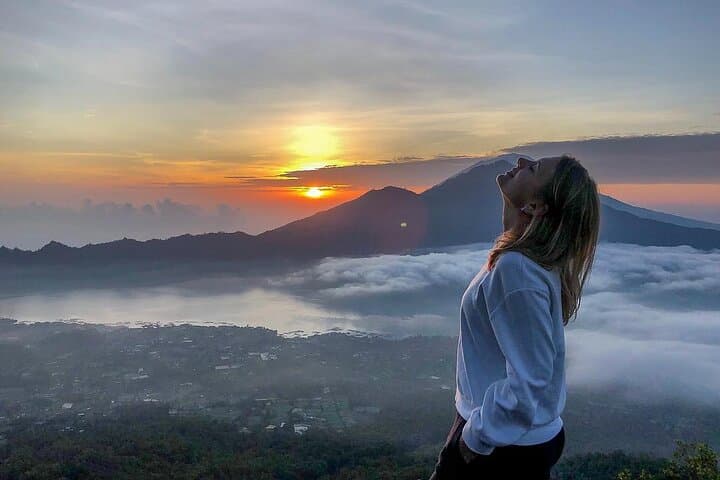


You leave hotel shutters closed and a cool, star-heavy sky as your van slides uphill through small villages toward the caldera. The trailhead is dim; your guide taps a headlamp on and the path ahead materializes in patches. As you climb, volcanic scree crunches underfoot and the air thins; behind you, lights from Kintamani scatter across the floor of the caldera while the first pale band of dawn begins to warm the rim.
You leave hotel shutters closed and a cool, star-heavy sky as your van slides uphill through small villages toward the caldera. The trailhead is dim; your guide taps a headlamp on and the path ahead materializes in patches. As you climb, volcanic scree crunches underfoot and the air thins; behind you, lights from Kintamani scatter across the floor of the caldera while the first pale band of dawn begins to warm the rim.
Mount Batur sits on the edge of a large caldera and overlooks Lake Batur—a lake born of collapse during Pleistocene eruptions and shaped by repeated activity. The mountain’s dark basalt and pumice fields speak to its relatively recent volcanic life; villagers around Kintamani practice dry-season farming and maintain small temples that mark sacred spots on the slopes. Local guides have led these pre-dawn treks for years, often finishing with a simple breakfast and coffee at the crater rim while Mount Agung stands in silhouette beyond the lake.
Expect a steady 1.5–2 hour ascent covering roughly 2–3 km with 700–800 m of elevation gain; round-trip is typically 4–6 km on steep switchbacks, loose volcanic gravel, and occasional stone steps. Pace yourself, use trekking poles for balance on scree sections, and layer for changing temperatures—cold at the summit, humid at the parking area. Transfers, a headlamp, pole, bottled water and breakfast are commonly included in group tours. Leave no trace on the fragile slopes, follow your licensed guide, and plan for an early start—this is sunrise trekking, and timing is everything.