THE ADVENTURE COLLECTIVE® · Independent discovery and booking for outdoor travel

Beat the crowds and reach Mount Batur’s rim before dawn to watch the sun lift over Bali’s volcanic skyline. This guided pre-dawn trek combines manageable climbing, geothermal curiosities and a volcanic-steamed breakfast.
Beat the crowds and reach Mount Batur’s rim before dawn to watch the sun lift over Bali’s volcanic skyline. This guided pre-dawn trek combines manageable climbing, geothermal curiosities and a volcanic-steamed breakfast.
A pre-dawn van pulls away from a sleepy hotel and the road narrows into agricultural lanes lit by passing headlights. By torchlight the trail begins—loose volcanic scree, occasional stone steps and a steady switchback that forces a rhythm: one foot, the next, breath, repeat. As the sky brightens, steam curls from fumaroles and the ridge opens to a sudden horizon where Mount Agung pins the sunrise. A simple breakfast—steam eggs warmed by subterranean heat—arrives as the light spills across the caldera lake.
Verified experiences and guided adventures in the surrounding area.
Operated by Bali Sky Tour · Kintamani, Bali
A pre-dawn van pulls away from a sleepy hotel and the road narrows into agricultural lanes lit by passing headlights. By torchlight the trail begins—loose volcanic scree, occasional stone steps and a steady switchback that forces a rhythm: one foot, the next, breath, repeat. As the sky brightens, steam curls from fumaroles and the ridge opens to a sudden horizon where Mount Agung pins the sunrise. A simple breakfast—steam eggs warmed by subterranean heat—arrives as the light spills across the caldera lake.
Geologically Mount Batur sits inside a large caldera created by a massive collapse; its current cone rises to about 1,717 m and remains among Bali’s most active volcanoes. For locals the mountain and the neighboring peaks are woven into Balinese Hindu practice and everyday life—ceremonies and offerings still occur in villages around the rim.
Expect steep, short sections and loose ash underfoot more than technical rock climbing. The guided rhythm of a local trekking guide keeps groups moving efficiently and provides context on recent eruptions, fumarole fields and the agricultural terraces you pass on the return.
Practical guidance: start times are early (around 1:30–2:00 AM) to reach the summit for sunrise, so plan for 4–5 hours of trekking and 8–9 hours total with transfers. Wear sturdy trail shoes, bring a headlamp and layers—temperatures drop on the ridge. Carry water, move at a steady pace on scree, and respect village customs when passing through settlements. The route is popular—book a guided transfer and expect basic provided breakfast at the top.
moderate.
4–5 hours (trekking); 8–9 hours total including transfers.
Good for travelers who can sustain steady uphill walking for 2–3 hours and handle uneven, loose terrain
Pickups generally begin around 1:30–2:00 AM so you can reach the trailhead and hike up in time for sunrise.
The ascent is moderate with loose volcanic scree; expect about 1.5–3 hours to the summit depending on pace and fitness.
A local guide is strongly recommended for safety, route-finding and local knowledge; this tour includes a professional trekking guide.
A light breakfast is served—typically steamed eggs warmed by volcanic heat—plus bottled water and basic seating spots to view the sunrise.
The Batur caldera formed during a massive collapse; the current cone has erupted periodically and the lake and surrounding villages have long been integral to Balinese agricultural and ritual life.
Stay on the established trail to limit erosion and avoid leaving litter; local guides help minimize impact and direct visitors away from sensitive fumarole areas.
Bali Sky Tour operates guided outdoor trips and adventures with an emphasis on safety, stewardship, and memorable experiences.
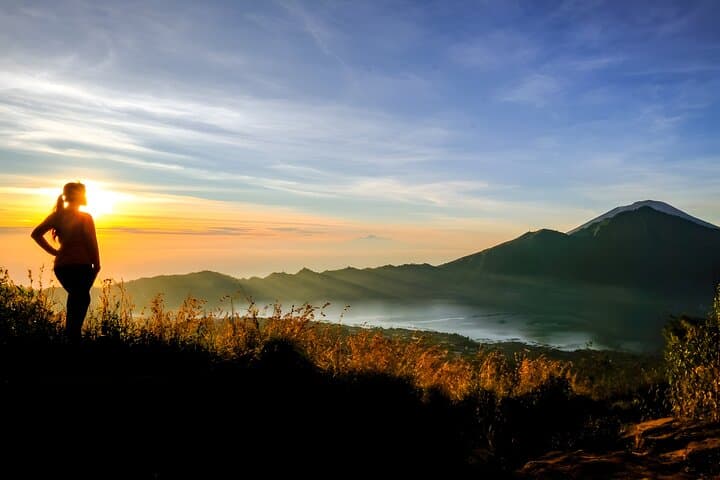


A pre-dawn van pulls away from a sleepy hotel and the road narrows into agricultural lanes lit by passing headlights. By torchlight the trail begins—loose volcanic scree, occasional stone steps and a steady switchback that forces a rhythm: one foot, the next, breath, repeat. As the sky brightens, steam curls from fumaroles and the ridge opens to a sudden horizon where Mount Agung pins the sunrise. A simple breakfast—steam eggs warmed by subterranean heat—arrives as the light spills across the caldera lake.
A pre-dawn van pulls away from a sleepy hotel and the road narrows into agricultural lanes lit by passing headlights. By torchlight the trail begins—loose volcanic scree, occasional stone steps and a steady switchback that forces a rhythm: one foot, the next, breath, repeat. As the sky brightens, steam curls from fumaroles and the ridge opens to a sudden horizon where Mount Agung pins the sunrise. A simple breakfast—steam eggs warmed by subterranean heat—arrives as the light spills across the caldera lake.
Geologically Mount Batur sits inside a large caldera created by a massive collapse; its current cone rises to about 1,717 m and remains among Bali’s most active volcanoes. For locals the mountain and the neighboring peaks are woven into Balinese Hindu practice and everyday life—ceremonies and offerings still occur in villages around the rim.
Expect steep, short sections and loose ash underfoot more than technical rock climbing. The guided rhythm of a local trekking guide keeps groups moving efficiently and provides context on recent eruptions, fumarole fields and the agricultural terraces you pass on the return.
Practical guidance: start times are early (around 1:30–2:00 AM) to reach the summit for sunrise, so plan for 4–5 hours of trekking and 8–9 hours total with transfers. Wear sturdy trail shoes, bring a headlamp and layers—temperatures drop on the ridge. Carry water, move at a steady pace on scree, and respect village customs when passing through settlements. The route is popular—book a guided transfer and expect basic provided breakfast at the top.