THE ADVENTURE COLLECTIVE® · Independent discovery and booking for outdoor travel

Ascend Mount Batur before dawn to watch sunlight spill across Lake Batur and neighboring peaks. This practical guide covers what to expect on the 2-hour volcanic hike, local context, and essential gear.
Ascend Mount Batur before dawn to watch sunlight spill across Lake Batur and neighboring peaks. This practical guide covers what to expect on the 2-hour volcanic hike, local context, and essential gear.
You step from the van into pre-dawn cool, headlamp slicing a path across black volcanic scree while stars slowly fade behind the silhouette of Bali’s jagged rim. The trail climbs steadily—first through sparse grasses, then loose cinder—each step a small negotiation with the mountain until the summit opens to the eastern horizon.
Verified experiences and guided adventures in the surrounding area.
Operated by Bali Hiking Tour · Kintamani, Bali
You step from the van into pre-dawn cool, headlamp slicing a path across black volcanic scree while stars slowly fade behind the silhouette of Bali’s jagged rim. The trail climbs steadily—first through sparse grasses, then loose cinder—each step a small negotiation with the mountain until the summit opens to the eastern horizon.
Mount Batur is an active caldera whose last large eruption was in the 20th century; its crater and nearby Lake Batur are central to local agriculture and Balinese ritual life. Geologically young and raw, the slopes are mostly volcanic ash and pumice with pockets of hardened lava; terraces and small farms hug the lower flanks, showing how people have adapted to fertile, volcanic soils.
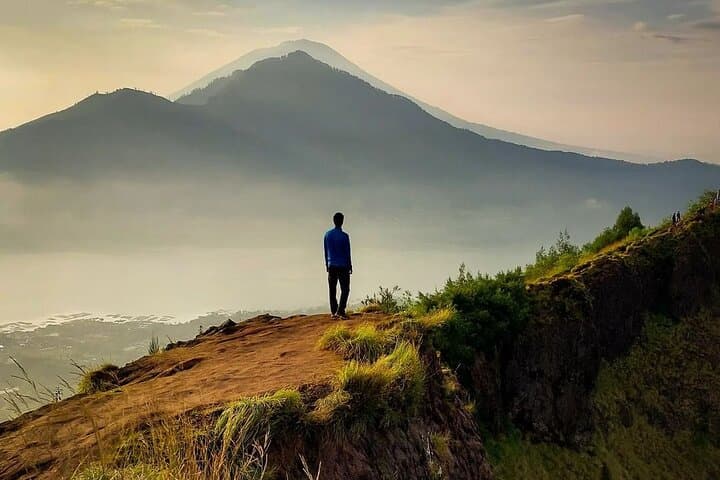
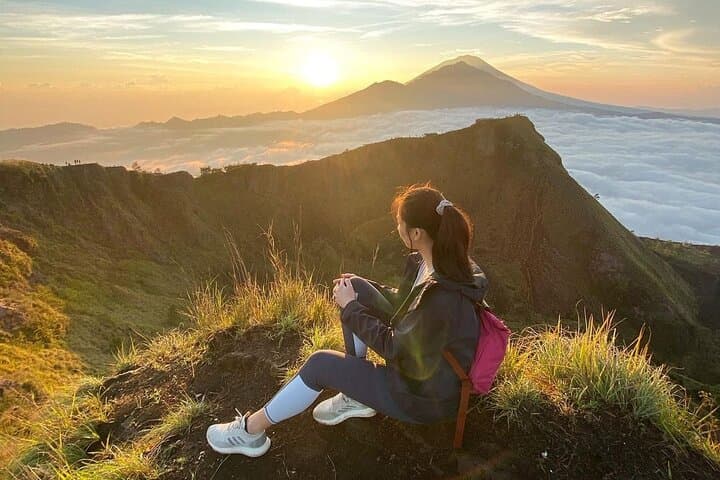
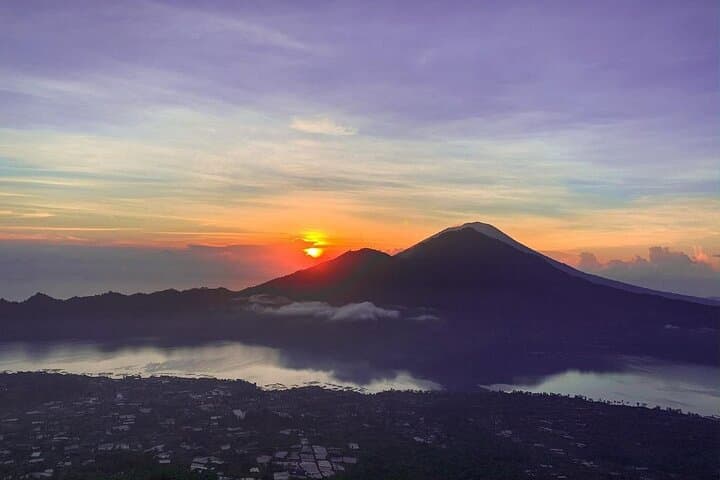
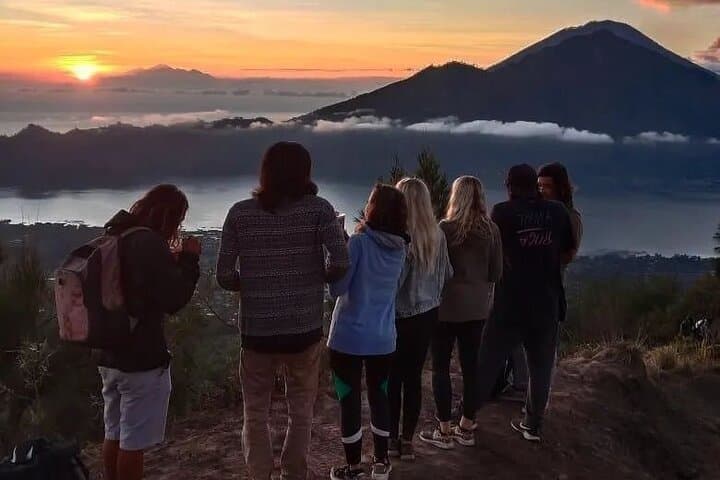
Culturally, guides are often local and knowledgeable about offerings, sunrise timing, and safe routes. Expect long-tailed macaques in the lower zones and a scattering of tropical birds. The payoff is a wide, unbroken sunrise over Lake Batur and neighboring Mount Agung—an elemental scene of light, steam, and ash.
Practical guidance: plan for a pre-dawn start, 1.5–2.5 hours ascent depending on pace, and loose, uneven terrain underfoot. Wear sturdy hiking shoes with good traction, bring 1–2 liters of water, an insulating layer for summit winds, and a headlamp with extra batteries. Follow your guide’s instructions on route choice and crater access—parts of the rim can be unstable. Allow time afterward for a short visit to local farms or hot springs near Toya Devasya.
This trek suits hikers comfortable on rocky, sometimes steep ground who want a short, high-reward climb with cultural context and dramatic sunrise views.
moderate.
4–8 hours.
Moderate fitness—able to hike on loose volcanic terrain for 1.5–3 hours with short steep sections
The ascent typically takes 1.5–2.5 hours depending on fitness; round-trip with transfers and sunrise viewing is usually 4–8 hours.
Guides monitor local volcanic activity; access can be restricted if authorities deem it unsafe—always follow guide and local advisories.
Basic stalls and local cafés exist near parking areas and in nearby villages, but bring snacks and water for the hike itself.
Entrance fees to Mount Batur area are typically included with organized tours or collected locally; confirm with your operator beforehand.
Mount Batur sits inside a larger caldera formed by massive eruptions; local communities have farmed the fertile slopes for generations and incorporate the mountain into Balinese ritual life.
Trails are vulnerable to erosion and litter; stick to marked routes, pack out trash, and support local guides who help manage foot traffic and protect fragile areas.
Bali Hiking Tour operates guided outdoor trips and adventures with an emphasis on safety, stewardship, and memorable experiences.
You step from the van into pre-dawn cool, headlamp slicing a path across black volcanic scree while stars slowly fade behind the silhouette of Bali’s jagged rim. The trail climbs steadily—first through sparse grasses, then loose cinder—each step a small negotiation with the mountain until the summit opens to the eastern horizon.
You step from the van into pre-dawn cool, headlamp slicing a path across black volcanic scree while stars slowly fade behind the silhouette of Bali’s jagged rim. The trail climbs steadily—first through sparse grasses, then loose cinder—each step a small negotiation with the mountain until the summit opens to the eastern horizon.
Mount Batur is an active caldera whose last large eruption was in the 20th century; its crater and nearby Lake Batur are central to local agriculture and Balinese ritual life. Geologically young and raw, the slopes are mostly volcanic ash and pumice with pockets of hardened lava; terraces and small farms hug the lower flanks, showing how people have adapted to fertile, volcanic soils.
Culturally, guides are often local and knowledgeable about offerings, sunrise timing, and safe routes. Expect long-tailed macaques in the lower zones and a scattering of tropical birds. The payoff is a wide, unbroken sunrise over Lake Batur and neighboring Mount Agung—an elemental scene of light, steam, and ash.
Practical guidance: plan for a pre-dawn start, 1.5–2.5 hours ascent depending on pace, and loose, uneven terrain underfoot. Wear sturdy hiking shoes with good traction, bring 1–2 liters of water, an insulating layer for summit winds, and a headlamp with extra batteries. Follow your guide’s instructions on route choice and crater access—parts of the rim can be unstable. Allow time afterward for a short visit to local farms or hot springs near Toya Devasya.
This trek suits hikers comfortable on rocky, sometimes steep ground who want a short, high-reward climb with cultural context and dramatic sunrise views.