THE ADVENTURE COLLECTIVE® · Independent discovery and booking for outdoor travel

Climb Mount Batur before dawn to stand on the rim of an active Bali volcano as the sun slices across Lake Batur. This practical guide covers what to expect on the 2-hour ascent, cultural context, and the gear and timing to make the sunrise worthwhile.
Climb Mount Batur before dawn to stand on the rim of an active Bali volcano as the sun slices across Lake Batur. This practical guide covers what to expect on the 2-hour ascent, cultural context, and the gear and timing to make the sunrise worthwhile.
Before dawn the trail breathes steam and soft headlamps thread a line up the slope of Gunung Batur. Climbers move in quiet cadence, the road behind them shrinking to a ribbon of taillights while the crater ahead begins to outline itself against a paling sky.
Verified experiences and guided adventures in the surrounding area.
Operated by Best Adventure In Bali · Kintamani, Bali
Before dawn the trail breathes steam and soft headlamps thread a line up the slope of Gunung Batur. Climbers move in quiet cadence, the road behind them shrinking to a ribbon of taillights while the crater ahead begins to outline itself against a paling sky.
Mount Batur is an active stratovolcano set inside a larger caldera at 1,717 m above sea level. The peak and the lake below are the result of repeated eruptions over millennia; local Balinese consider the mountain sacred and several small temples on its flanks speak to an ongoing cultural relationship between people and fire. Geologically, the Batur complex is younger than nearby Agung and sits in the volcanic arc created by the subduction of the Australian plate beneath Sunda.
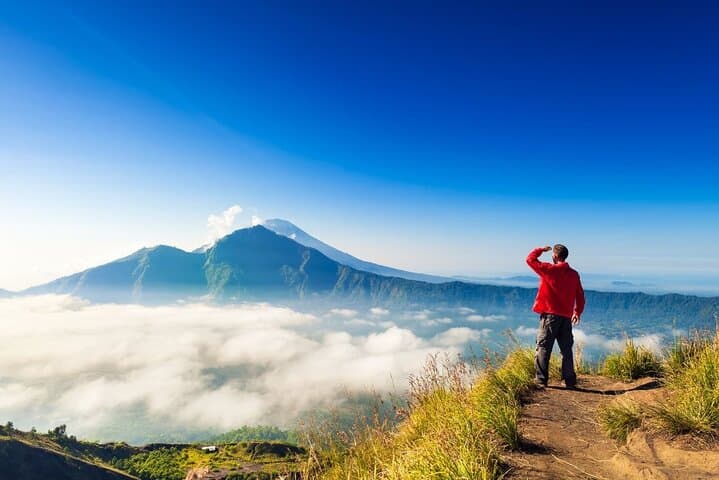
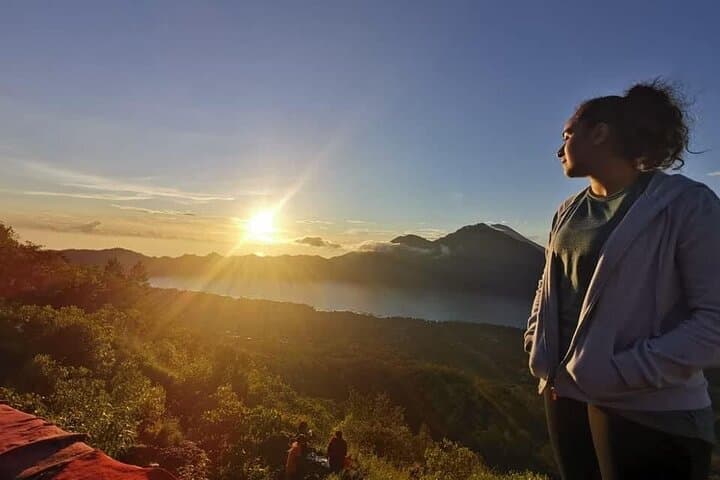
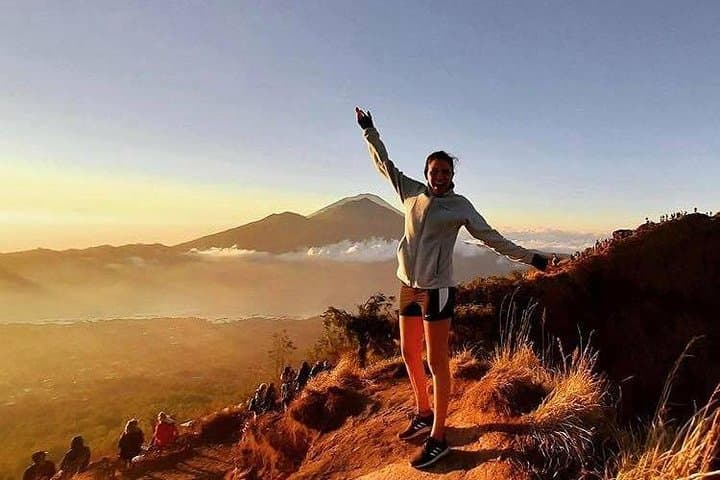
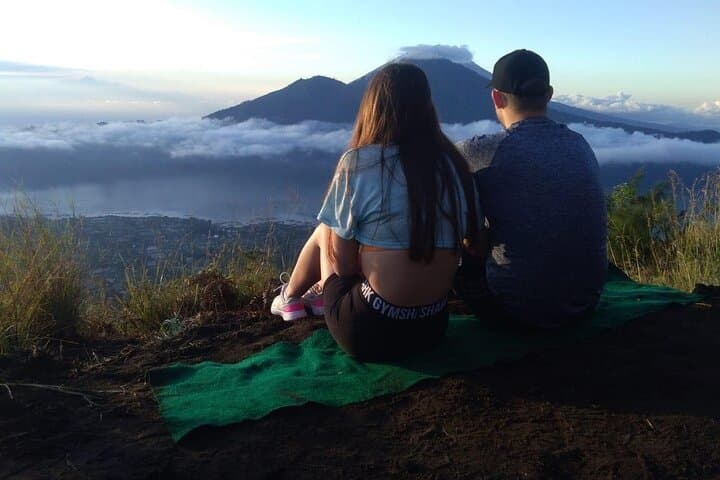
The ascent is straightforward but steep in sections — volcanic sand, loose gravel and rock that reward steady footing more than speed. Guides lead groups to a clear summit bench in roughly two hours where sunrise unfolds over Lake Batur and the rim’s serrated silhouette. Breakfast is often warmed by geothermal steam in nearby Toya Bungkah, a practical tradition born of the volcano’s heat.
Practical guidance: start around 1:00–2:00 a.m. to reach the summit for first light, wear grippy footwear and two lightweight layers for the chilly pre-dawn wind, carry 1–1.5 liters of water and a headlamp with fresh batteries. Respect temple areas and stay on established trails — volcanic terrain can shift and fragile soils recover slowly. Expect a 4–7 hour outing with early pickup from Ubud or nearby towns and a memorable, elemental sunrise at the crater rim.
moderate.
5–7 hours.
Moderate fitness—able to sustain a steady uphill hike of roughly 1.5–2 hours and manage uneven volcanic terrain.
Typical hiking time from base to summit is about 1.5–2 hours depending on fitness and trail conditions; descent is usually slightly faster.
Mount Batur is an active volcano but routinely guided treks operate with local monitoring; follow your guide’s instructions and check eruption advisories before booking.
Local guides are standard and included in many tours; they know the safest routes, cultural protocols and handle transport logistics.
Pre-dawn temperatures are cool and windy; the dry season gives clearer sunrises, while the wet season can bring low clouds and rain—dress accordingly.
Mount Batur sits inside a large caldera formed by major eruptions; it is culturally significant to Balinese Hindu communities and is dotted with small temples and ritual sites.
Stick to established trails, avoid disturbing temple sites, and pack out waste—visitor pressure and trail erosion are the main local impacts to manage.
Best Adventure In Bali operates guided outdoor trips and adventures with an emphasis on safety, stewardship, and memorable experiences.
Before dawn the trail breathes steam and soft headlamps thread a line up the slope of Gunung Batur. Climbers move in quiet cadence, the road behind them shrinking to a ribbon of taillights while the crater ahead begins to outline itself against a paling sky.
Before dawn the trail breathes steam and soft headlamps thread a line up the slope of Gunung Batur. Climbers move in quiet cadence, the road behind them shrinking to a ribbon of taillights while the crater ahead begins to outline itself against a paling sky.
Mount Batur is an active stratovolcano set inside a larger caldera at 1,717 m above sea level. The peak and the lake below are the result of repeated eruptions over millennia; local Balinese consider the mountain sacred and several small temples on its flanks speak to an ongoing cultural relationship between people and fire. Geologically, the Batur complex is younger than nearby Agung and sits in the volcanic arc created by the subduction of the Australian plate beneath Sunda.
The ascent is straightforward but steep in sections — volcanic sand, loose gravel and rock that reward steady footing more than speed. Guides lead groups to a clear summit bench in roughly two hours where sunrise unfolds over Lake Batur and the rim’s serrated silhouette. Breakfast is often warmed by geothermal steam in nearby Toya Bungkah, a practical tradition born of the volcano’s heat.
Practical guidance: start around 1:00–2:00 a.m. to reach the summit for first light, wear grippy footwear and two lightweight layers for the chilly pre-dawn wind, carry 1–1.5 liters of water and a headlamp with fresh batteries. Respect temple areas and stay on established trails — volcanic terrain can shift and fragile soils recover slowly. Expect a 4–7 hour outing with early pickup from Ubud or nearby towns and a memorable, elemental sunrise at the crater rim.