THE ADVENTURE COLLECTIVE® · Independent discovery and booking for outdoor travel

Climb Bali’s highest volcano for a pre-dawn summit that rewards effort with expansive views and island-wide light. Choose the grueling Besakih route for a full summit push or Pasar Agung for a shorter, still-stunning ascent.
Climb Bali’s highest volcano for a pre-dawn summit that rewards effort with expansive views and island-wide light. Choose the grueling Besakih route for a full summit push or Pasar Agung for a shorter, still-stunning ascent.
Night air on Bali tightens as trekkers collect at a hotel pickup and climb into waiting vehicles bound for the volcano’s shoulders. By torchlight the trail eats distance in a steady, breath-driven rhythm; roots, volcanic scree and occasional limestone outcrops mark the route as the island sleeps beneath you. At the rim, wind slices and the sky loosens color — a slow, bright proof of why people rise at midnight to reach 3,142 meters for sunrise.
Verified experiences and guided adventures in the surrounding area.
Operated by CV Bali Trekking Tour · Rendang, Bali
Night air on Bali tightens as trekkers collect at a hotel pickup and climb into waiting vehicles bound for the volcano’s shoulders. By torchlight the trail eats distance in a steady, breath-driven rhythm; roots, volcanic scree and occasional limestone outcrops mark the route as the island sleeps beneath you. At the rim, wind slices and the sky loosens color — a slow, bright proof of why people rise at midnight to reach 3,142 meters for sunrise.
Geologically Mount Agung is an active stratovolcano carved of andesitic lava; its 1963 eruption reshaped the island and remains a significant event in local memory. Culturally the mountain is central to Balinese Hindu practice — Besakih Temple sits on its lower slopes and plays a role in community rites, giving the climb spiritual context. Ecology shifts with elevation: humid lowland forest gives way to sparse alpine grass and rock near the summit.
Practical details shape the experience. Two main start points exist: Besakih (Pengubengan) is the longer, steeper option (~6 hours uphill to the summit), while Pasar Agung is shorter and reaches a point about 100 meters below the true summit in roughly 3–4 hours. Treks begin around 22:00–00:30 with guided groups, include bottled water, breakfast, trekking poles and flashlights, and typically return you to your hotel by midday. Expect steep, exposed sections, cool summit winds and variable footing; pack layered clothing, a reliable headlamp, good boots and enough hydration. Guides manage route-finding and pace; because of altitude and terrain, the trek is best for fit hikers comfortable with sustained climbs and night hiking.
difficult.
10–16 hours.
Require high aerobic fitness and leg stamina; comfortable with long, steep ascents and night hiking
Expect 3–4 hours uphill from Pasar Agung and about 6 hours from Besakih (Pengubengan) to reach the summit area; total door-to-door time is 10–16 hours depending on route and transfers.
No technical climbing skills are required, but you should have experience with long day hikes, night hiking and steep terrain.
Dry season months (April–October) offer more reliable conditions and clearer sunrises; departures start around 22:00–00:30 to reach the ridge before dawn.
Not recommended for young children, pregnant travelers, or people with serious cardiovascular or spinal conditions; consult the operator and your physician.
Mount Agung’s 1963 eruption was one of Indonesia’s largest 20th-century eruptions and reshaped local settlements; Besakih Temple below has long cultural importance for Balinese Hindu ceremonies.
Trails pass fragile volcanic soils and alpine grasses—stick to established paths, avoid litter, and use local guides who practice low-impact trekking.
CV Bali Trekking Tour operates guided outdoor trips and adventures with an emphasis on safety, stewardship, and memorable experiences.
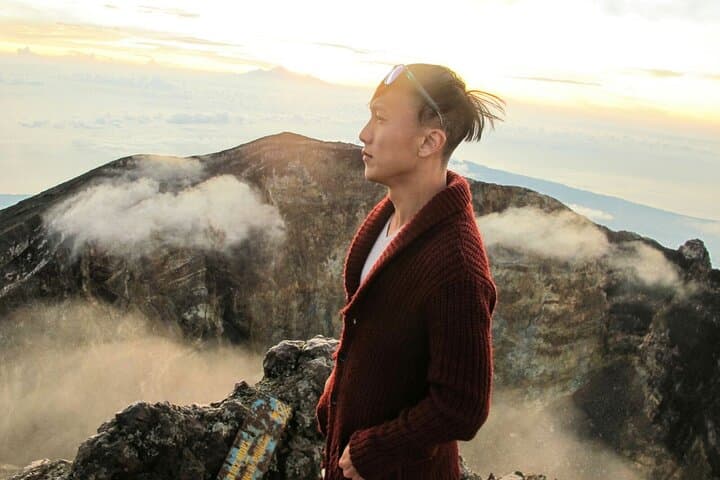
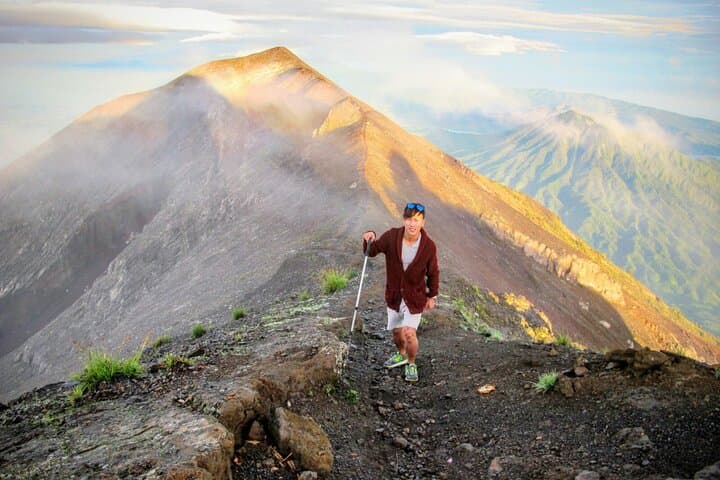
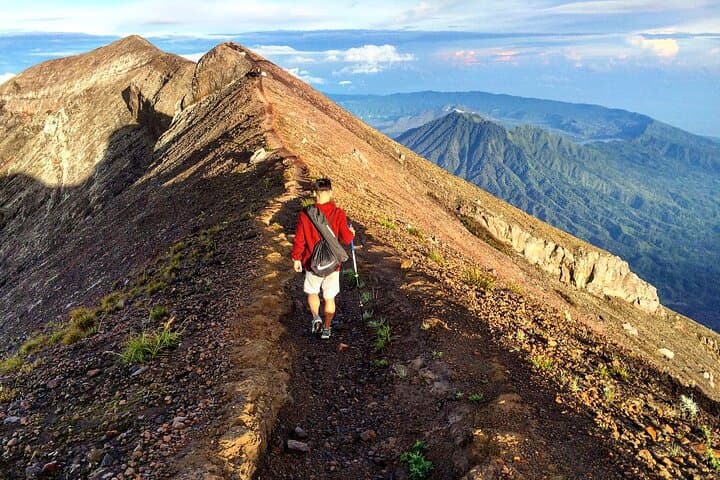
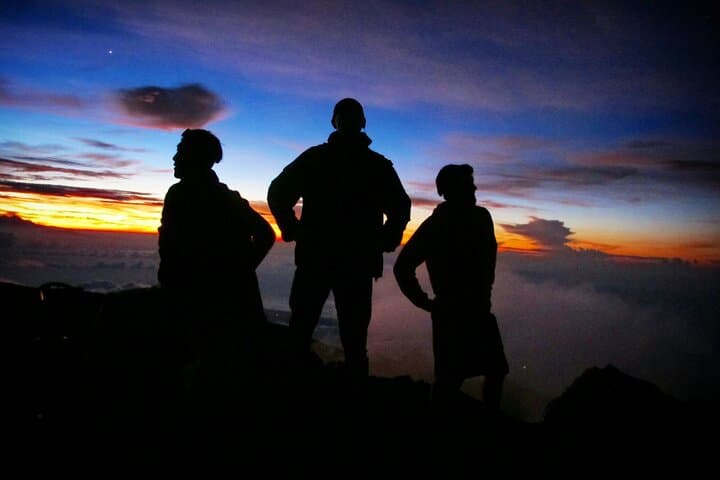
Night air on Bali tightens as trekkers collect at a hotel pickup and climb into waiting vehicles bound for the volcano’s shoulders. By torchlight the trail eats distance in a steady, breath-driven rhythm; roots, volcanic scree and occasional limestone outcrops mark the route as the island sleeps beneath you. At the rim, wind slices and the sky loosens color — a slow, bright proof of why people rise at midnight to reach 3,142 meters for sunrise.
Night air on Bali tightens as trekkers collect at a hotel pickup and climb into waiting vehicles bound for the volcano’s shoulders. By torchlight the trail eats distance in a steady, breath-driven rhythm; roots, volcanic scree and occasional limestone outcrops mark the route as the island sleeps beneath you. At the rim, wind slices and the sky loosens color — a slow, bright proof of why people rise at midnight to reach 3,142 meters for sunrise.
Geologically Mount Agung is an active stratovolcano carved of andesitic lava; its 1963 eruption reshaped the island and remains a significant event in local memory. Culturally the mountain is central to Balinese Hindu practice — Besakih Temple sits on its lower slopes and plays a role in community rites, giving the climb spiritual context. Ecology shifts with elevation: humid lowland forest gives way to sparse alpine grass and rock near the summit.
Practical details shape the experience. Two main start points exist: Besakih (Pengubengan) is the longer, steeper option (~6 hours uphill to the summit), while Pasar Agung is shorter and reaches a point about 100 meters below the true summit in roughly 3–4 hours. Treks begin around 22:00–00:30 with guided groups, include bottled water, breakfast, trekking poles and flashlights, and typically return you to your hotel by midday. Expect steep, exposed sections, cool summit winds and variable footing; pack layered clothing, a reliable headlamp, good boots and enough hydration. Guides manage route-finding and pace; because of altitude and terrain, the trek is best for fit hikers comfortable with sustained climbs and night hiking.