THE ADVENTURE COLLECTIVE® · Independent discovery and booking for outdoor travel

Board a midnight transfer and head toward Bali’s highest and most sacred peak. This guided sunrise ascent of Mount Agung blends steep volcanic terrain, cultural significance and a summit dawn that rewards a demanding climb.
Board a midnight transfer and head toward Bali’s highest and most sacred peak. This guided sunrise ascent of Mount Agung blends steep volcanic terrain, cultural significance and a summit dawn that rewards a demanding climb.
At midnight a headlamp pool gathers on a dark road toward Pasar Agung; the island sleeps while the mountain’s silhouette sharpens against the sky. You walk where locals consider holy ground, the air cooling as the trail pitches up through black volcanic scree and sparse montane forest. By headlamp and guide you climb, the slope pulling at calves and lungs until the horizon lightens and the summit unfolds—an uncompromising, rewardingly raw sunrise above Bali.
Verified experiences and guided adventures in the surrounding area.
Operated by Bali Volcano Tour · Amlapura, Bali
At midnight a headlamp pool gathers on a dark road toward Pasar Agung; the island sleeps while the mountain’s silhouette sharpens against the sky. You walk where locals consider holy ground, the air cooling as the trail pitches up through black volcanic scree and sparse montane forest. By headlamp and guide you climb, the slope pulling at calves and lungs until the horizon lightens and the summit unfolds—an uncompromising, rewardingly raw sunrise above Bali.
Mount Agung is Bali’s highest peak at about 3,031 m and the spiritual heart of eastern Bali, home to the Besakih temple complex on its lower flanks. Geologically it’s a stratovolcano with a history of explosive eruptions, most recently causing island-wide disruption in 2017; that volatility is part of the landscape’s drama. Culturally, the mountain is active in Balinese Hindu ritual life—respect and local guidance at temple access points are expected.
Practical guidance: most organized climbs start late evening and reach the summit in roughly 4–5 hours depending on route (Pasar Agung or Besakih), with descent taking similar time—this tour lists a total outing around 6–8 hours. Terrain alternates steep dirt, loose rock and steps; expect strenuous ascent, uneven footing and rapid temperature swings at the top. Bring a reliable headlamp, warm layers, sturdy hiking boots and water; a local guide handles navigation and temple protocols. Not recommended for those with cardiovascular, spinal issues or pregnancy. Time your climb in the dry season for firmer trails and clearer summit views, and always pack out what you bring in to protect this sacred landscape.
challenging.
6–8 hours.
Requires a high level of cardiovascular fitness and leg strength; regular hikers or runners will find it more manageable.
Organized climbs typically run 6–8 hours total: about 4–5 hours to the summit from the upper trailhead and 2–3 hours to descend, depending on route and pace.
Guides are strongly recommended and often required for safety, route navigation and to respect temple access rules; the listed tour includes a local English-speaking guide.
The dry season (roughly April–October) offers firmer trails and clearer summit views; avoid heavy rain months when trails become slippery and visibility drops.
People with serious heart conditions, recent spinal injuries, or who are pregnant should not attempt this hike; it’s strenuous and involves sustained uphill effort.
Mount Agung is Bali’s tallest volcano and central to Balinese Hindu practice; Besakih, the ‘mother temple,’ sits on its slopes and has been a religious focal point for centuries.
Trails and temple areas are sensitive—stick to marked paths, respect ritual spaces, and pack out waste to reduce impact on this sacred landscape.
Bali Volcano Tour operates guided outdoor trips and adventures with an emphasis on safety, stewardship, and memorable experiences.
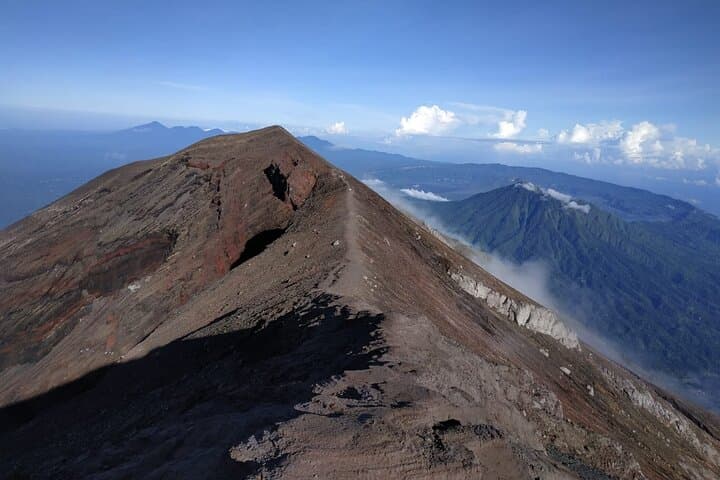
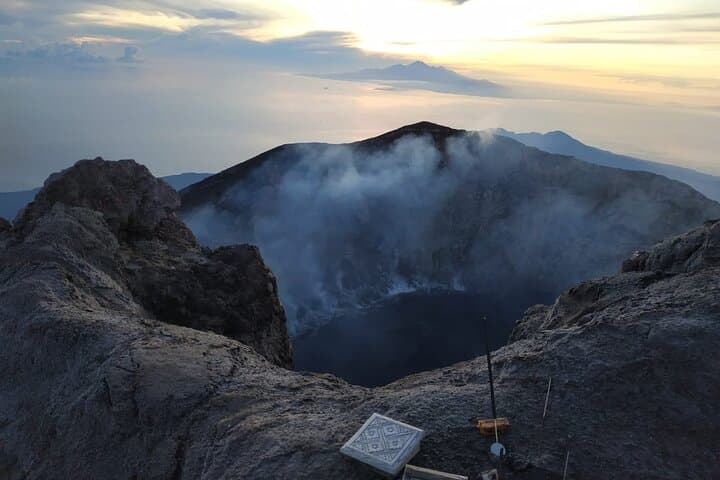
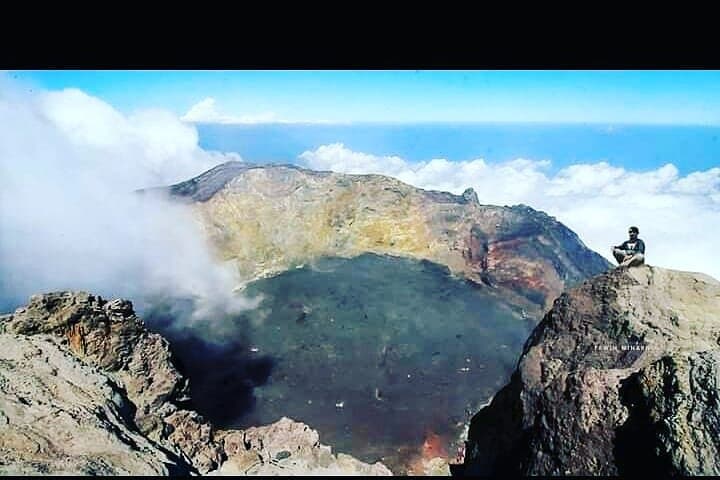
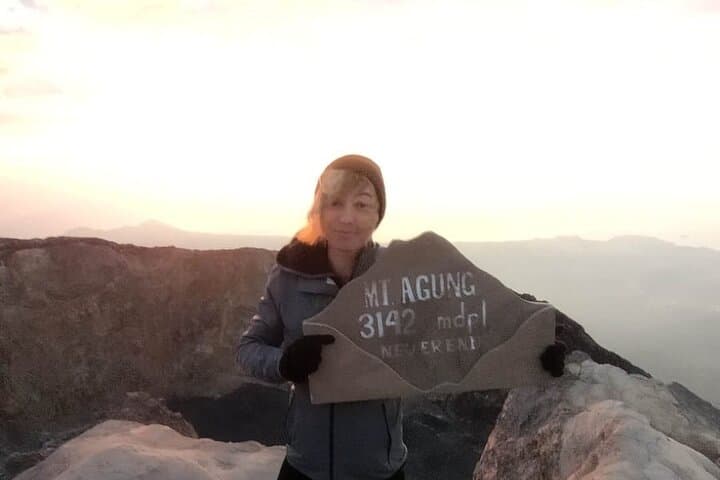
At midnight a headlamp pool gathers on a dark road toward Pasar Agung; the island sleeps while the mountain’s silhouette sharpens against the sky. You walk where locals consider holy ground, the air cooling as the trail pitches up through black volcanic scree and sparse montane forest. By headlamp and guide you climb, the slope pulling at calves and lungs until the horizon lightens and the summit unfolds—an uncompromising, rewardingly raw sunrise above Bali.
At midnight a headlamp pool gathers on a dark road toward Pasar Agung; the island sleeps while the mountain’s silhouette sharpens against the sky. You walk where locals consider holy ground, the air cooling as the trail pitches up through black volcanic scree and sparse montane forest. By headlamp and guide you climb, the slope pulling at calves and lungs until the horizon lightens and the summit unfolds—an uncompromising, rewardingly raw sunrise above Bali.
Mount Agung is Bali’s highest peak at about 3,031 m and the spiritual heart of eastern Bali, home to the Besakih temple complex on its lower flanks. Geologically it’s a stratovolcano with a history of explosive eruptions, most recently causing island-wide disruption in 2017; that volatility is part of the landscape’s drama. Culturally, the mountain is active in Balinese Hindu ritual life—respect and local guidance at temple access points are expected.
Practical guidance: most organized climbs start late evening and reach the summit in roughly 4–5 hours depending on route (Pasar Agung or Besakih), with descent taking similar time—this tour lists a total outing around 6–8 hours. Terrain alternates steep dirt, loose rock and steps; expect strenuous ascent, uneven footing and rapid temperature swings at the top. Bring a reliable headlamp, warm layers, sturdy hiking boots and water; a local guide handles navigation and temple protocols. Not recommended for those with cardiovascular, spinal issues or pregnancy. Time your climb in the dry season for firmer trails and clearer summit views, and always pack out what you bring in to protect this sacred landscape.