THE ADVENTURE COLLECTIVE® · Independent discovery and booking for outdoor travel

Glide across the Nile to Philae’s island temple, then step into the color and hospitality of a Nubian village. This private motorboat tour pairs an Egyptologist’s insights with flexible pacing and hotel transfers for an accessible Aswan day trip.
Glide across the Nile to Philae’s island temple, then step into the color and hospitality of a Nubian village. This private motorboat tour pairs an Egyptologist’s insights with flexible pacing and hotel transfers for an accessible Aswan day trip.
A low-profile motorboat slips away from Aswan’s quay at first light, the Nile opening like a quiet road that dares you forward. The engine’s whisper, the sun burning through a thin strip of morning haze, and the temple’s silhouette growing out of the river set the tone: historical gravity and human-scale intimacy.
Verified experiences and guided adventures in the surrounding area.
Operated by Saray El-Nile · Aswan, Aswan Governorate
A low-profile motorboat slips away from Aswan’s quay at first light, the Nile opening like a quiet road that dares you forward. The engine’s whisper, the sun burning through a thin strip of morning haze, and the temple’s silhouette growing out of the river set the tone: historical gravity and human-scale intimacy.
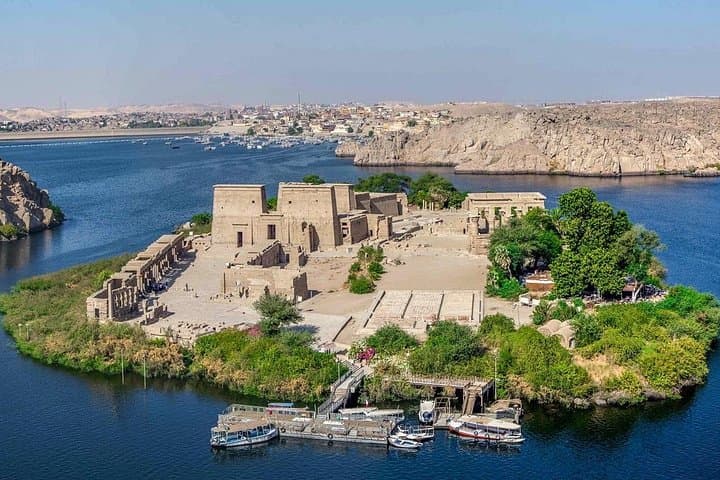
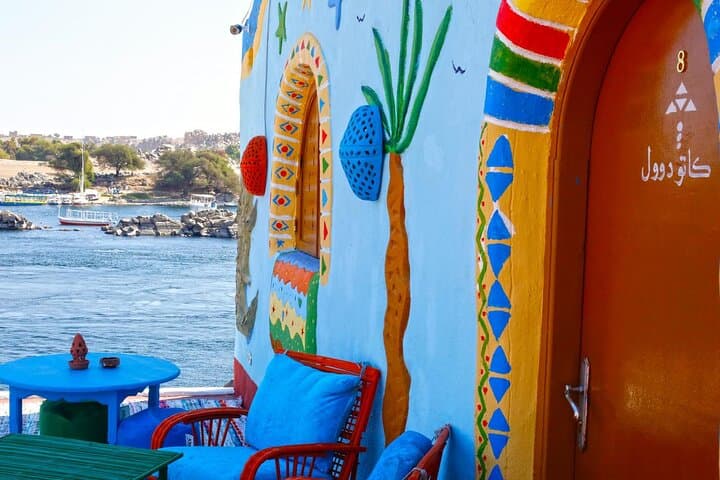
Philae is a compact, richly carved complex dedicated to Isis, relocated stone-by-stone to Agilkia Island during the Aswan High Dam rescue. Columns, reliefs and stairways still read like an illustrated map of late-pharaonic ritual and Roman-era reuse. Across the water, Nubian villages present a very different archive—painted façades, handmade textiles and oral histories passed over mint tea and warm invitations.
Geologically, the Aswan region sits on hard granite outcrops that interrupt the Nile’s flow, shaping islands and traditional river navigation. Culturally, Nubian life along these banks combines ancient craft, seasonal rhythms set by the river, and resilient local identity that adapted to dam-induced displacement in the 20th century.
Practical details matter: the private motorboat ride and Egyptologist guide let you skip large crowds and set the pace; the full experience runs about 5½ hours including hotel transfers, bottled water and a village tea stop. Dress modestly for temple interiors and village visits, bring sun protection, and keep small bills for crafts and tips. Morning departures offer cooler light for photography and quieter pier traffic. Expect easy walking on stone steps and compact village lanes—this is an accessible, informative day that pairs archaeology with a living river culture.
easy.
5–6 hours.
Suitable for travelers with basic mobility; involves short walks, steps, and stable boat transfers.
The private tour runs approximately 5½ hours door-to-door, including boat transfers and a village tea stop.
Yes, the itinerary lists admission to Philae Temple as included with the tour.
Yes — private hotel pickup and drop-off in Aswan are included in the tour package.
The tour is described as physically easy; however, boat boarding and temple steps may require assistance for those with limited mobility or small children.
Philae was one of the last active centers for the worship of Isis and was moved to Agilkia Island during the 1960s to protect it from flooding after the Aswan High Dam’s construction.
Relocation and restoration projects preserved Philae, and responsible tourism helps sustain local Nubian communities—support local guides and avoid disturbing archaeological surfaces.
Saray El-Nile operates guided outdoor trips and adventures with an emphasis on safety, stewardship, and memorable experiences.
A low-profile motorboat slips away from Aswan’s quay at first light, the Nile opening like a quiet road that dares you forward. The engine’s whisper, the sun burning through a thin strip of morning haze, and the temple’s silhouette growing out of the river set the tone: historical gravity and human-scale intimacy.
A low-profile motorboat slips away from Aswan’s quay at first light, the Nile opening like a quiet road that dares you forward. The engine’s whisper, the sun burning through a thin strip of morning haze, and the temple’s silhouette growing out of the river set the tone: historical gravity and human-scale intimacy.
Philae is a compact, richly carved complex dedicated to Isis, relocated stone-by-stone to Agilkia Island during the Aswan High Dam rescue. Columns, reliefs and stairways still read like an illustrated map of late-pharaonic ritual and Roman-era reuse. Across the water, Nubian villages present a very different archive—painted façades, handmade textiles and oral histories passed over mint tea and warm invitations.
Geologically, the Aswan region sits on hard granite outcrops that interrupt the Nile’s flow, shaping islands and traditional river navigation. Culturally, Nubian life along these banks combines ancient craft, seasonal rhythms set by the river, and resilient local identity that adapted to dam-induced displacement in the 20th century.
Practical details matter: the private motorboat ride and Egyptologist guide let you skip large crowds and set the pace; the full experience runs about 5½ hours including hotel transfers, bottled water and a village tea stop. Dress modestly for temple interiors and village visits, bring sun protection, and keep small bills for crafts and tips. Morning departures offer cooler light for photography and quieter pier traffic. Expect easy walking on stone steps and compact village lanes—this is an accessible, informative day that pairs archaeology with a living river culture.