THE ADVENTURE COLLECTIVE® · Independent discovery and booking for outdoor travel

Feel the wind and see Silesia from an open two-seat motor hang glider on a 20-minute flight over Gliwice. Practical briefing, helmets with intercom, and clear views of lakes and the historic Gliwice Radio Tower.
Feel the wind and see Silesia from an open two-seat motor hang glider on a 20-minute flight over Gliwice. Practical briefing, helmets with intercom, and clear views of lakes and the historic Gliwice Radio Tower.
You sit strapped into an open two-seat motor hang glider at a small Silesian airfield. The propeller growls, the wing lifts, and wind immediately dares you—no cockpit, only the sky and the light sway of the frame. Over the next twenty minutes fields, lakes and the urban grid of Gliwice unfold beneath you; clouds sometimes billow below like a slow-moving sea.
Verified experiences and guided adventures in the surrounding area.
Operated by Izifly · Gliwice, Silesian Voivodeship
You sit strapped into an open two-seat motor hang glider at a small Silesian airfield. The propeller growls, the wing lifts, and wind immediately dares you—no cockpit, only the sky and the light sway of the frame. Over the next twenty minutes fields, lakes and the urban grid of Gliwice unfold beneath you; clouds sometimes billow below like a slow-moving sea.
The landscape here reflects heavy industry and rural pockets: Silesian coal basins give way to farm plots and reservoirs. From above you can pick out the 111 m Gliwice Radio Tower, linked to the 1939 Gleiwitz incident, and the angular roofs of city halls and factories that define regional history. Geology is unassuming—gentle lowlands cut by river valleys—yet the human imprint shapes what you’ll see.
Culturally, Silesia blends Polish and Central European influences; many local teams and roadside diners reflect a working-region pride. Flights emphasize scenery and sensation: operators point out lakes and historic sites while pilots manage throttle and lines.
Practical guidance: flights run about 20 minutes in the air (allow extra for briefing), maximum weight about 110 kg, and helmets with intercoms are provided. Not recommended for pregnant travelers or those with significant heart issues. Expect speeds up to 120 km/h during maneuvers; wear sturdy shoes, windproof layers, and secure cameras with straps. Book mornings or late afternoons for better light and calmer thermals; operators cancel in bad weather and usually refund with 24+ hour notice.
This is a brief, direct way to feel airborne over Silesia—part sightseeing, part adrenaline ride, all open-air exposure.
easy.
20 minutes (flight); allow 1–2 hours total for check-in and briefing.
Suitable for most fitness levels—passenger role requires no physical exertion but stable mobility for boarding
The airborne portion is 20 minutes; allow 1–2 hours total for briefing, harnessing and debrief. Helmets with intercom are provided.
Maximum passenger weight is around 110 kg. Not recommended for pregnant travelers or anyone with serious cardiovascular conditions—check with the operator before booking.
Operators cancel flights in unsafe weather (low clouds, high winds, precipitation) and typically offer refunds if canceled 24+ hours before departure or due to poor conditions.
Yes—securely mounted cameras or devices with straps are generally allowed; loose items may be prohibited for safety reasons.
Gliwice sits in Silesia, an industrial region shaped by coal and steel; the nearby radio tower is linked to the 1939 Gleiwitz incident that preceded World War II.
Operators follow local airfield rules to limit disturbance; passengers should avoid noisy approaches to protected wetland edges and respect landing zones to reduce habitat impact.
Izifly operates guided outdoor trips and adventures with an emphasis on safety, stewardship, and memorable experiences.
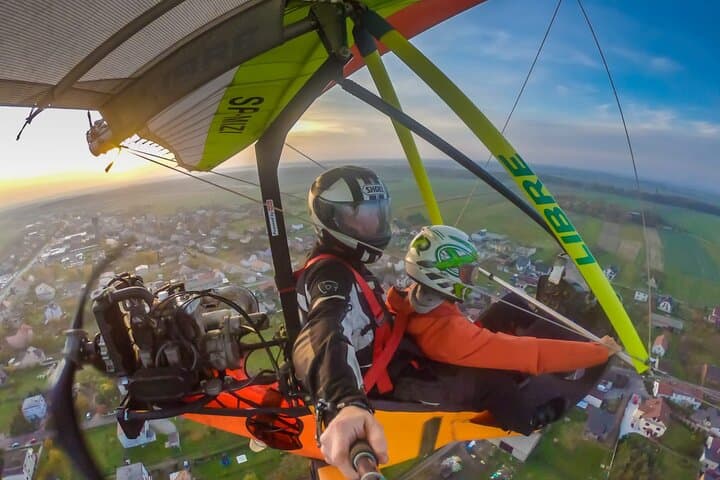
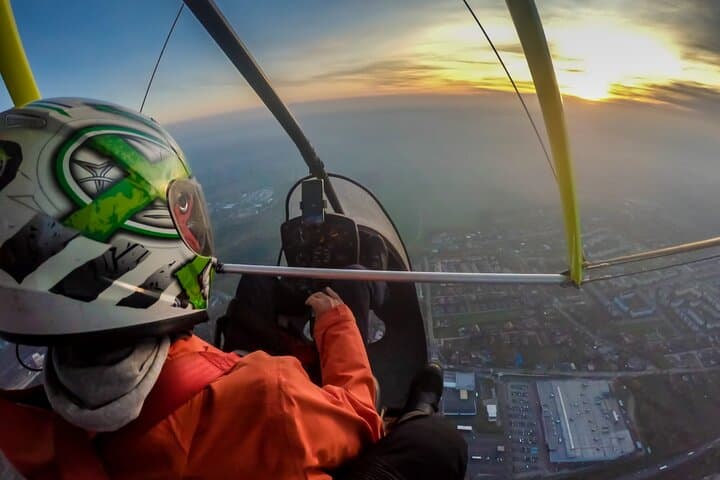
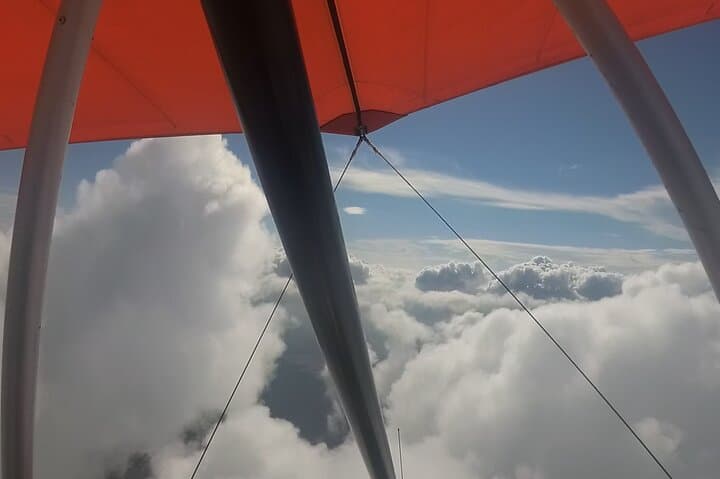
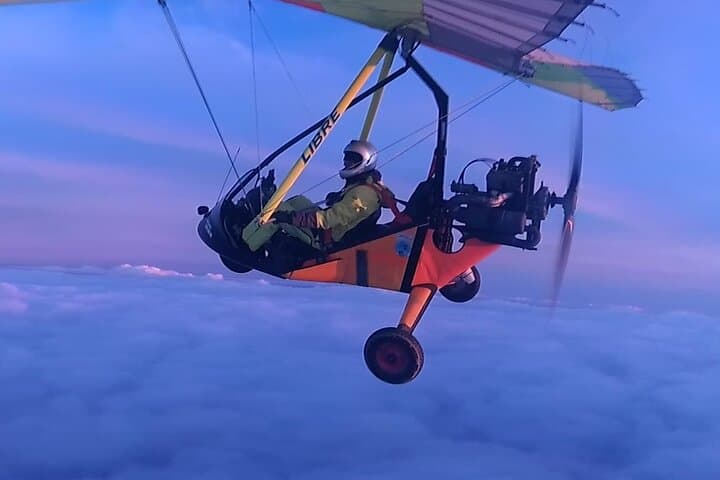
You sit strapped into an open two-seat motor hang glider at a small Silesian airfield. The propeller growls, the wing lifts, and wind immediately dares you—no cockpit, only the sky and the light sway of the frame. Over the next twenty minutes fields, lakes and the urban grid of Gliwice unfold beneath you; clouds sometimes billow below like a slow-moving sea.
You sit strapped into an open two-seat motor hang glider at a small Silesian airfield. The propeller growls, the wing lifts, and wind immediately dares you—no cockpit, only the sky and the light sway of the frame. Over the next twenty minutes fields, lakes and the urban grid of Gliwice unfold beneath you; clouds sometimes billow below like a slow-moving sea.
The landscape here reflects heavy industry and rural pockets: Silesian coal basins give way to farm plots and reservoirs. From above you can pick out the 111 m Gliwice Radio Tower, linked to the 1939 Gleiwitz incident, and the angular roofs of city halls and factories that define regional history. Geology is unassuming—gentle lowlands cut by river valleys—yet the human imprint shapes what you’ll see.
Culturally, Silesia blends Polish and Central European influences; many local teams and roadside diners reflect a working-region pride. Flights emphasize scenery and sensation: operators point out lakes and historic sites while pilots manage throttle and lines.
Practical guidance: flights run about 20 minutes in the air (allow extra for briefing), maximum weight about 110 kg, and helmets with intercoms are provided. Not recommended for pregnant travelers or those with significant heart issues. Expect speeds up to 120 km/h during maneuvers; wear sturdy shoes, windproof layers, and secure cameras with straps. Book mornings or late afternoons for better light and calmer thermals; operators cancel in bad weather and usually refund with 24+ hour notice.
This is a brief, direct way to feel airborne over Silesia—part sightseeing, part adrenaline ride, all open-air exposure.