THE ADVENTURE COLLECTIVE® · Independent discovery and booking for outdoor travel

Take a full-day loop from Mostar to Sarajevo with a Konjic coffee break and several hours to explore Sarajevo’s Ottoman bazaar, historic bridges, and key World War I sites. This practical day trip blends river scenery with dense cultural history.
Take a full-day loop from Mostar to Sarajevo with a Konjic coffee break and several hours to explore Sarajevo’s Ottoman bazaar, historic bridges, and key World War I sites. This practical day trip blends river scenery with dense cultural history.
You step onto the shaded side of the minivan in Mostar as morning light hits the Neretva; the guide tucks luggage in and the road heads north through karst hills and river-cut valleys.
Verified experiences and guided adventures in the surrounding area.
Operated by iHouse Travel · Mostar, Herzegovina-Neretva Canton
You step onto the shaded side of the minivan in Mostar as morning light hits the Neretva; the guide tucks luggage in and the road heads north through karst hills and river-cut valleys.
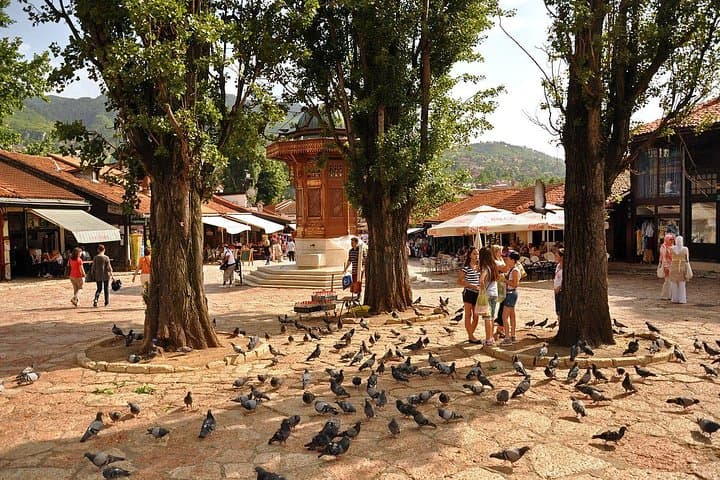
The route passes Konjic, where an Ottoman-era stone bridge arches over swift turquoise water — a short coffee break here places you beside the same river that shaped local trade routes for centuries. Arriving in Sarajevo feels like crossing eras: Ottoman bazaars give way to Austro-Hungarian facades and 20th-century scars. Walk Baščaršija to sample ćevapi smells and copperware shops, then pause at Latinska ćuprija, where a single day in 1914 changed Europe.
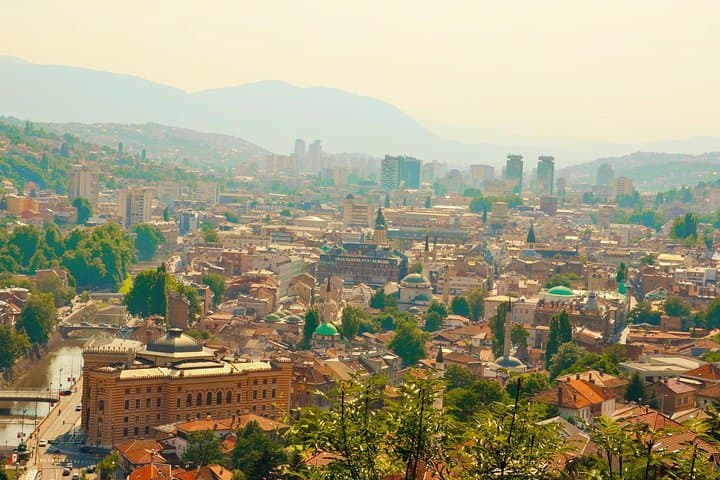
Geology is visible in the limestone ridges framing the valley; the Miljacka River threads the city, pushing the rhythm of daily life. Cultural layers are compact: mosques, Orthodox and Catholic churches, and Austro-Hungarian boulevards sit within a few blocks.
Practical guide: the tour is a full-day loop from Mostar — expect 10 hours round-trip with several hours to explore Sarajevo on foot. Cobbled streets and uneven bridge stones demand sturdy shoes and steady footing. Cash (convertible marks) is useful for small vendors; museums and specialty sites may require separate tickets. Plan priorities before arrival — Baščaršija, the Latin Bridge, the Gazi Husrev-beg Mosque, or the Tunnel of Hope — so you use your time efficiently. Stay hydrated, carry a light layer for changing valley temperatures, and keep your camera ready: the city rewards slow walking and curious eyes.
easy.
10 hours.
Suitable for most fitness levels; involves several hours of moderate walking and standing on uneven surfaces.
The tour runs approximately 10 hours total, including transit time and a few hours to explore Sarajevo independently.
The tour vehicle and stops are listed as wheelchair accessible, but some historic sites and streets in Sarajevo have uneven surfaces—check specifics with the operator.
Meals are not included; you’ll have time to buy food in Baščaršija or nearby cafes during the free time in Sarajevo.
No border-crossing is involved within Bosnia and Herzegovina, but bring ID; visa requirements depend on your nationality—confirm beforehand.
The corridor between Mostar and Sarajevo reflects Ottoman trade routes, Austro-Hungarian urban planning and 20th-century conflict; Latinska ćuprija is linked to the 1914 assassination that sparked World War I.
Visitor pressure affects riverbanks and historic bridges; support local businesses, avoid littering, and stay on marked streets to protect fragile urban and riparian habitats.
iHouse Travel operates guided outdoor trips and adventures with an emphasis on safety, stewardship, and memorable experiences.
You step onto the shaded side of the minivan in Mostar as morning light hits the Neretva; the guide tucks luggage in and the road heads north through karst hills and river-cut valleys.
You step onto the shaded side of the minivan in Mostar as morning light hits the Neretva; the guide tucks luggage in and the road heads north through karst hills and river-cut valleys.
The route passes Konjic, where an Ottoman-era stone bridge arches over swift turquoise water — a short coffee break here places you beside the same river that shaped local trade routes for centuries. Arriving in Sarajevo feels like crossing eras: Ottoman bazaars give way to Austro-Hungarian facades and 20th-century scars. Walk Baščaršija to sample ćevapi smells and copperware shops, then pause at Latinska ćuprija, where a single day in 1914 changed Europe.
Geology is visible in the limestone ridges framing the valley; the Miljacka River threads the city, pushing the rhythm of daily life. Cultural layers are compact: mosques, Orthodox and Catholic churches, and Austro-Hungarian boulevards sit within a few blocks.
Practical guide: the tour is a full-day loop from Mostar — expect 10 hours round-trip with several hours to explore Sarajevo on foot. Cobbled streets and uneven bridge stones demand sturdy shoes and steady footing. Cash (convertible marks) is useful for small vendors; museums and specialty sites may require separate tickets. Plan priorities before arrival — Baščaršija, the Latin Bridge, the Gazi Husrev-beg Mosque, or the Tunnel of Hope — so you use your time efficiently. Stay hydrated, carry a light layer for changing valley temperatures, and keep your camera ready: the city rewards slow walking and curious eyes.