THE ADVENTURE COLLECTIVE® · Independent discovery and booking for outdoor travel

Walk through surviving bunkers, trenches and wartime vantage points in a focused two-hour tour of Mostar’s urban frontlines. Guides combine on-site artifacts with personal accounts to explain the city’s wartime experience and postwar recovery.
Walk through surviving bunkers, trenches and wartime vantage points in a focused two-hour tour of Mostar’s urban frontlines. Guides combine on-site artifacts with personal accounts to explain the city’s wartime experience and postwar recovery.
You step off the minivan and the city’s stonework and river noise condense into a single, heavy silence. The guide leads you past bullet-pitted facades toward low concrete bunkers half-hidden behind overgrown grass—places that once kept families alive. The tour moves at a steady tempo: short walks between preserved shelters and trenches, interspersed with drives across neighborhoods where the scars of 1992–95 are still visible.
Verified experiences and guided adventures in the surrounding area.
Operated by iHouse Travel · Mostar, Herzegovina-Neretva Canton
You step off the minivan and the city’s stonework and river noise condense into a single, heavy silence. The guide leads you past bullet-pitted facades toward low concrete bunkers half-hidden behind overgrown grass—places that once kept families alive. The tour moves at a steady tempo: short walks between preserved shelters and trenches, interspersed with drives across neighborhoods where the scars of 1992–95 are still visible.
Mostar’s modern story is written in its streets. The city changed from Ottoman trade hub to Austro-Hungarian influence and, more recently, into a frontline during the Bosnian war. Stari Most’s destruction in 1993 and its reconstruction in 2004 bookend one of the most photographed episodes in European postwar recovery. Geologically, the limestone karst of Herzegovina frames the Neretva River, whose green channel guided settlement patterns and strategic positions during the conflict.
Culturally, Mostar blends Bosniak and Croat traditions; local guides often share personal accounts that humanize facts and dates. Expect frank storytelling—some details are difficult but delivered with respect. The experience is half walking, half driving, focused on material remains: trenches, artillery positions, cellars used as shelters.
Practically, plan a two-hour block, bring water, and wear sturdy shoes for uneven surfaces. Photography is allowed but follow the guide’s direction, especially at private properties and memorials. If you want context, pair the tour with a visit to the Muslibegović House and the Koski Mehmed-Pasha minaret for panoramic views. The Mostar Shelters tour is a concentrated, informative way to understand how war altered urban life—and how a city rebuilds around memory.
easy.
2 hours.
Suitable for most fitness levels; requires standing and short walks over uneven ground.
The Mostar Shelters tour runs approximately two hours, combining short walks and drives between sites.
Children may join, but infants should sit on laps; content includes wartime history that may be upsetting to young children.
Guides typically speak English; check the booking page or request language support in advance.
Meeting details are provided at booking—some departures include hotel pickup from selected hotels, otherwise a central city meeting point is used.
Mostar bore heavy fighting during the 1992–95 Bosnian war; the Old Bridge’s 1993 destruction and 2004 reconstruction are key moments in the city’s recent history.
Tours emphasize respectful visitation and working with local guides who document damage while promoting preservation; avoid touching fragile structures and follow guidance to minimize impact.
iHouse Travel operates guided outdoor trips and adventures with an emphasis on safety, stewardship, and memorable experiences.
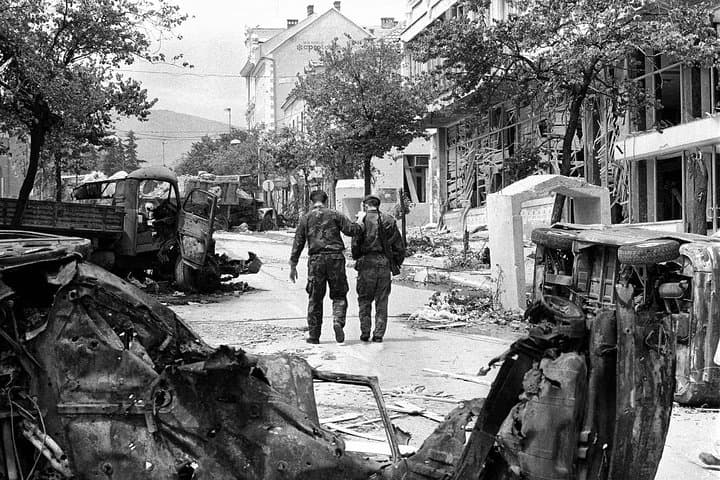
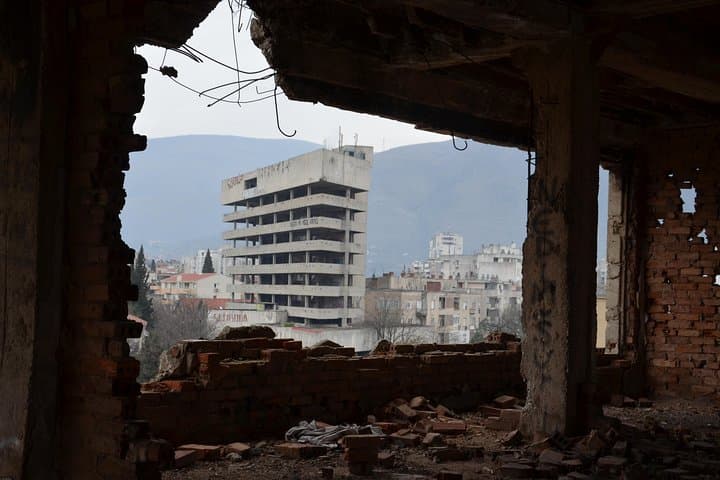
You step off the minivan and the city’s stonework and river noise condense into a single, heavy silence. The guide leads you past bullet-pitted facades toward low concrete bunkers half-hidden behind overgrown grass—places that once kept families alive. The tour moves at a steady tempo: short walks between preserved shelters and trenches, interspersed with drives across neighborhoods where the scars of 1992–95 are still visible.
You step off the minivan and the city’s stonework and river noise condense into a single, heavy silence. The guide leads you past bullet-pitted facades toward low concrete bunkers half-hidden behind overgrown grass—places that once kept families alive. The tour moves at a steady tempo: short walks between preserved shelters and trenches, interspersed with drives across neighborhoods where the scars of 1992–95 are still visible.
Mostar’s modern story is written in its streets. The city changed from Ottoman trade hub to Austro-Hungarian influence and, more recently, into a frontline during the Bosnian war. Stari Most’s destruction in 1993 and its reconstruction in 2004 bookend one of the most photographed episodes in European postwar recovery. Geologically, the limestone karst of Herzegovina frames the Neretva River, whose green channel guided settlement patterns and strategic positions during the conflict.
Culturally, Mostar blends Bosniak and Croat traditions; local guides often share personal accounts that humanize facts and dates. Expect frank storytelling—some details are difficult but delivered with respect. The experience is half walking, half driving, focused on material remains: trenches, artillery positions, cellars used as shelters.
Practically, plan a two-hour block, bring water, and wear sturdy shoes for uneven surfaces. Photography is allowed but follow the guide’s direction, especially at private properties and memorials. If you want context, pair the tour with a visit to the Muslibegović House and the Koski Mehmed-Pasha minaret for panoramic views. The Mostar Shelters tour is a concentrated, informative way to understand how war altered urban life—and how a city rebuilds around memory.