THE ADVENTURE COLLECTIVE® · Independent discovery and booking for outdoor travel

Walk between eras along Mostar’s cobbled lanes and across the UNESCO-listed Stari Most with a local guide. This two-hour private tour blends history, craft demonstrations and viewpoints for a concise introduction to the city’s cultural crossroads.
Walk between eras along Mostar’s cobbled lanes and across the UNESCO-listed Stari Most with a local guide. This two-hour private tour blends history, craft demonstrations and viewpoints for a concise introduction to the city’s cultural crossroads.
You step onto sun-warmed cobbles and the Neretva answers with a cool, green rush that seems to dare you forward. Stari Most rises ahead—white stone arching over a river that has carried goods, people and stories between east and west for centuries. Your guide, local and practiced, moves through narrow lanes where Ottoman storefronts sit shoulder-to-shoulder with Austro-Hungarian villas, and the city’s past is visible in plaster and ironwork.
Verified experiences and guided adventures in the surrounding area.
Operated by Herzeg Day Tours · Mostar, Herzegovina-Neretva Canton
You step onto sun-warmed cobbles and the Neretva answers with a cool, green rush that seems to dare you forward. Stari Most rises ahead—white stone arching over a river that has carried goods, people and stories between east and west for centuries. Your guide, local and practiced, moves through narrow lanes where Ottoman storefronts sit shoulder-to-shoulder with Austro-Hungarian villas, and the city’s past is visible in plaster and ironwork.
Mostar’s bridge was first built in the 16th century under Ottoman rule, severed in the 1990s conflict and painstakingly reconstructed as a UNESCO World Heritage site. Geology is apparent in the karst limestone that frames the Neretva gorge; the river’s emerald channel and the steep terraces create dramatic sightlines for photography. Cultural layers reveal themselves in mosques where visitors may climb a minaret, in artisan workshops maintaining centuries-old metalwork, and in a Spanish Square that marks the city’s recent history of peacekeeping.
Practical guidance: the two-hour private walk covers uneven cobblestones and short stair sections—suitable for most fitness levels but wear sturdy shoes. Bring a refillable water bottle, modest attire for mosque visits, and small bills for market purchases. Best times are early morning or late afternoon for softer light and fewer crowds. Allow time to linger at the bridge viewpoint and to visit a traditional workshop where owners will show the craft behind local souvenirs. This tour is compact, historically rich and immediately accessible—ideal for travelers who want context with their photographs.
easy.
2 hours.
Light walking ability; able to manage uneven cobbles and short flights of stairs.
The tour lasts about two hours and includes short walks across cobbled streets, a few stair sections and time at viewpoints—suitable for most fitness levels.
Some mosques in Mostar allow tourist entry and limited minaret access; modest dress and respect for prayer times are required—your guide will advise on access.
Yes; the operator notes it’s suitable for all fitness levels, but children should be supervised around river viewpoints and cobbles.
This private walking tour typically covers guiding only; any paid entry (museum or specific sites) is usually extra—confirm with the operator before booking.
Stari Most was originally built in the 1560s under Ottoman patronage, destroyed during the 1993 conflict and rebuilt in the early 2000s using traditional techniques; it’s now a symbol of reconciliation and UNESCO protection.
Visitor impact is managed through local preservation projects and limits on commercial activity around the bridge; support local artisans to keep traditional crafts viable.
Herzeg Day Tours operates guided outdoor trips and adventures with an emphasis on safety, stewardship, and memorable experiences.
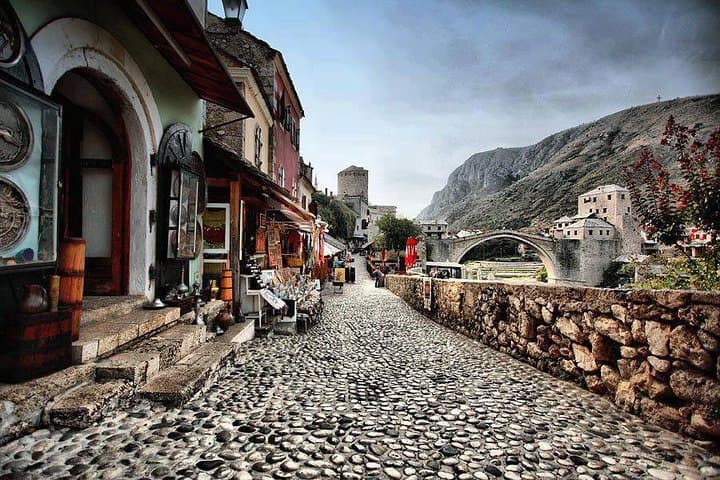
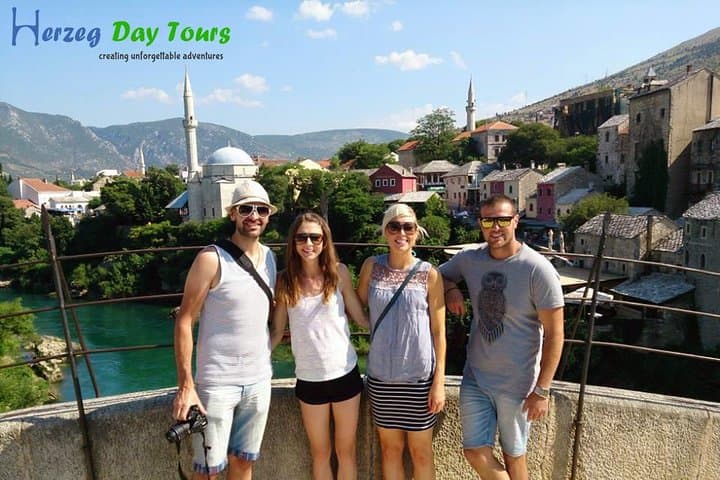
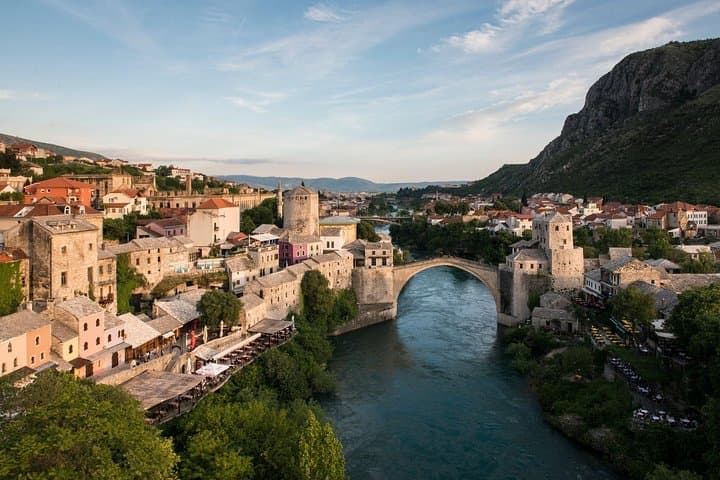
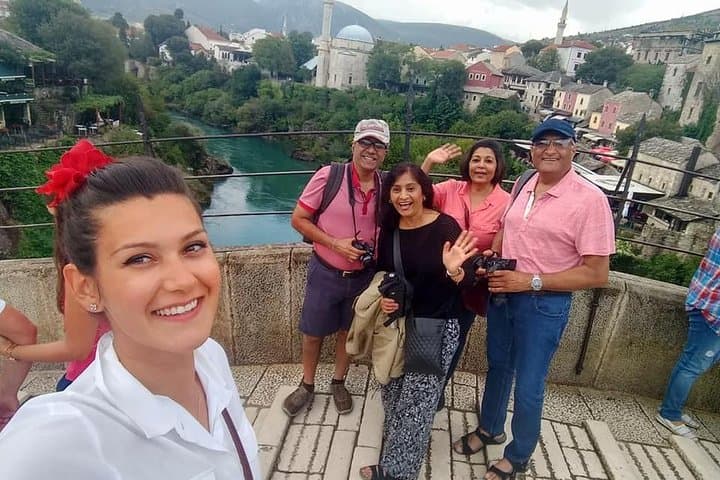
You step onto sun-warmed cobbles and the Neretva answers with a cool, green rush that seems to dare you forward. Stari Most rises ahead—white stone arching over a river that has carried goods, people and stories between east and west for centuries. Your guide, local and practiced, moves through narrow lanes where Ottoman storefronts sit shoulder-to-shoulder with Austro-Hungarian villas, and the city’s past is visible in plaster and ironwork.
You step onto sun-warmed cobbles and the Neretva answers with a cool, green rush that seems to dare you forward. Stari Most rises ahead—white stone arching over a river that has carried goods, people and stories between east and west for centuries. Your guide, local and practiced, moves through narrow lanes where Ottoman storefronts sit shoulder-to-shoulder with Austro-Hungarian villas, and the city’s past is visible in plaster and ironwork.
Mostar’s bridge was first built in the 16th century under Ottoman rule, severed in the 1990s conflict and painstakingly reconstructed as a UNESCO World Heritage site. Geology is apparent in the karst limestone that frames the Neretva gorge; the river’s emerald channel and the steep terraces create dramatic sightlines for photography. Cultural layers reveal themselves in mosques where visitors may climb a minaret, in artisan workshops maintaining centuries-old metalwork, and in a Spanish Square that marks the city’s recent history of peacekeeping.
Practical guidance: the two-hour private walk covers uneven cobblestones and short stair sections—suitable for most fitness levels but wear sturdy shoes. Bring a refillable water bottle, modest attire for mosque visits, and small bills for market purchases. Best times are early morning or late afternoon for softer light and fewer crowds. Allow time to linger at the bridge viewpoint and to visit a traditional workshop where owners will show the craft behind local souvenirs. This tour is compact, historically rich and immediately accessible—ideal for travelers who want context with their photographs.