THE ADVENTURE COLLECTIVE® · Independent discovery and booking for outdoor travel

Travel from Split to Mostar’s Old Bridge and the karst-carved Kravice Waterfalls on a single, well-paced day. Expect guided history in Mostar, free time for the bazaar, and a scenic stop to swim or photograph the cascades.
Travel from Split to Mostar’s Old Bridge and the karst-carved Kravice Waterfalls on a single, well-paced day. Expect guided history in Mostar, free time for the bazaar, and a scenic stop to swim or photograph the cascades.
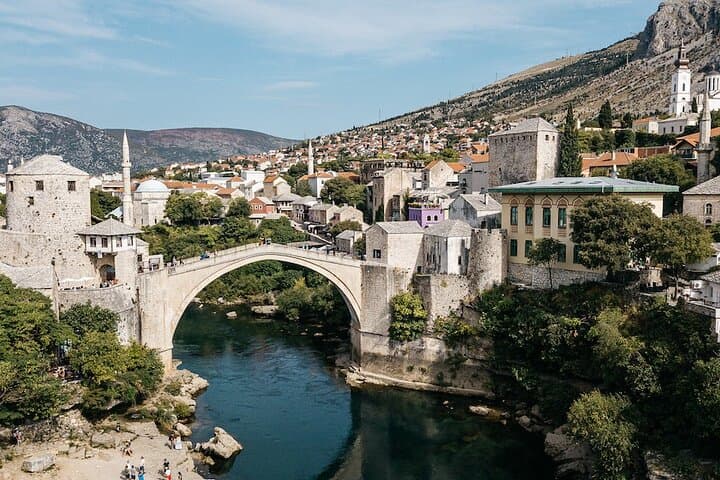
You step onto an air-conditioned coach in Split before dawn; the Adriatic slips away and limestone hills push up from the plain as the driver threads toward Bosnia and Herzegovina. By mid-morning the Neretva valley opens, the city of Mostar arriving like a map come alive — minarets and church spires marking centuries of cohabitation.
Verified experiences and guided adventures in the surrounding area.
Operated by Booker - travel agency · Mostar, Herzegovina-Neretva
You step onto an air-conditioned coach in Split before dawn; the Adriatic slips away and limestone hills push up from the plain as the driver threads toward Bosnia and Herzegovina. By mid-morning the Neretva valley opens, the city of Mostar arriving like a map come alive — minarets and church spires marking centuries of cohabitation.
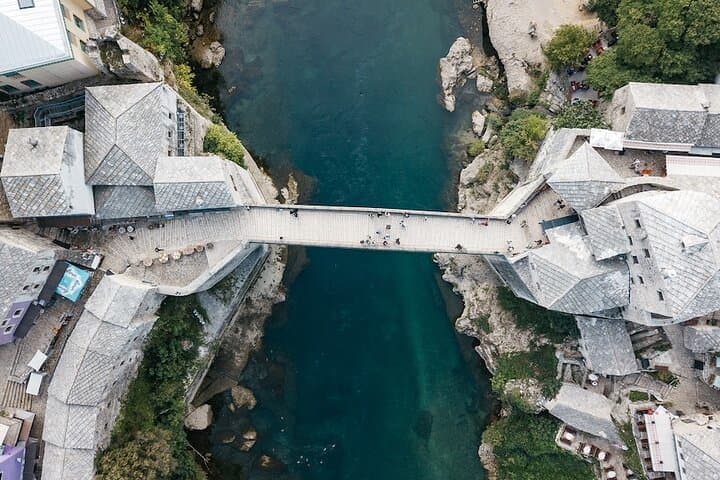
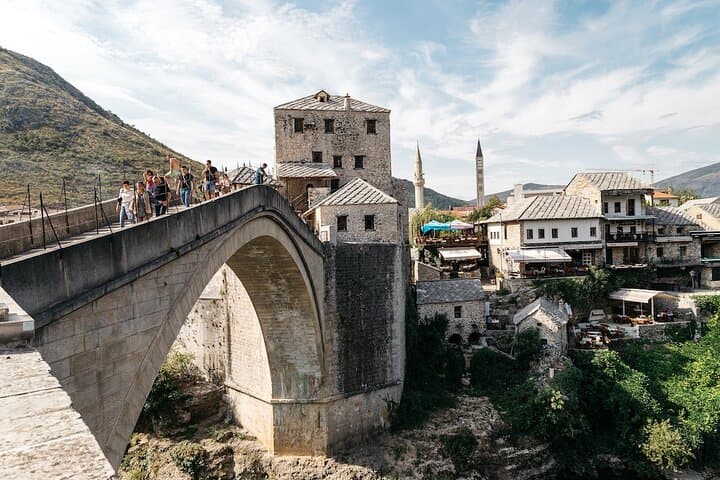
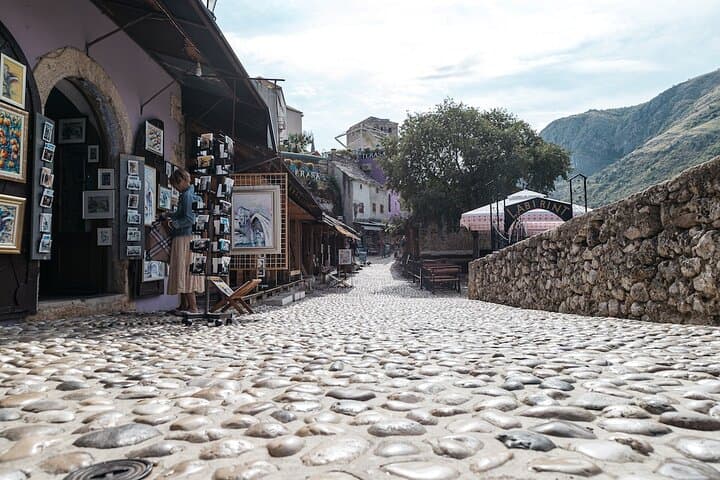
Mostar’s 16th‑century Stari Most (Old Bridge) is the focal point: originally Ottoman masonry, destroyed in the 1990s war and meticulously rebuilt in the 2000s, now listed with the Old Town as UNESCO cultural heritage. The town’s bazaar and winding cobbled lanes reveal Ottoman-influenced stone houses and riverside cafés. Geology shifts south toward Kravice: karst limestone creates a semicircular travertine cascade where tufa barriers form calm pools below the main drop.
Kravice Waterfalls Park offers roughly 60–90 minutes to walk the loop, swim in designated sections in summer, or sit on terraced viewing decks. Expect paved approaches, a few stairs, and short gravel paths. The tour’s rhythm pairs guided context in Mostar with free time for shopping, a riverside lunch, and a refreshing stop at Kravice.
Practical edge: the full-day excursion is long (about 12 hours round-trip from Split) with several hours on the road—bring sun protection, a refillable water bottle, and a passport. Swimwear and quick-dry layers are useful if you plan to enter the pools; cash is handy for small vendors. For a compact introduction to Herzegovina’s history and geology, this day trip is efficient, scenic, and straightforward to plan.
easy.
12 hours (full day).
Suitable for most fitness levels; you should be able to walk on cobbles, stairs, and short gravel trails.
Yes—this tour crosses the border into Bosnia and Herzegovina; a valid passport is required at booking and on the day of travel.
Yes in summer months you typically have time to swim in designated areas; bring swimwear and towel, and note lifeguard presence varies.
Expect roughly 2.5–3.5 hours each way depending on traffic and border queues; the entire excursion is about 12 hours.
Admission is usually not included—check the tour’s current inclusions and bring some cash to cover park entry if required.
Mostar grew as a regional hub under Ottoman rule in the 15th–16th centuries; its Old Bridge is an Ottoman architectural work rebuilt after war damage and now protected by UNESCO.
Kravice is part of a protected natural area—stay on marked paths, avoid littering, and limit sunscreen use in swimming areas to reduce pollution of fragile pools.
Booker - travel agency operates guided outdoor trips and adventures with an emphasis on safety, stewardship, and memorable experiences.
You step onto an air-conditioned coach in Split before dawn; the Adriatic slips away and limestone hills push up from the plain as the driver threads toward Bosnia and Herzegovina. By mid-morning the Neretva valley opens, the city of Mostar arriving like a map come alive — minarets and church spires marking centuries of cohabitation.
You step onto an air-conditioned coach in Split before dawn; the Adriatic slips away and limestone hills push up from the plain as the driver threads toward Bosnia and Herzegovina. By mid-morning the Neretva valley opens, the city of Mostar arriving like a map come alive — minarets and church spires marking centuries of cohabitation.
Mostar’s 16th‑century Stari Most (Old Bridge) is the focal point: originally Ottoman masonry, destroyed in the 1990s war and meticulously rebuilt in the 2000s, now listed with the Old Town as UNESCO cultural heritage. The town’s bazaar and winding cobbled lanes reveal Ottoman-influenced stone houses and riverside cafés. Geology shifts south toward Kravice: karst limestone creates a semicircular travertine cascade where tufa barriers form calm pools below the main drop.
Kravice Waterfalls Park offers roughly 60–90 minutes to walk the loop, swim in designated sections in summer, or sit on terraced viewing decks. Expect paved approaches, a few stairs, and short gravel paths. The tour’s rhythm pairs guided context in Mostar with free time for shopping, a riverside lunch, and a refreshing stop at Kravice.
Practical edge: the full-day excursion is long (about 12 hours round-trip from Split) with several hours on the road—bring sun protection, a refillable water bottle, and a passport. Swimwear and quick-dry layers are useful if you plan to enter the pools; cash is handy for small vendors. For a compact introduction to Herzegovina’s history and geology, this day trip is efficient, scenic, and straightforward to plan.