THE ADVENTURE COLLECTIVE® · Independent discovery and booking for outdoor travel

A full‑day private drive from Dubrovnik that pairs the emerald pools of Kravice Waterfalls with Mostar’s famous Ottoman bridge. Expect swimming, short walks on limestone trails, and a vivid history lesson in a single day.
A full‑day private drive from Dubrovnik that pairs the emerald pools of Kravice Waterfalls with Mostar’s famous Ottoman bridge. Expect swimming, short walks on limestone trails, and a vivid history lesson in a single day.
You start before sunrise in Dubrovnik, windows down as the Adriatic slips by and the Elaphiti islands wink on the horizon.
The road eases into karst fields and low hills; the guide points out the changing light on limestone walls as you cross the border into Bosnia and Herzegovina.
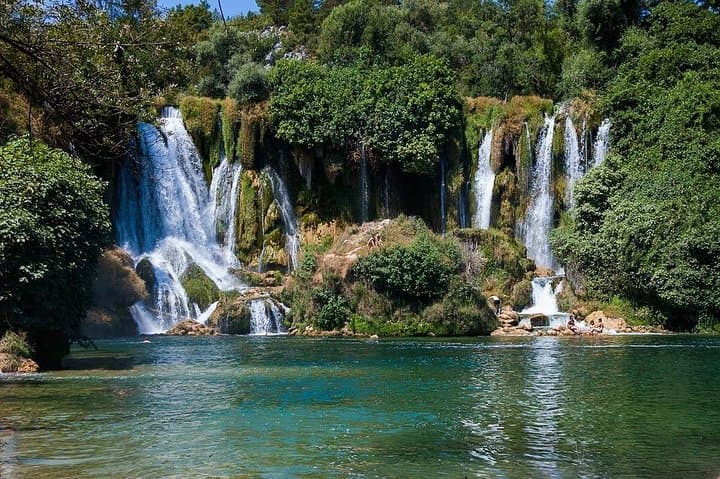
At Kravice Waterfalls the river takes center stage — broad cascades and natural pools cut through tufa, daring you to step into emerald water on a hot summer day. The falls are shallow in places and deceptively swift in others; rafters and swimmers find different rhythms here.
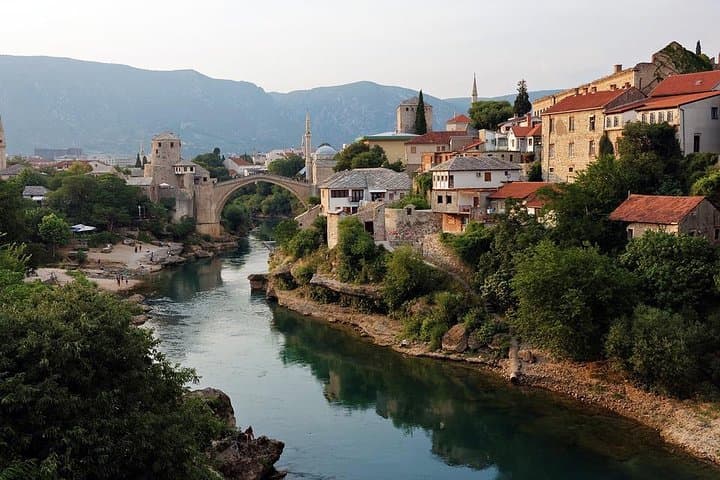
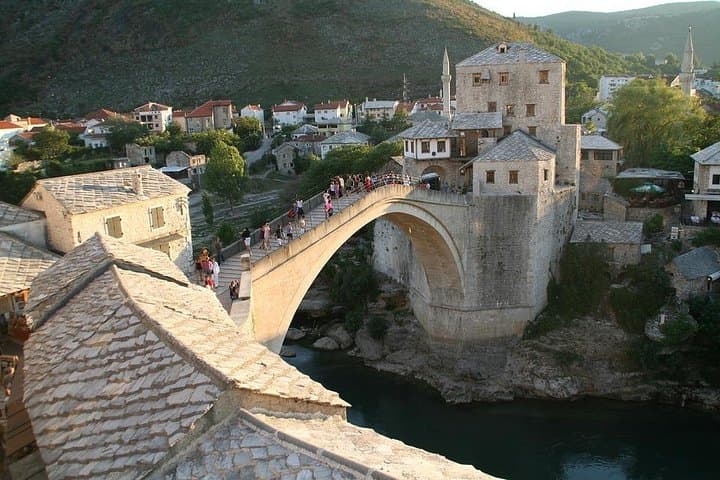
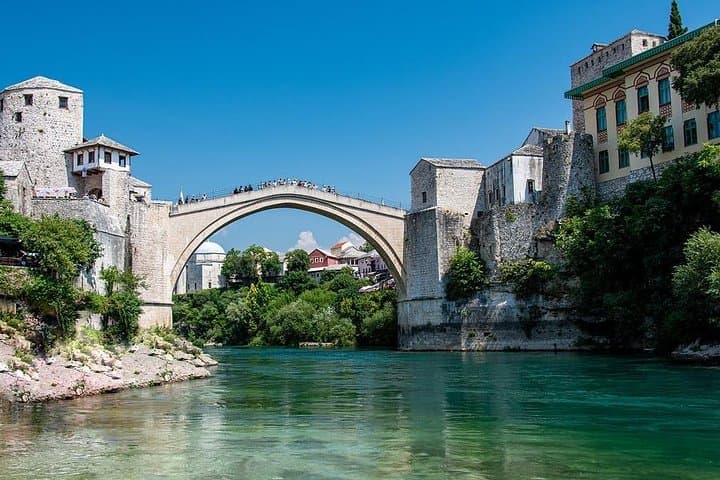
Mostar's Old Town arrives like a stage set: a rebuilt 16th‑century Ottoman bridge arching over the Neretva, cobbled lanes serving ćevapi and baklava, and a mix of Ottoman, Mediterranean and Austro‑Hungarian architecture. The bridge, destroyed in the 1990s and restored in 2004, is UNESCO‑listed and carries the weight of recent history.
Geology matters here — karst springs feed the river and create tufa shelves that hold the falls together — and local customs do too: modest dress near mosques, and a taste for strong coffee and grilled fare in market lanes.
Practicalities are straightforward: it's a private, full‑day tour (roughly 10 hours), includes hotel pickup and an English‑speaking driver, and crosses an international border — bring your passport, local currency (BAM) for small purchases, and a swimsuit tucked into a daypack. Footwear should handle cobbles and wet rocks; plan for sun, sudden spray at the falls, and a late return to Dubrovnik.
Verified experiences and guided adventures in the surrounding area.
Operated by Super Transfer Services · Dubrovnik, Dubrovnik-Neretva County
You start before sunrise in Dubrovnik, windows down as the Adriatic slips by and the Elaphiti islands wink on the horizon.
The road eases into karst fields and low hills; the guide points out the changing light on limestone walls as you cross the border into Bosnia and Herzegovina.
At Kravice Waterfalls the river takes center stage — broad cascades and natural pools cut through tufa, daring you to step into emerald water on a hot summer day. The falls are shallow in places and deceptively swift in others; rafters and swimmers find different rhythms here.
Mostar's Old Town arrives like a stage set: a rebuilt 16th‑century Ottoman bridge arching over the Neretva, cobbled lanes serving ćevapi and baklava, and a mix of Ottoman, Mediterranean and Austro‑Hungarian architecture. The bridge, destroyed in the 1990s and restored in 2004, is UNESCO‑listed and carries the weight of recent history.
Geology matters here — karst springs feed the river and create tufa shelves that hold the falls together — and local customs do too: modest dress near mosques, and a taste for strong coffee and grilled fare in market lanes.
Practicalities are straightforward: it's a private, full‑day tour (roughly 10 hours), includes hotel pickup and an English‑speaking driver, and crosses an international border — bring your passport, local currency (BAM) for small purchases, and a swimsuit tucked into a daypack. Footwear should handle cobbles and wet rocks; plan for sun, sudden spray at the falls, and a late return to Dubrovnik.
moderate.
10 hours.
Light to moderate fitness — you should be able to walk on uneven cobbles and manage short, easy hikes and steps.
Yes — the tour crosses into Bosnia and Herzegovina, so all travelers must carry valid passports and check visa requirements before departure.
Yes — the itinerary includes a roughly two‑hour stop at Kravice suitable for swimming; bring a swimsuit and towel.
Expect 1–2 hours of on‑foot exploration on cobbled streets and steps around the Old Town and the bridge; surfaces can be uneven.
Transportation, guide/driver and pickup/drop‑off are included; meals, personal purchases and optional local fees are not typically covered.
Mostar’s Stari Most was built in the 16th century under Ottoman rule, destroyed during the 1990s conflict and reconstructed in 2004 — the bridge now stands as a UNESCO World Heritage focal point.
Kravice sits on a sensitive karst system; stick to marked paths, avoid single‑use plastics at the falls, and respect swimming restrictions to protect tufa formations.
Super Transfer Services operates guided outdoor trips and adventures with an emphasis on safety, stewardship, and memorable experiences.
You start before sunrise in Dubrovnik, windows down as the Adriatic slips by and the Elaphiti islands wink on the horizon.
The road eases into karst fields and low hills; the guide points out the changing light on limestone walls as you cross the border into Bosnia and Herzegovina.
At Kravice Waterfalls the river takes center stage — broad cascades and natural pools cut through tufa, daring you to step into emerald water on a hot summer day. The falls are shallow in places and deceptively swift in others; rafters and swimmers find different rhythms here.
Mostar's Old Town arrives like a stage set: a rebuilt 16th‑century Ottoman bridge arching over the Neretva, cobbled lanes serving ćevapi and baklava, and a mix of Ottoman, Mediterranean and Austro‑Hungarian architecture. The bridge, destroyed in the 1990s and restored in 2004, is UNESCO‑listed and carries the weight of recent history.
Geology matters here — karst springs feed the river and create tufa shelves that hold the falls together — and local customs do too: modest dress near mosques, and a taste for strong coffee and grilled fare in market lanes.
Practicalities are straightforward: it's a private, full‑day tour (roughly 10 hours), includes hotel pickup and an English‑speaking driver, and crosses an international border — bring your passport, local currency (BAM) for small purchases, and a swimsuit tucked into a daypack. Footwear should handle cobbles and wet rocks; plan for sun, sudden spray at the falls, and a late return to Dubrovnik.