THE ADVENTURE COLLECTIVE® · Independent discovery and booking for outdoor travel

A full-day private drive from Dubrovnik to Mostar that stitches Ottoman-era mosques, karst springs, and UNESCO-listed Stari Most into one accessible cultural route. Expect scenic driving, short historic stops in Pocitelj and Blagaj, and several hours to explore Mostar’s Old Town.
A full-day private drive from Dubrovnik to Mostar that stitches Ottoman-era mosques, karst springs, and UNESCO-listed Stari Most into one accessible cultural route. Expect scenic driving, short historic stops in Pocitelj and Blagaj, and several hours to explore Mostar’s Old Town.
The highway drops you into a different century as the Neretva valley widens and the river dares you to look away. Drive past orange-terraced fields and karst outcrops, then pause at Pocitelj’s stone ramparts where the old walls keep watch over the pass. At Blagaj the Buna spring erupts from the cliff like a hidden well and the 600-year-old Dervish house presses itself into the rock; the river whispers and pulls your gaze downstream toward Mostar.
Verified experiences and guided adventures in the surrounding area.
Operated by Best Dubrovnik Stay · Mostar, Herzegovina-Neretva Canton
The highway drops you into a different century as the Neretva valley widens and the river dares you to look away. Drive past orange-terraced fields and karst outcrops, then pause at Pocitelj’s stone ramparts where the old walls keep watch over the pass. At Blagaj the Buna spring erupts from the cliff like a hidden well and the 600-year-old Dervish house presses itself into the rock; the river whispers and pulls your gaze downstream toward Mostar.
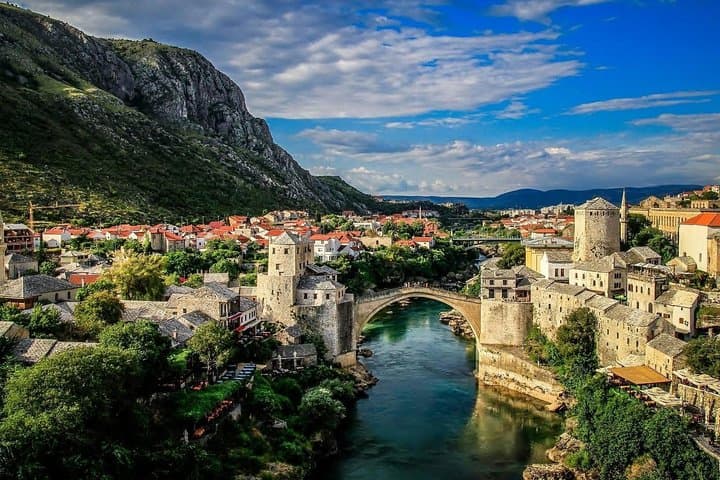
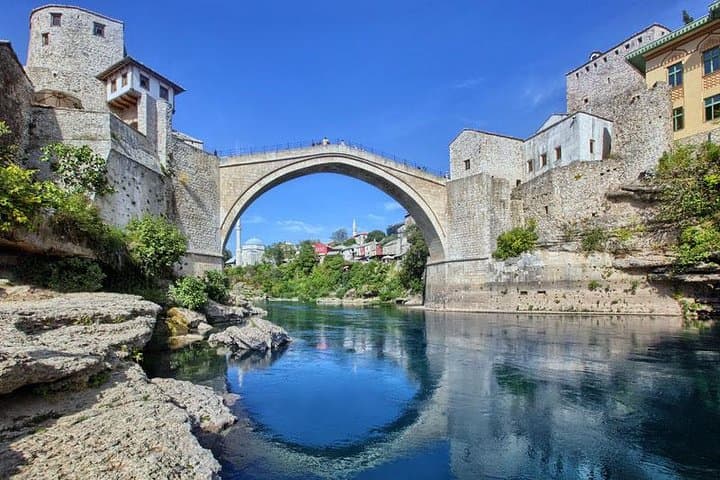
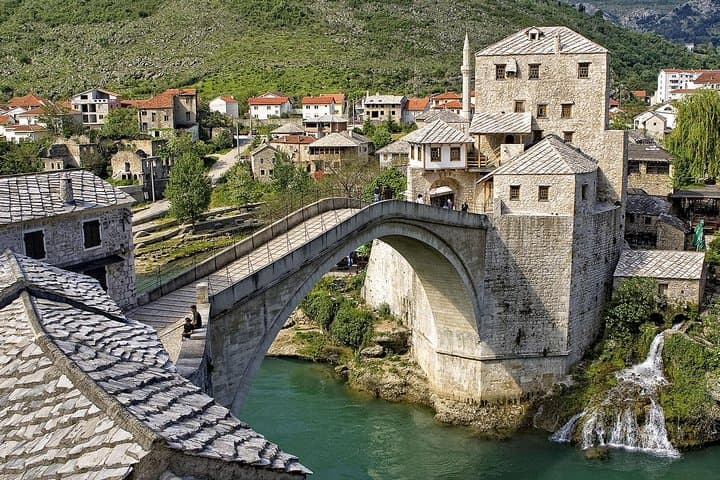
Mostar’s Stari Most is an architectural hinge between Ottoman and Austro-Hungarian layers—rebuilt after the 1993 destruction and now a UNESCO symbol of recovery. The town’s cobbled alleys lead between mosques and austere Austro-Hungarian façades, with street grills sending up the scent of ćevapi and strong Bosnian coffee. Geologically, this region is karst: limestone cliffs, sudden springs, and narrow river gorges that have long shaped trade routes and strategic forts like Pocitelj (linked to King Tvrtko in the 14th century and on Bosnia’s UNESCO tentative list).
Practical edge: the full-day private tour runs about 8–10 hours including border formalities — expect 2–3 hours of driving each way from Dubrovnik. Bring ID/passport for the Croatia–Bosnia border, local cash (BAM) for small purchases, and comfortable shoes for cobbles and stairs. Summer is peak for bridge diving and crowds; spring and fall offer cooler walking and lower lines. Plan to sample local dishes, allow time for photography at the bridge, and respect religious sites. This trip blends history, river drama, and easy walking—ideal for travelers who want a concentrated cultural landscape in a single, scenic day.
easy.
8–10 hours.
Light: suitable for anyone comfortable with several short walks and stairs; minimal elevation change.
The drive is roughly 2–3 hours each way depending on border wait times and traffic; the full tour runs about 8–10 hours.
Typical city walking and external site visits are included, but special museum or mosque entry fees and meals are usually extra — confirm with the operator.
EU and many nationalities can enter with a passport or ID; check current visa rules for your nationality before travel and carry your passport.
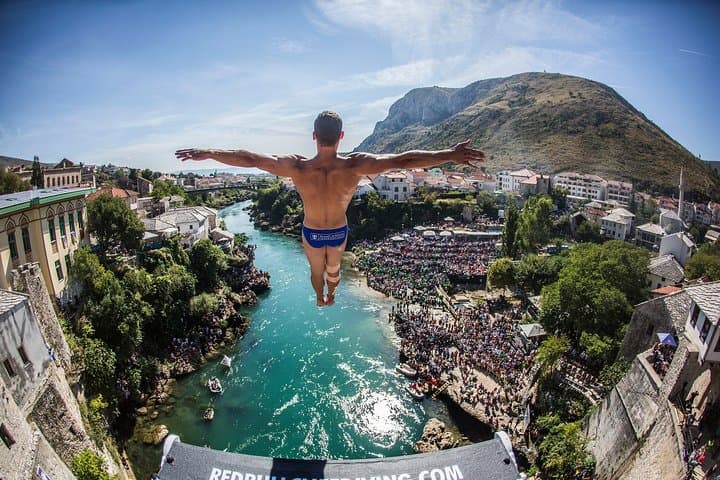
Bridge diving is seasonal and weather-dependent; in summer you have the best chance to see local or organized jumps from the Old Bridge.
Mostar grew under Ottoman rule and later Austro-Hungarian administration; Stari Most was destroyed in 1993 and painstakingly rebuilt and reopened in 2004 as a symbol of reconciliation.
The Neretva’s karst springs are sensitive to pollution; small-group tourism helps limit impact, so stick to paths, avoid single-use plastics, and support local businesses.
Best Dubrovnik Stay operates guided outdoor trips and adventures with an emphasis on safety, stewardship, and memorable experiences.
The highway drops you into a different century as the Neretva valley widens and the river dares you to look away. Drive past orange-terraced fields and karst outcrops, then pause at Pocitelj’s stone ramparts where the old walls keep watch over the pass. At Blagaj the Buna spring erupts from the cliff like a hidden well and the 600-year-old Dervish house presses itself into the rock; the river whispers and pulls your gaze downstream toward Mostar.
The highway drops you into a different century as the Neretva valley widens and the river dares you to look away. Drive past orange-terraced fields and karst outcrops, then pause at Pocitelj’s stone ramparts where the old walls keep watch over the pass. At Blagaj the Buna spring erupts from the cliff like a hidden well and the 600-year-old Dervish house presses itself into the rock; the river whispers and pulls your gaze downstream toward Mostar.
Mostar’s Stari Most is an architectural hinge between Ottoman and Austro-Hungarian layers—rebuilt after the 1993 destruction and now a UNESCO symbol of recovery. The town’s cobbled alleys lead between mosques and austere Austro-Hungarian façades, with street grills sending up the scent of ćevapi and strong Bosnian coffee. Geologically, this region is karst: limestone cliffs, sudden springs, and narrow river gorges that have long shaped trade routes and strategic forts like Pocitelj (linked to King Tvrtko in the 14th century and on Bosnia’s UNESCO tentative list).
Practical edge: the full-day private tour runs about 8–10 hours including border formalities — expect 2–3 hours of driving each way from Dubrovnik. Bring ID/passport for the Croatia–Bosnia border, local cash (BAM) for small purchases, and comfortable shoes for cobbles and stairs. Summer is peak for bridge diving and crowds; spring and fall offer cooler walking and lower lines. Plan to sample local dishes, allow time for photography at the bridge, and respect religious sites. This trip blends history, river drama, and easy walking—ideal for travelers who want a concentrated cultural landscape in a single, scenic day.