THE ADVENTURE COLLECTIVE® · Independent discovery and booking for outdoor travel

Explore Mostar’s Old Bridge, wartime photo exhibition, Bulevar and Spanish Square in a focused two-hour walking tour. Learn Ottoman-era history, recent wartime context, and where to sit for a proper Bosnian coffee.
Explore Mostar’s Old Bridge, wartime photo exhibition, Bulevar and Spanish Square in a focused two-hour walking tour. Learn Ottoman-era history, recent wartime context, and where to sit for a proper Bosnian coffee.
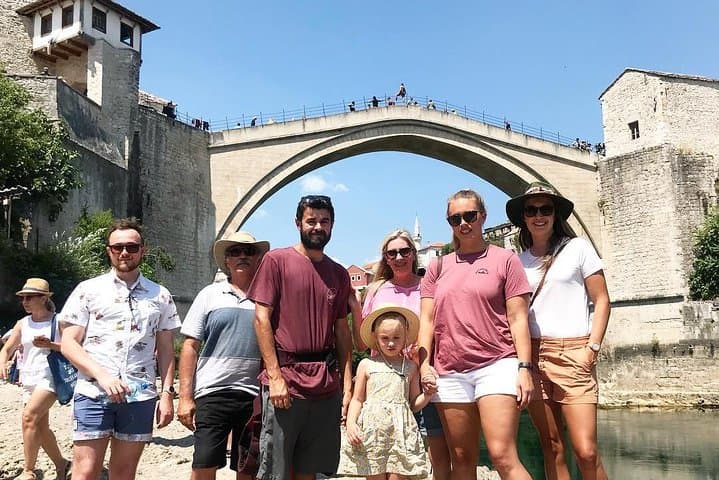
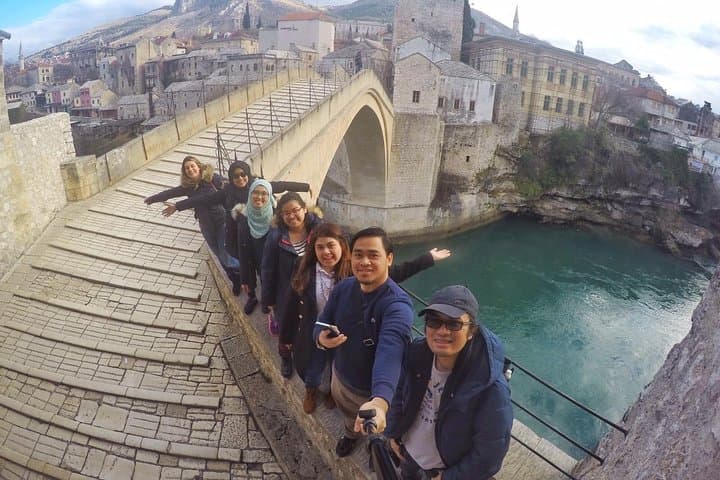
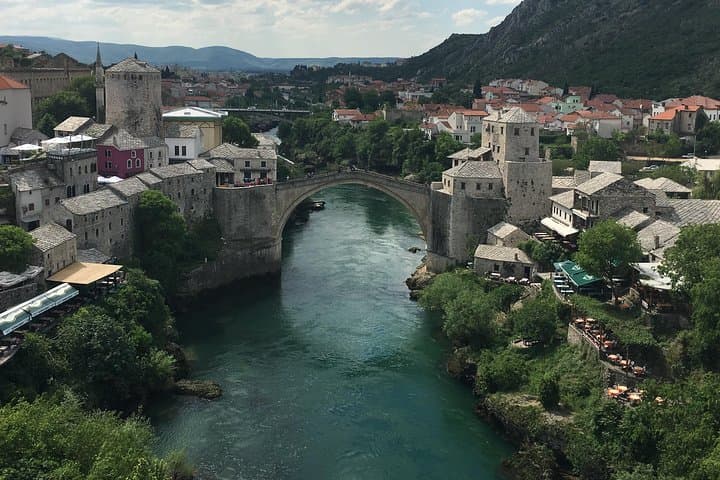
You step off the busy street and the Neretva opens below—cold, green water daring you to look beyond the stone. The Old Bridge (Stari Most) arches across the gorge with a clean, modern curve that still carries the weight of centuries and a recent, visible restoration. Cobbled alleys smell of roasted coffee and spices; a guide points out carved wooden shops and the old bazaar where craftsmen still shape local goods.
Verified experiences and guided adventures in the surrounding area.
Operated by Discover Herzegovina · Mostar, Herzegovina-Neretva
You step off the busy street and the Neretva opens below—cold, green water daring you to look beyond the stone. The Old Bridge (Stari Most) arches across the gorge with a clean, modern curve that still carries the weight of centuries and a recent, visible restoration. Cobbled alleys smell of roasted coffee and spices; a guide points out carved wooden shops and the old bazaar where craftsmen still shape local goods.
Mostar grew in the 15th–16th century as an Ottoman frontier town, its architecture and street plan reflecting that era. The Old Bridge, destroyed in the 1990s conflict and rebuilt with UNESCO support, stands as a focal point for both reconciliation and tourism. Above the bridge a compact war photo exhibition documents the city’s recent past through the eyes of a visiting photojournalist—raw images that explain why some facades wear pockmarks and why each square matters.
Walk Bulevar to see the scars of frontline geography now hosting city life; pause at Spanish Square for a slow Bosnian coffee and sunset light. Guides usually thread historical context, practical navigation of narrow streets, and local recommendations for food and handcrafted souvenirs.
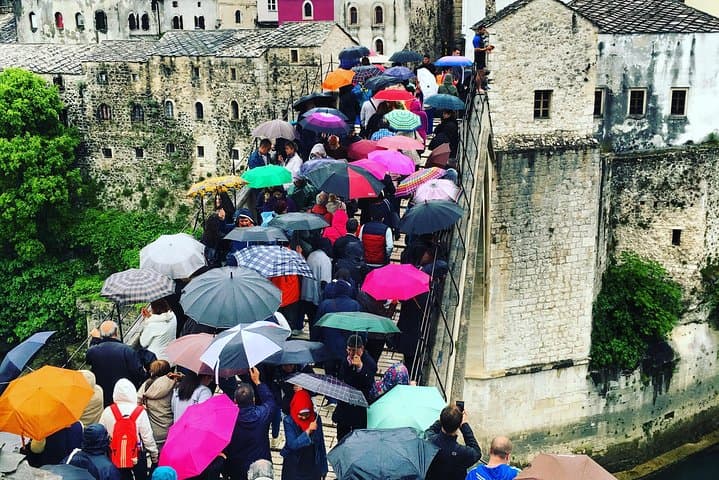
Practical guidance: this is an easy, mostly flat walking tour of about two hours—bring sensible shoes for uneven pavement, a light jacket for river breezes, water, and a small bag for purchases. Midday is busiest; mornings and late afternoons offer softer light for photos and fewer crowds.
easy.
2 hours.
Suitable for most fitness levels; requires walking on uneven pavement for up to two hours.
The tour runs about two hours and is a walking itinerary focused on the Old Bridge area, the war photo exhibition, Bulevar and Spanish Square.
Yes—it's classified as easy and accessible to most fitness levels, though note the uneven cobblestones and some steps.
Yes—guides include recommendations and usually end at a local coffee shop; bring small cash for purchases.
Private tours are customizable; you can request specific stops or extra time at points of interest when booking.
Mostar developed as an Ottoman frontier town in the 15th–16th centuries; Stari Most was destroyed in the 1990s conflict and reconstructed with UNESCO-led restoration in the early 2000s.
Visitor footfall is concentrated on historic streets—stick to marked paths, support local artisans, and avoid touching fragile masonry to reduce wear.
Discover Herzegovina operates guided outdoor trips and adventures with an emphasis on safety, stewardship, and memorable experiences.
You step off the busy street and the Neretva opens below—cold, green water daring you to look beyond the stone. The Old Bridge (Stari Most) arches across the gorge with a clean, modern curve that still carries the weight of centuries and a recent, visible restoration. Cobbled alleys smell of roasted coffee and spices; a guide points out carved wooden shops and the old bazaar where craftsmen still shape local goods.
You step off the busy street and the Neretva opens below—cold, green water daring you to look beyond the stone. The Old Bridge (Stari Most) arches across the gorge with a clean, modern curve that still carries the weight of centuries and a recent, visible restoration. Cobbled alleys smell of roasted coffee and spices; a guide points out carved wooden shops and the old bazaar where craftsmen still shape local goods.
Mostar grew in the 15th–16th century as an Ottoman frontier town, its architecture and street plan reflecting that era. The Old Bridge, destroyed in the 1990s conflict and rebuilt with UNESCO support, stands as a focal point for both reconciliation and tourism. Above the bridge a compact war photo exhibition documents the city’s recent past through the eyes of a visiting photojournalist—raw images that explain why some facades wear pockmarks and why each square matters.
Walk Bulevar to see the scars of frontline geography now hosting city life; pause at Spanish Square for a slow Bosnian coffee and sunset light. Guides usually thread historical context, practical navigation of narrow streets, and local recommendations for food and handcrafted souvenirs.
Practical guidance: this is an easy, mostly flat walking tour of about two hours—bring sensible shoes for uneven pavement, a light jacket for river breezes, water, and a small bag for purchases. Midday is busiest; mornings and late afternoons offer softer light for photos and fewer crowds.