THE ADVENTURE COLLECTIVE® · Independent discovery and booking for outdoor travel

A full-day road tour from Sarajevo that pairs Mostar’s rebuilt Old Bridge, the cliffside Buna spring at Blagaj, Ottoman-era Počitelj and the swimming pools of Kravica waterfall. Expect short walks, cultural sites, and scenic river views.
A full-day road tour from Sarajevo that pairs Mostar’s rebuilt Old Bridge, the cliffside Buna spring at Blagaj, Ottoman-era Počitelj and the swimming pools of Kravica waterfall. Expect short walks, cultural sites, and scenic river views.
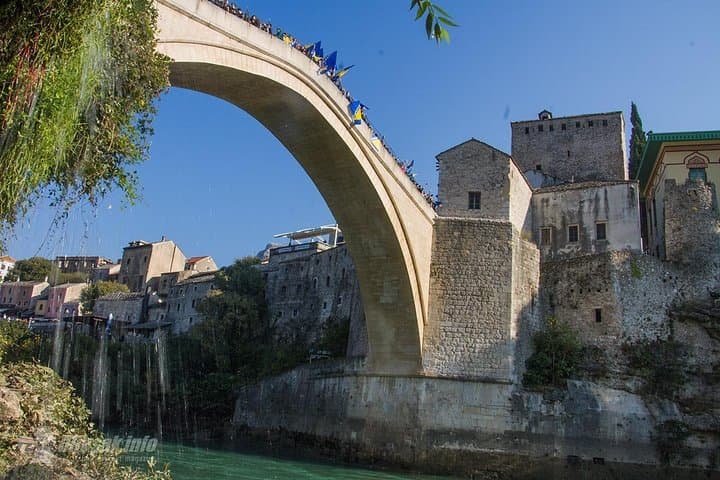
You arrive on a sun-warmed road that unfurls from Sarajevo toward the limestone edges of Herzegovina, the Neretva River cutting a glassy green through rocky walls. By mid-morning the bus eases into Mostar and the valley smells of river stone and frying ćevapi; the Old Bridge rises over the Neretva, a single elegant arc demanding a closer look.
Verified experiences and guided adventures in the surrounding area.
Operated by Royal Bear Tour · Sarajevo, Federation of Bosnia and Herzegovina
You arrive on a sun-warmed road that unfurls from Sarajevo toward the limestone edges of Herzegovina, the Neretva River cutting a glassy green through rocky walls. By mid-morning the bus eases into Mostar and the valley smells of river stone and frying ćevapi; the Old Bridge rises over the Neretva, a single elegant arc demanding a closer look.
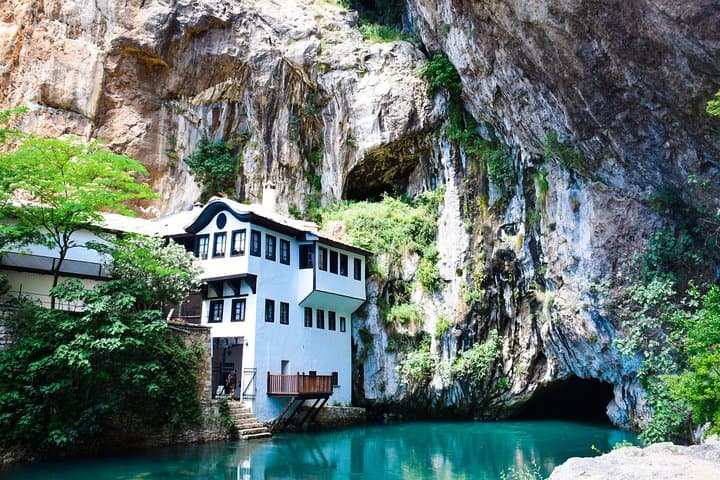
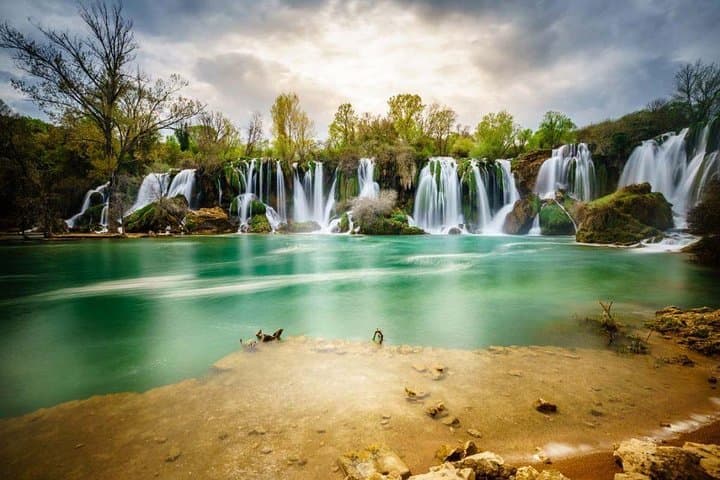
The region reads like a layered history: Ottoman houses and Austro-Hungarian facades rub shoulders with modern restoration after the 1990s conflict. Geology does the work here — karst limestone has sculpted springs and waterfalls, most visibly at Blagaj, where the Buna springs burst from a cliff beside a 600-year-old dervish tekke, and at Kravica, where tufa cascades drop about 25 meters into a circular plunge pool popular for swimming.
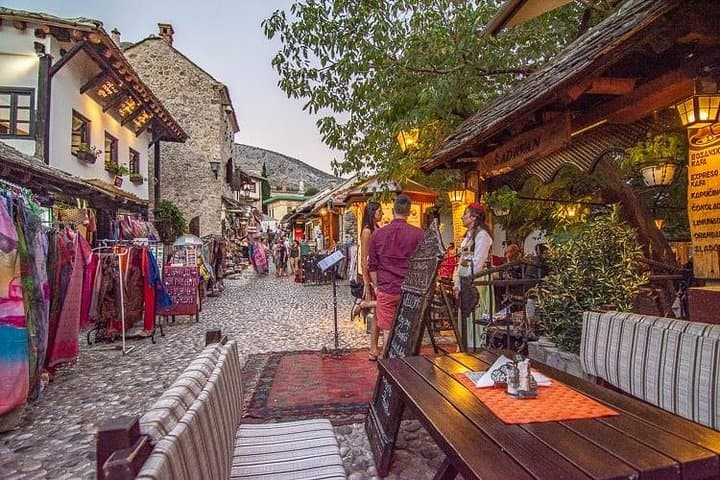
Culturally, the tour stitches market lanes, stone bridges and monastic calm into a single day of contrasts. Expect brief town walks, time at the tekke, a stop in the Ottoman-era village of Počitelj, and a swim or picnic at Kravica when the weather allows.
Practical guidance: plan for a 5–10 hour day with multiple short walks on uneven stone; bring a small daypack, water, and flexible layers for shade and wind near the river. Timing matters — early visits to Mostar or Blagaj avoid crowds and deliver the clearest light for photos. Respect religious sites at Blagaj by dressing modestly; at Kravica follow posted rules about swimming and safety. The route is coach-based and suitable for most fitness levels, but expect some stairs and cobbled streets when exploring the historic centers.
moderate.
5–10 hours.
Suitable for travelers in average fitness; involves multiple short walks, stairs and standing periods.
Yes — while major sites accept cards, smaller cafés, markets and some entrance fees may be cash-only; have BAM on hand.
Yes in summer months where permitted; follow local signage, lifeguard instructions if present, and take care on slippery rocks.
The operator lists a variable duration of 5 to 10 hours depending on pickup, traffic and time spent at each site.
The itinerary is advertised as stroller-accessible for short distances, but expect stairs and uneven streets in historic areas—infant seats and coach transport are usually provided.
Mostar’s Old Bridge (Stari Most) dates back to the 16th century Ottoman period, destroyed in the 1990s conflict and rebuilt with UNESCO-supported restoration to symbolize reconciliation.
Kravica’s delicate tufa formations and the karst water system are sensitive to visitor pressure—stick to marked paths, avoid littering and follow local guidance to reduce impact.
Royal Bear Tour operates guided outdoor trips and adventures with an emphasis on safety, stewardship, and memorable experiences.
You arrive on a sun-warmed road that unfurls from Sarajevo toward the limestone edges of Herzegovina, the Neretva River cutting a glassy green through rocky walls. By mid-morning the bus eases into Mostar and the valley smells of river stone and frying ćevapi; the Old Bridge rises over the Neretva, a single elegant arc demanding a closer look.
You arrive on a sun-warmed road that unfurls from Sarajevo toward the limestone edges of Herzegovina, the Neretva River cutting a glassy green through rocky walls. By mid-morning the bus eases into Mostar and the valley smells of river stone and frying ćevapi; the Old Bridge rises over the Neretva, a single elegant arc demanding a closer look.
The region reads like a layered history: Ottoman houses and Austro-Hungarian facades rub shoulders with modern restoration after the 1990s conflict. Geology does the work here — karst limestone has sculpted springs and waterfalls, most visibly at Blagaj, where the Buna springs burst from a cliff beside a 600-year-old dervish tekke, and at Kravica, where tufa cascades drop about 25 meters into a circular plunge pool popular for swimming.
Culturally, the tour stitches market lanes, stone bridges and monastic calm into a single day of contrasts. Expect brief town walks, time at the tekke, a stop in the Ottoman-era village of Počitelj, and a swim or picnic at Kravica when the weather allows.
Practical guidance: plan for a 5–10 hour day with multiple short walks on uneven stone; bring a small daypack, water, and flexible layers for shade and wind near the river. Timing matters — early visits to Mostar or Blagaj avoid crowds and deliver the clearest light for photos. Respect religious sites at Blagaj by dressing modestly; at Kravica follow posted rules about swimming and safety. The route is coach-based and suitable for most fitness levels, but expect some stairs and cobbled streets when exploring the historic centers.