THE ADVENTURE COLLECTIVE® · Independent discovery and booking for outdoor travel

Cross borders in a single day: from the pilgrimage paths of Medjugorje to Mostar’s 16th-century Stari Most and the fortified lanes of Pocitelj. This full-day trip from Dubrovnik pairs cultural depth with sharp river views.
Cross borders in a single day: from the pilgrimage paths of Medjugorje to Mostar’s 16th-century Stari Most and the fortified lanes of Pocitelj. This full-day trip from Dubrovnik pairs cultural depth with sharp river views.
You step off an air-conditioned minibus and the valley opens: a green river threads through pale stone, and a single arched bridge crowns the town like a deliberate act of balance. The day begins in Medjugorje, where pilgrims walk quietly up the gentle slopes to Apparition Hill, then moves inland to Mostar’s Old Town, where cobbled streets and Ottoman-era facades frame the 16th-century Stari Most.
Verified experiences and guided adventures in the surrounding area.
Operated by Super Tours · Mostar, Herzegovina-Neretva Canton
You step off an air-conditioned minibus and the valley opens: a green river threads through pale stone, and a single arched bridge crowns the town like a deliberate act of balance. The day begins in Medjugorje, where pilgrims walk quietly up the gentle slopes to Apparition Hill, then moves inland to Mostar’s Old Town, where cobbled streets and Ottoman-era facades frame the 16th-century Stari Most.
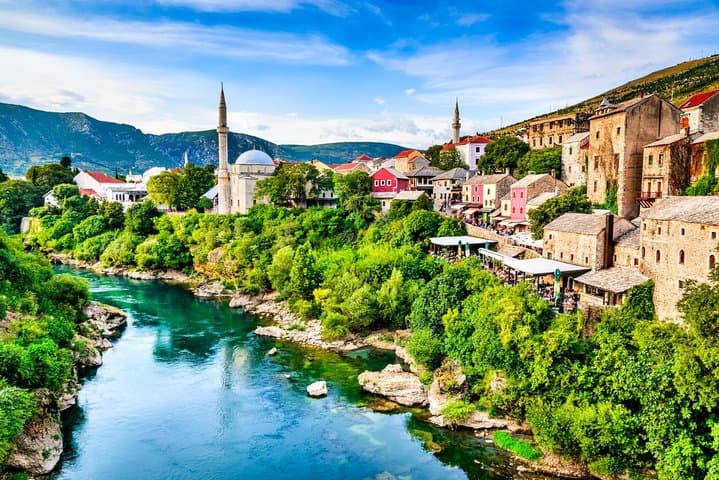
The region carries layers of history — Ottoman mosques and minarets, Austro-Hungarian architecture, and still-visible scars from the 1990s conflict that reshaped the landscape and the population. Geology matters here: the karst of Herzegovina sculpts steep cliffs and plunging river gorges; the Neretva’s cold, fast water has defined where towns grew and where bridges were built.
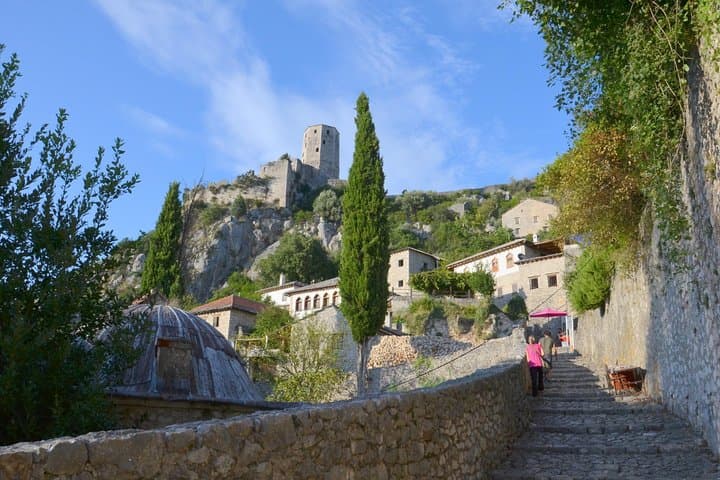
Culture is immediate and tactile: coffeehouses line the river, local leatherworkers and copper smiths sell on Kujundziluk, and Mostar’s bridge divers test the river’s pull with fearless tradition. Pocitelj, a fortified hill-town, offers a short climb and broad views over the Neretva.
Practical side: this is an 11-hour, full-day cross-border tour from Dubrovnik — bring a valid passport, small bills (many vendors prefer cash or euros), and comfortable shoes for slippery stones. Expect long vehicle stretches, brief guided stops, and ample free time to explore. Hydrate, wear sun protection in summer, and be prepared for narrow alleys and steps. Swap Medjugorje for Kravica Falls if you prefer a swim — confirm with the operator in advance. The trip is straightforward, historically rich, and best taken with a patient pace: it’s a day of contrasts, where pilgrimage, market life and bold river views meet.
easy.
11 hours.
Suitable for travelers in average fitness who can handle moderate walking on cobbles and several hours seated in a vehicle.
Yes. A current valid passport is required for travel across the Croatia–Bosnia and Herzegovina border.
Transport and guide/escort are included; admissions and meals are typically not included — bring cash for purchases and food.
Yes — the supplier may allow swapping the Medjugorje stop for Kravica Falls if you request it at least one day before the tour; confirm via the voucher contact number.
The tour involves cobbled streets, stairs, and some short climbs; it’s broadly suitable for most but may be difficult for those with significant mobility limitations.
Stari Most in Mostar was originally built in the 16th century by Ottoman architects, destroyed in 1993 and reconstructed in the early 2000s; Medjugorje became a major pilgrimage site after reported apparitions in 1981.
Tourism pressures concentrate on narrow Old Town streets and fragile riverbanks — stick to marked paths, avoid littering, and support local shops to keep benefits in the community.
Super Tours operates guided outdoor trips and adventures with an emphasis on safety, stewardship, and memorable experiences.
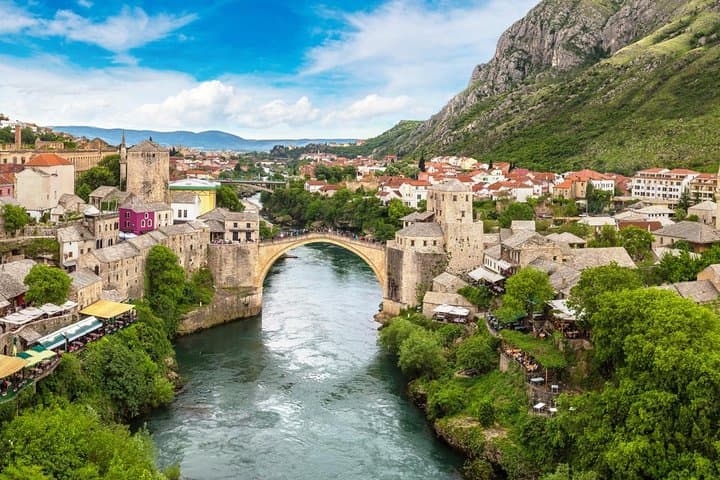
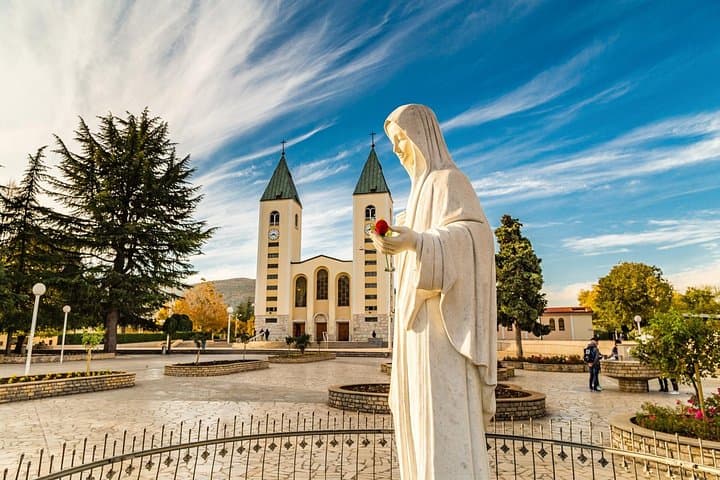
You step off an air-conditioned minibus and the valley opens: a green river threads through pale stone, and a single arched bridge crowns the town like a deliberate act of balance. The day begins in Medjugorje, where pilgrims walk quietly up the gentle slopes to Apparition Hill, then moves inland to Mostar’s Old Town, where cobbled streets and Ottoman-era facades frame the 16th-century Stari Most.
You step off an air-conditioned minibus and the valley opens: a green river threads through pale stone, and a single arched bridge crowns the town like a deliberate act of balance. The day begins in Medjugorje, where pilgrims walk quietly up the gentle slopes to Apparition Hill, then moves inland to Mostar’s Old Town, where cobbled streets and Ottoman-era facades frame the 16th-century Stari Most.
The region carries layers of history — Ottoman mosques and minarets, Austro-Hungarian architecture, and still-visible scars from the 1990s conflict that reshaped the landscape and the population. Geology matters here: the karst of Herzegovina sculpts steep cliffs and plunging river gorges; the Neretva’s cold, fast water has defined where towns grew and where bridges were built.
Culture is immediate and tactile: coffeehouses line the river, local leatherworkers and copper smiths sell on Kujundziluk, and Mostar’s bridge divers test the river’s pull with fearless tradition. Pocitelj, a fortified hill-town, offers a short climb and broad views over the Neretva.
Practical side: this is an 11-hour, full-day cross-border tour from Dubrovnik — bring a valid passport, small bills (many vendors prefer cash or euros), and comfortable shoes for slippery stones. Expect long vehicle stretches, brief guided stops, and ample free time to explore. Hydrate, wear sun protection in summer, and be prepared for narrow alleys and steps. Swap Medjugorje for Kravica Falls if you prefer a swim — confirm with the operator in advance. The trip is straightforward, historically rich, and best taken with a patient pace: it’s a day of contrasts, where pilgrimage, market life and bold river views meet.