THE ADVENTURE COLLECTIVE® · Independent discovery and booking for outdoor travel

Cross the Adriatic coast for a full-day journey from Split or Trogir to Mostar’s UNESCO-listed Old Bridge and the thundering Kravica Waterfall. This trip combines Ottoman history, karst geology and an optional swim beneath dramatic travertine falls.
Cross the Adriatic coast for a full-day journey from Split or Trogir to Mostar’s UNESCO-listed Old Bridge and the thundering Kravica Waterfall. This trip combines Ottoman history, karst geology and an optional swim beneath dramatic travertine falls.
A morning bus peels away from Split’s harbor and the Adriatic light, and the road dives inland through limestone ridges until you smell river water and wood smoke. By midmorning you’re in Mostar: narrow stone streets, a river that runs green and cold beneath the Old Bridge, and cafés where gamey Bosnian coffee steams in tiny cups. The guide’s voice threads through alleys, pointing out Ottoman-era arches and Austro-Hungarian facades that mark centuries of contested borders.
Verified experiences and guided adventures in the surrounding area.
Operated by South Tours Croatia · Mostar, Herzegovina-Neretva Canton
A morning bus peels away from Split’s harbor and the Adriatic light, and the road dives inland through limestone ridges until you smell river water and wood smoke. By midmorning you’re in Mostar: narrow stone streets, a river that runs green and cold beneath the Old Bridge, and cafés where gamey Bosnian coffee steams in tiny cups. The guide’s voice threads through alleys, pointing out Ottoman-era arches and Austro-Hungarian facades that mark centuries of contested borders.
Beyond the town, the landscape becomes karst—porous limestone that sculpts sinkholes, steep gorges and the stepped travertine ledges that feed Kravica. Kravica Waterfall arrives like a curtain of broad, jade water spilling into a semicircular pool; in summer locals picnic on terraces and jump from rocky shelves into the basin. The area blends cultural history with geology: Mostar’s 16th-century Stari Most bridge rebuilt after the 1990s conflict, and Kravica’s travertine shelves formed by mineral-rich water slowly cementing moss and pebbles.
Practicalities are straightforward but important: this is a cross-border day trip, so carry a valid passport and €5 in cash for the border fee. Wear sturdy shoes for cobblestones and a swimsuit for optional swimming at Kravica; waterproof sandals and a light towel are useful. Expect an early departure and a full day—plan snacks, a refillable bottle, and small bills for local vendors.
The route pairs urban history with a freshwater swim: it’s an accessible, sensory day that mixes cultural walking with a splash of nature.
easy.
8–12 hours.
Light — suitable for travelers able to handle walking on uneven cobbles and short, easy trails; no special fitness required.
Yes — the route crosses from Croatia into Bosnia and Herzegovina; all passengers must present a valid passport on the day of travel.
Swimming is optional and season-dependent; access is typically available in warmer months but not guaranteed—bring swimwear if you want to enter the water.
The described itinerary does not include optional admission or personal expenses; a small border fee is payable in cash at the meeting point as noted by the operator.
Expect moderate walking on uneven cobblestones and short slopes around the Old Bridge area—comfortable shoes are recommended.
Mostar’s Stari Most was built in the 16th century during Ottoman rule and reconstructed after wartime destruction in the 1990s; the town reflects Ottoman, Austro-Hungarian and Balkan histories.
Kravica’s travertine pools are sensitive to pollution and crowding; visitors are encouraged to follow local rules, avoid littering and use designated swimming areas to protect habitats.
South Tours Croatia operates guided outdoor trips and adventures with an emphasis on safety, stewardship, and memorable experiences.
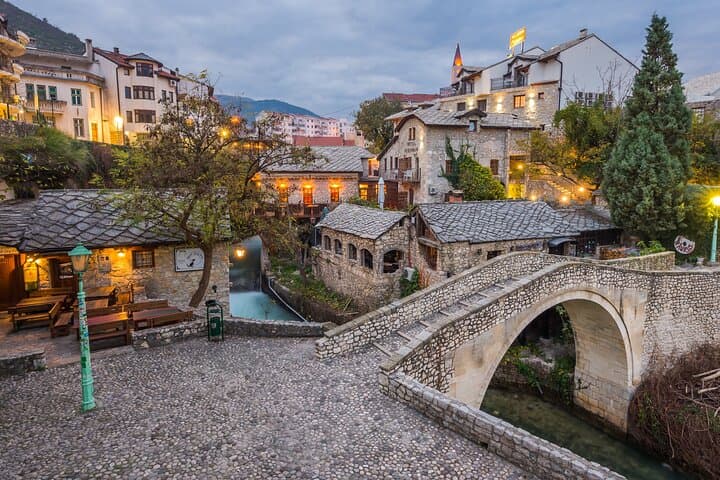
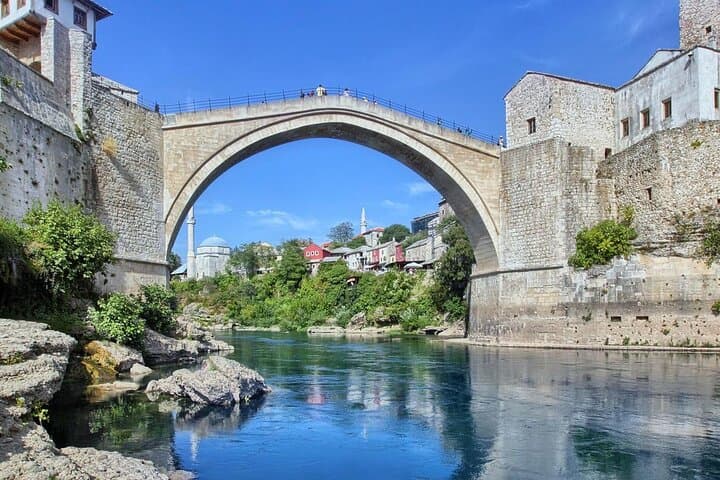
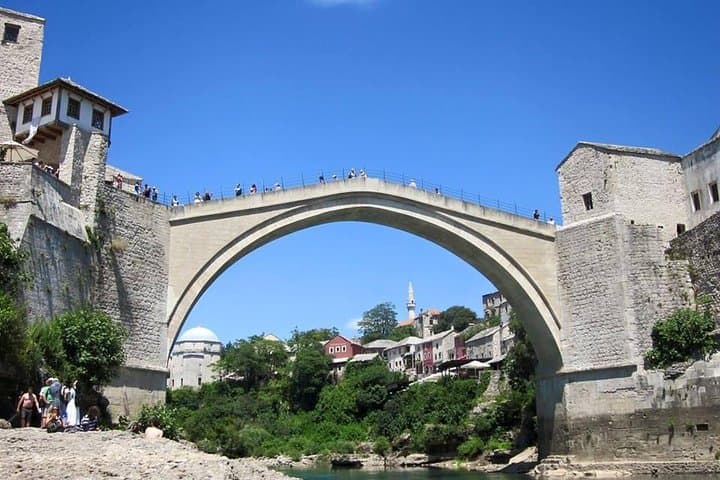
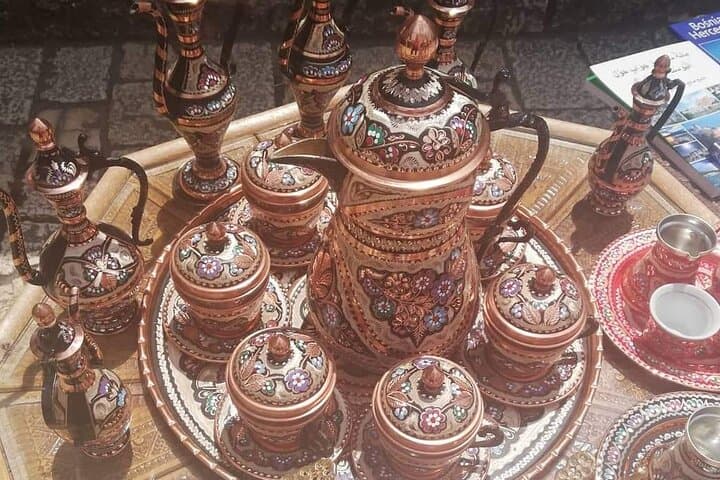
A morning bus peels away from Split’s harbor and the Adriatic light, and the road dives inland through limestone ridges until you smell river water and wood smoke. By midmorning you’re in Mostar: narrow stone streets, a river that runs green and cold beneath the Old Bridge, and cafés where gamey Bosnian coffee steams in tiny cups. The guide’s voice threads through alleys, pointing out Ottoman-era arches and Austro-Hungarian facades that mark centuries of contested borders.
A morning bus peels away from Split’s harbor and the Adriatic light, and the road dives inland through limestone ridges until you smell river water and wood smoke. By midmorning you’re in Mostar: narrow stone streets, a river that runs green and cold beneath the Old Bridge, and cafés where gamey Bosnian coffee steams in tiny cups. The guide’s voice threads through alleys, pointing out Ottoman-era arches and Austro-Hungarian facades that mark centuries of contested borders.
Beyond the town, the landscape becomes karst—porous limestone that sculpts sinkholes, steep gorges and the stepped travertine ledges that feed Kravica. Kravica Waterfall arrives like a curtain of broad, jade water spilling into a semicircular pool; in summer locals picnic on terraces and jump from rocky shelves into the basin. The area blends cultural history with geology: Mostar’s 16th-century Stari Most bridge rebuilt after the 1990s conflict, and Kravica’s travertine shelves formed by mineral-rich water slowly cementing moss and pebbles.
Practicalities are straightforward but important: this is a cross-border day trip, so carry a valid passport and €5 in cash for the border fee. Wear sturdy shoes for cobblestones and a swimsuit for optional swimming at Kravica; waterproof sandals and a light towel are useful. Expect an early departure and a full day—plan snacks, a refillable bottle, and small bills for local vendors.
The route pairs urban history with a freshwater swim: it’s an accessible, sensory day that mixes cultural walking with a splash of nature.