THE ADVENTURE COLLECTIVE® · Independent discovery and booking for outdoor travel

A full-day, small-group drive from Dubrovnik that pairs Kravica’s tufa waterfalls with Mostar’s UNESCO-listed Old Bridge. Expect a long but rewarding day of swims, history and karst scenery—bring passport, cash and sturdy shoes.
A full-day, small-group drive from Dubrovnik that pairs Kravica’s tufa waterfalls with Mostar’s UNESCO-listed Old Bridge. Expect a long but rewarding day of swims, history and karst scenery—bring passport, cash and sturdy shoes.
A pre-dawn van pulls away from Dubrovnik's limestone roofs and hugs the Adriatic, the sea shrinking behind you as the road climbs toward the Pelješac Bridge. Mountain silhouettes open onto the Neretva valley; the river below looks as if it dared to cut its own channel through the karst.
Verified experiences and guided adventures in the surrounding area.
Operated by Dubrovnik Smile · Mostar, Herzegovina-Neretva Canton
A pre-dawn van pulls away from Dubrovnik's limestone roofs and hugs the Adriatic, the sea shrinking behind you as the road climbs toward the Pelješac Bridge. Mountain silhouettes open onto the Neretva valley; the river below looks as if it dared to cut its own channel through the karst.
First stop, Kravica: a broad tufa cascade that drops roughly 25 metres into a semicircular pool about 120 metres across. The water pushes forward with confident, steady force; in summer it invites swims and picnics, while off-season the falls read as a cool, misted amphitheater. Geologically, Kravica is a classic karst spring-and-tufa system—calcium-rich water deposits build the rim and terraces that give the falls their curtain-like shape.
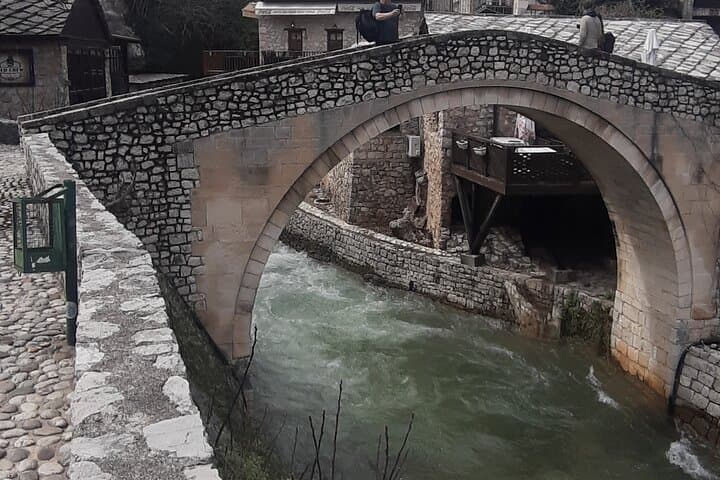
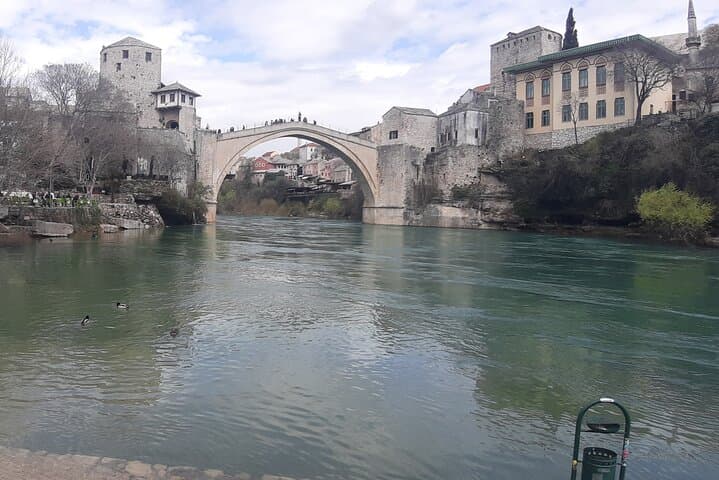
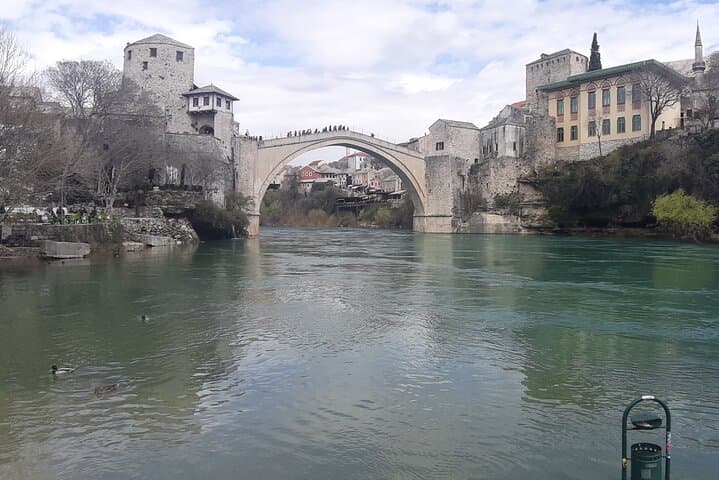
Later, Mostar unfolds on the Neretva: a 16th-century Ottoman bridge once splashed apart by 1990s conflict and rebuilt as a modern symbol of the city. Stari Most’s reconstructed arch frames the market alleys, mosques and riverside cafés; local guides point out Ottoman-era houses and the stone craftsmen’s quarter.
Practicalities matter on this cross-border day trip. Expect a long day (about 12 hours total), a border check and an entrance fee to Kravica (cash only, around €10). Wear grippy shoes for uneven paths, bring swimwear and a quick-dry towel in summer, and carry snacks and at least 1–2 liters of water. Passport and comfortable layering are essential—temperatures change from coastal warmth to inland shade.
This small-group excursion balances scenic stops with practical rhythm: plenty of photo opportunities, a controlled pace through customs, and a clear chance to swim, stroll and learn about the layered history of Herzegovina.
moderate.
10–12 hours.
Suitable for people who can sit through long drives and walk on uneven surfaces for short periods; swimming is optional.
Yes. The tour crosses the Croatia–Bosnia and Herzegovina border; a current passport is required for all participants.
No. The entrance fee to Kravica is not included and is usually about €10 per person—cash only.
Expect around 10–12 hours total for pickup, travel, stops at Kravica and Mostar, and return to Dubrovnik.
Yes, swimming is common in summer when conditions are safe; bring swimwear and be prepared for rocky access and changing facilities that may be basic.
Stari Most in Mostar was originally built by the Ottomans in the 16th century, destroyed in 1993 and reconstructed and reopened in 2004 as a symbol of reconciliation.
Kravica sits in a sensitive karst watershed—avoid soaps in the water, stay on marked paths, and respect signs to minimize erosion and protect habitats.
Dubrovnik Smile operates guided outdoor trips and adventures with an emphasis on safety, stewardship, and memorable experiences.

A pre-dawn van pulls away from Dubrovnik's limestone roofs and hugs the Adriatic, the sea shrinking behind you as the road climbs toward the Pelješac Bridge. Mountain silhouettes open onto the Neretva valley; the river below looks as if it dared to cut its own channel through the karst.
A pre-dawn van pulls away from Dubrovnik's limestone roofs and hugs the Adriatic, the sea shrinking behind you as the road climbs toward the Pelješac Bridge. Mountain silhouettes open onto the Neretva valley; the river below looks as if it dared to cut its own channel through the karst.
First stop, Kravica: a broad tufa cascade that drops roughly 25 metres into a semicircular pool about 120 metres across. The water pushes forward with confident, steady force; in summer it invites swims and picnics, while off-season the falls read as a cool, misted amphitheater. Geologically, Kravica is a classic karst spring-and-tufa system—calcium-rich water deposits build the rim and terraces that give the falls their curtain-like shape.
Later, Mostar unfolds on the Neretva: a 16th-century Ottoman bridge once splashed apart by 1990s conflict and rebuilt as a modern symbol of the city. Stari Most’s reconstructed arch frames the market alleys, mosques and riverside cafés; local guides point out Ottoman-era houses and the stone craftsmen’s quarter.
Practicalities matter on this cross-border day trip. Expect a long day (about 12 hours total), a border check and an entrance fee to Kravica (cash only, around €10). Wear grippy shoes for uneven paths, bring swimwear and a quick-dry towel in summer, and carry snacks and at least 1–2 liters of water. Passport and comfortable layering are essential—temperatures change from coastal warmth to inland shade.
This small-group excursion balances scenic stops with practical rhythm: plenty of photo opportunities, a controlled pace through customs, and a clear chance to swim, stroll and learn about the layered history of Herzegovina.