THE ADVENTURE COLLECTIVE® · Independent discovery and booking for outdoor travel

Descend from Sarajevo into the dramatic canyons of Herzegovina on an 11‑hour day tour that links Konjic, Jablanica, Kravica Falls, Počitelj, Blagaj Tekke and Mostar’s Old Bridge—history, karst rivers and Ottoman architecture in one long, revealing day.
Descend from Sarajevo into the dramatic canyons of Herzegovina on an 11‑hour day tour that links Konjic, Jablanica, Kravica Falls, Počitelj, Blagaj Tekke and Mostar’s Old Bridge—history, karst rivers and Ottoman architecture in one long, revealing day.
Morning light spills over Sarajevo as the minarets and Austro-Hungarian facades blink awake; you board an air-conditioned vehicle and the city’s bustle recedes into limestone ridges. The road drops toward Herzegovina and the landscape changes—rocky folds give way to river canyons and olive-scattered slopes. Konjic appears first, its 17th-century stone bridge arching above the turquoise Neretva, a compact place to hear stories of Tito’s bunker and white-water runs on the upper river.
Verified experiences and guided adventures in the surrounding area.
Operated by Funky Tours · Sarajevo, Federation of Bosnia and Herzegovina
Morning light spills over Sarajevo as the minarets and Austro-Hungarian facades blink awake; you board an air-conditioned vehicle and the city’s bustle recedes into limestone ridges. The road drops toward Herzegovina and the landscape changes—rocky folds give way to river canyons and olive-scattered slopes. Konjic appears first, its 17th-century stone bridge arching above the turquoise Neretva, a compact place to hear stories of Tito’s bunker and white-water runs on the upper river.
Further south the route skirts Jablaničko Lake and Prenj’s steely massifs before Jablanica, where wartime history and spit-roasted lamb are part of the local narrative. Kravica Waterfall interrupts the drive with a 28 m curtain of water and a broad natural pool—swimming here is popular in warm months.
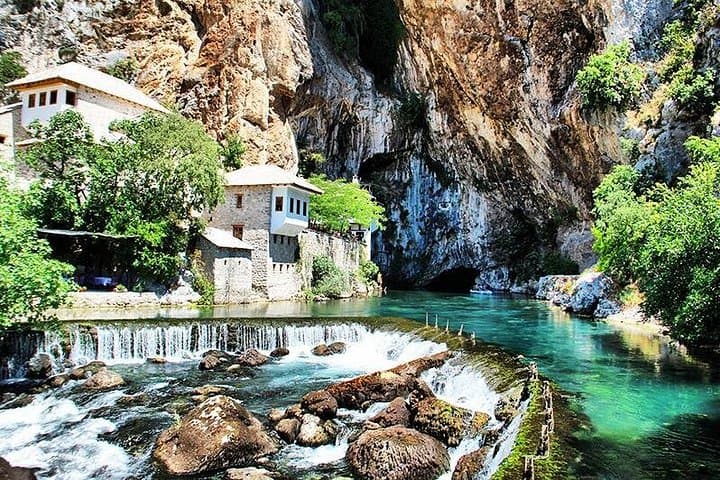
Počitelj requires an easy uphill stroll through Ottoman-era lanes to towers and a clock that mark its strategic past. At Blagaj you stand beneath a sheer cliff at the Buna spring, where water punches out of karst and feeds a dervish tekke—an architectural and spiritual site that still hosts prayers.
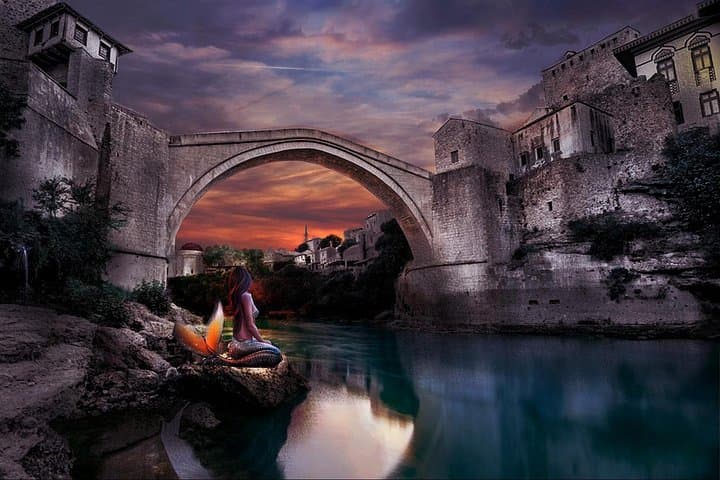
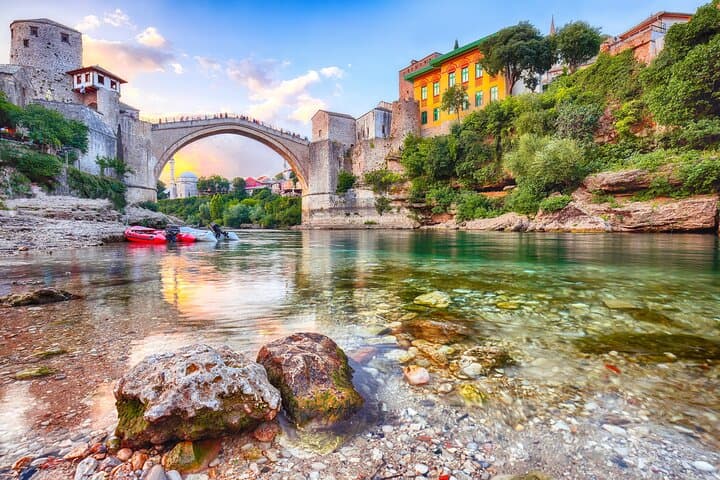
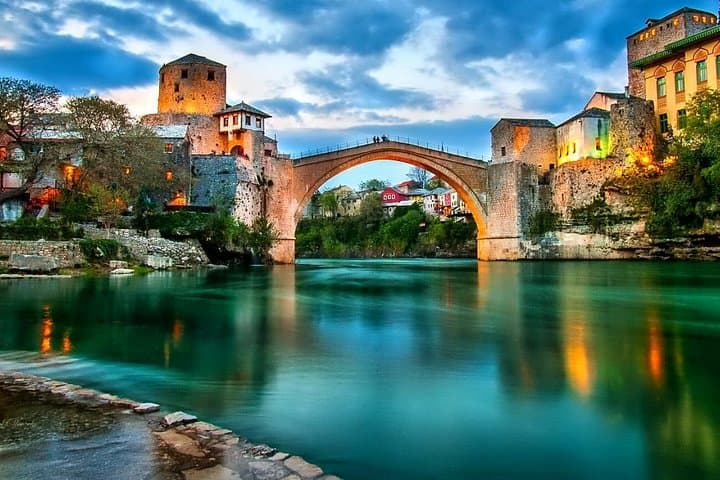
The day ends in Mostar with a focused two-hour walk: the Old Bridge, bazaar lanes, and reconstruction stories that trace conflict and renewal.
Practical edge: expect an 11-hour day with multiple short walks and uneven stone streets. Carry cash for small lunches (8–12 EUR), pack a refillable water bottle, wear sturdy shoes for cobbled and riverside terrain, and plan to return to Sarajevo by evening. Guides cover entrance fees listed, but times and stops can shift with traffic and weather.
easy.
10–11 hours.
Suitable for travelers with basic mobility; expect several short walks and one uphill stretch in Počitelj.
Most listed admissions (Blagaj Tekke and Kravica Waterfall as specified) are included in the tour price; check your confirmation for final details.
Lunch is not included—plan about 8–12 EUR for a trout meal in Blagaj or other local options.
Pick-up from central Sarajevo points is arranged; your booking will request a pickup point or you can meet at the office.
The tour notes stroller accessibility for infants in prams, but several sites have uneven terrain and steps; parental discretion advised.
This corridor mixes Ottoman-era fortified towns, Austro-Hungarian infrastructure and 20th-century wartime history—Mostar’s Old Bridge is a focal point of reconstruction after the 1990s conflict.
Karst springs like the Buna are sensitive to pollution and overuse—respect local signs, avoid littering and use licensed guides and restaurants to support community stewardship.
Funky Tours operates guided outdoor trips and adventures with an emphasis on safety, stewardship, and memorable experiences.
Morning light spills over Sarajevo as the minarets and Austro-Hungarian facades blink awake; you board an air-conditioned vehicle and the city’s bustle recedes into limestone ridges. The road drops toward Herzegovina and the landscape changes—rocky folds give way to river canyons and olive-scattered slopes. Konjic appears first, its 17th-century stone bridge arching above the turquoise Neretva, a compact place to hear stories of Tito’s bunker and white-water runs on the upper river.
Morning light spills over Sarajevo as the minarets and Austro-Hungarian facades blink awake; you board an air-conditioned vehicle and the city’s bustle recedes into limestone ridges. The road drops toward Herzegovina and the landscape changes—rocky folds give way to river canyons and olive-scattered slopes. Konjic appears first, its 17th-century stone bridge arching above the turquoise Neretva, a compact place to hear stories of Tito’s bunker and white-water runs on the upper river.
Further south the route skirts Jablaničko Lake and Prenj’s steely massifs before Jablanica, where wartime history and spit-roasted lamb are part of the local narrative. Kravica Waterfall interrupts the drive with a 28 m curtain of water and a broad natural pool—swimming here is popular in warm months.
Počitelj requires an easy uphill stroll through Ottoman-era lanes to towers and a clock that mark its strategic past. At Blagaj you stand beneath a sheer cliff at the Buna spring, where water punches out of karst and feeds a dervish tekke—an architectural and spiritual site that still hosts prayers.
The day ends in Mostar with a focused two-hour walk: the Old Bridge, bazaar lanes, and reconstruction stories that trace conflict and renewal.
Practical edge: expect an 11-hour day with multiple short walks and uneven stone streets. Carry cash for small lunches (8–12 EUR), pack a refillable water bottle, wear sturdy shoes for cobbled and riverside terrain, and plan to return to Sarajevo by evening. Guides cover entrance fees listed, but times and stops can shift with traffic and weather.