THE ADVENTURE COLLECTIVE® · Independent discovery and booking for outdoor travel

A seven-day Machame ascent moves from rainforest to alpine desert, culminating at Uhuru Peak (5,895 m). This small-group trek emphasizes acclimatization, local support crews, and varied terrain—prepare for long days, steep scree and cold summit-night conditions.
A seven-day Machame ascent moves from rainforest to alpine desert, culminating at Uhuru Peak (5,895 m). This small-group trek emphasizes acclimatization, local support crews, and varied terrain—prepare for long days, steep scree and cold summit-night conditions.
Night at the lodge in Moshi, a headlamp-studded line of climbers steps into the rainforest, breath steaming in the cool air as the Machame route immediately begins to climb. For seven days the mountain changes its moods: dense, dripping forest gives way to heath and moorland, then to an afro-alpine desert where giant lobelia and senecio point like markers toward Kibo’s glaciers.
Verified experiences and guided adventures in the surrounding area.
Operated by Go With Me Photographic Safaris · Moshi, Kilimanjaro Region
Night at the lodge in Moshi, a headlamp-studded line of climbers steps into the rainforest, breath steaming in the cool air as the Machame route immediately begins to climb. For seven days the mountain changes its moods: dense, dripping forest gives way to heath and moorland, then to an afro-alpine desert where giant lobelia and senecio point like markers toward Kibo’s glaciers.
Kilimanjaro is a dormant stratovolcano whose peaks—Shira, Mawenzi and Kibo—reflect both geological fire and long-term erosion. The Machame route approaches Kibo from the south-west, tracing old lava flows and glacial moraine while passing through ecosystems that local Chagga communities have worked and walked for centuries. Guides and porters are an essential part of the mountain’s living culture and economy; their skills and knowledge of acclimatization shape success as much as fitness.
Practical guidance: expect total elevation from Machame Gate (≈1,790 m) to Uhuru Peak (5,895 m), with cumulative ascent of roughly 4,100 m over 7 days and varied terrain—muddy trails, steep switchbacks, rocky scree and a pre-dawn summit push on loose volcanic gravel. Hydration, slow pacing and layered clothing are non-negotiable. Use gaiters and a crampon-capable boot for the upper slopes; a good sleeping bag rated to -10°C and a reliable headlamp make summit-night tolerable.
Acclimatize by taking the provided rest days seriously, listen to your guide about symptoms of altitude sickness, and plan flights to allow one buffer day in Moshi after descent.
challenging.
7 days.
Requires good aerobic fitness and leg strength for sustained ascents and long days; prior multi-day hiking experience strongly recommended
Yes—this tour lists park fees, camping equipment, porterage and meals as included in the itinerary; confirm final inclusions with your operator.
Uhuru Peak is 5,895 m; from Machame Gate (~1,790 m) expect roughly 4,100 m of cumulative ascent spread over seven days.
Good aerobic fitness and prior multi-day hiking experience are recommended; you should be comfortable hiking 5–8 hours on successive days with a light daypack.
Acute mountain sickness is relatively common above 3,000 m; guides monitor symptoms, enforce rest and descent when necessary, and rescue/evacuation fees are included by this operator.
The slopes of Kilimanjaro are home to Chagga communities whose agricultural terraces and oral histories have shaped the region; the mountain has long been a cultural landmark and navigation point for local people.
Kilimanjaro National Park protects fragile high-altitude ecosystems; stick to established paths, minimize campfire use and support local guides and porters to reduce environmental pressure.
Go With Me Photographic Safaris operates guided outdoor trips and adventures with an emphasis on safety, stewardship, and memorable experiences.
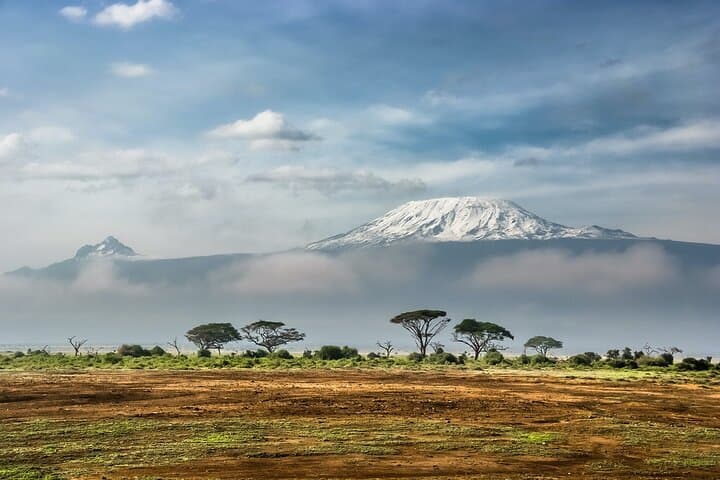


Night at the lodge in Moshi, a headlamp-studded line of climbers steps into the rainforest, breath steaming in the cool air as the Machame route immediately begins to climb. For seven days the mountain changes its moods: dense, dripping forest gives way to heath and moorland, then to an afro-alpine desert where giant lobelia and senecio point like markers toward Kibo’s glaciers.
Night at the lodge in Moshi, a headlamp-studded line of climbers steps into the rainforest, breath steaming in the cool air as the Machame route immediately begins to climb. For seven days the mountain changes its moods: dense, dripping forest gives way to heath and moorland, then to an afro-alpine desert where giant lobelia and senecio point like markers toward Kibo’s glaciers.
Kilimanjaro is a dormant stratovolcano whose peaks—Shira, Mawenzi and Kibo—reflect both geological fire and long-term erosion. The Machame route approaches Kibo from the south-west, tracing old lava flows and glacial moraine while passing through ecosystems that local Chagga communities have worked and walked for centuries. Guides and porters are an essential part of the mountain’s living culture and economy; their skills and knowledge of acclimatization shape success as much as fitness.
Practical guidance: expect total elevation from Machame Gate (≈1,790 m) to Uhuru Peak (5,895 m), with cumulative ascent of roughly 4,100 m over 7 days and varied terrain—muddy trails, steep switchbacks, rocky scree and a pre-dawn summit push on loose volcanic gravel. Hydration, slow pacing and layered clothing are non-negotiable. Use gaiters and a crampon-capable boot for the upper slopes; a good sleeping bag rated to -10°C and a reliable headlamp make summit-night tolerable.
Acclimatize by taking the provided rest days seriously, listen to your guide about symptoms of altitude sickness, and plan flights to allow one buffer day in Moshi after descent.