THE ADVENTURE COLLECTIVE® · Independent discovery and booking for outdoor travel

A full-day guided excursion from Sharm el Sheikh to Saint Catherine’s Monastery and the summit of Moses’ Mountain. Expect ancient churches, steep stone stairways, and a pre-dawn climb for sunrise views—plus long drives across the Sinai plateau.
A full-day guided excursion from Sharm el Sheikh to Saint Catherine’s Monastery and the summit of Moses’ Mountain. Expect ancient churches, steep stone stairways, and a pre-dawn climb for sunrise views—plus long drives across the Sinai plateau.
Before dawn a convoy leaves Sharm el Sheikh and the desert opens like a slow-moving ocean; the road folds across Sinai’s stony plains and the air cools as the highway climbs toward the massif of Jebel Musa. At the monastery’s outer wall the first lamps reveal ancient stones and the church’s compact courtyard—Christian art and woodwork that have survived centuries of pilgrimage.
Verified experiences and guided adventures in the surrounding area.
Operated by Egypt Tours Online · Saint Catherine, South Sinai Governorate
Before dawn a convoy leaves Sharm el Sheikh and the desert opens like a slow-moving ocean; the road folds across Sinai’s stony plains and the air cools as the highway climbs toward the massif of Jebel Musa. At the monastery’s outer wall the first lamps reveal ancient stones and the church’s compact courtyard—Christian art and woodwork that have survived centuries of pilgrimage.
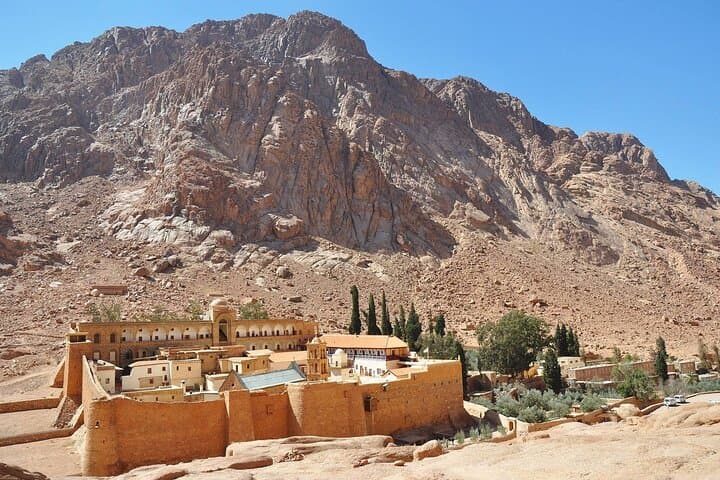
Saint Catherine’s Monastery sits at the foot of Moses’ Mountain, a geology of granite and volcanic outcrops carved by wind and rare rains. Founded in the 6th century, the monastery holds Byzantine icons and manuscripts that trace the region’s long role as a crossroads of faiths and empires. Local Bedouin history threads through the valley; guides often point out small herding paths and rock inscriptions that predate modern borders.
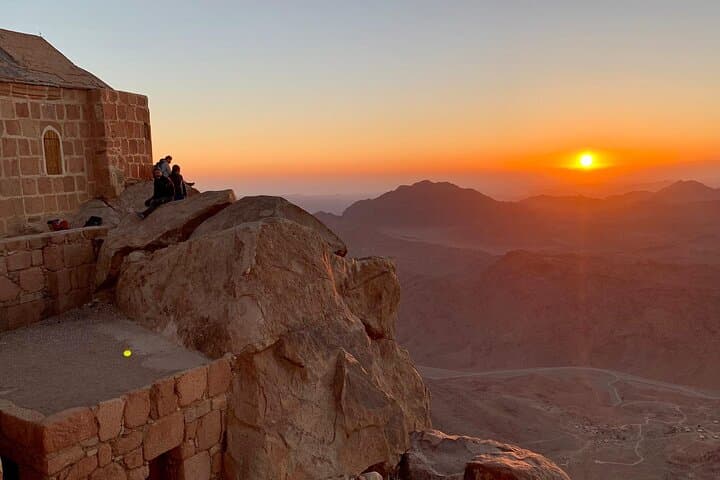
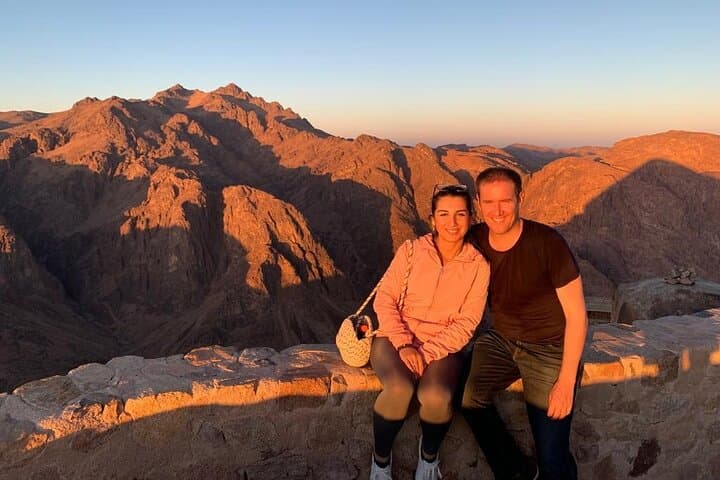
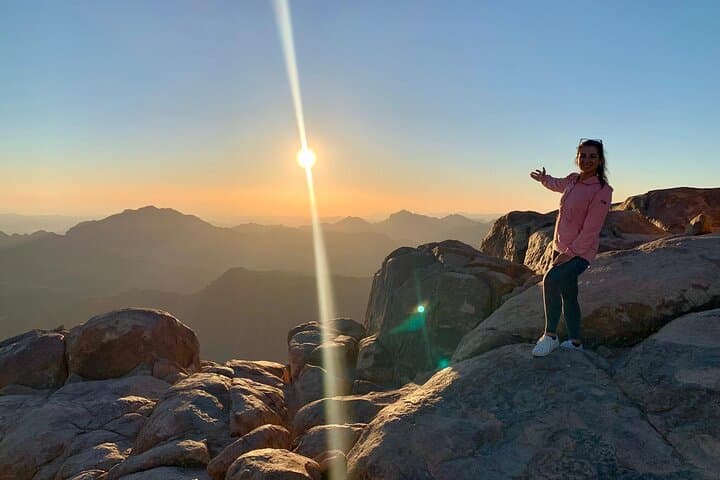
Visitors can choose the stone staircase (the Camel Path) or the steeper steps to the summit—both demand steady footing and respect for the site’s religious protocols: modest dress inside the monastery and quiet near chapels. Sunrise from the summit rewards a hard hour-plus climb with a wide panorama: ridgelines, the Gulf of Aqaba glinting distant, and the desert stretching toward the Red Sea.
Practically, expect a long day—transport can take several hours each way from Sharm, and summit conditions change quickly. Bring water, a headlamp for pre-dawn starts, layered clothing for cold winds, and shoes with grip for loose rock. For travelers seeking history, landscape, and a brisk alpine-style climb in the desert, this is a rare single-day combination of culture and high-place exposure.
moderate.
10–15 hours.
Suitable for travelers with regular aerobic fitness who can handle sustained uphill walking and stairs; brief rest breaks common.
From the monastery to the summit typically takes 1.5–3 hours depending on route, pace, and fitness—allow extra time for stops and sunrise viewing.
Yes—modest dress is expected (shoulders and knees covered), photography rules may apply in chapels, and visitors should maintain respectful silence in worship areas.
The steep stone steps and uneven terrain make the summit climb unsuitable for those with limited mobility; children capable of sustained walking may participate with supervision.
Road distance is about 200–220 km; transfer time is roughly 3–4 hours each way depending on traffic and road conditions, making this a full-day excursion.
Saint Catherine’s Monastery dates to the 6th century and preserves medieval icons and manuscripts; it has been a continuous pilgrimage site for over 1,400 years.
Visitor pressure and limited water resources mean staying on marked paths and packing out waste are essential; support local guides who follow low-impact practices.
Egypt Tours Online operates guided outdoor trips and adventures with an emphasis on safety, stewardship, and memorable experiences.
Before dawn a convoy leaves Sharm el Sheikh and the desert opens like a slow-moving ocean; the road folds across Sinai’s stony plains and the air cools as the highway climbs toward the massif of Jebel Musa. At the monastery’s outer wall the first lamps reveal ancient stones and the church’s compact courtyard—Christian art and woodwork that have survived centuries of pilgrimage.
Before dawn a convoy leaves Sharm el Sheikh and the desert opens like a slow-moving ocean; the road folds across Sinai’s stony plains and the air cools as the highway climbs toward the massif of Jebel Musa. At the monastery’s outer wall the first lamps reveal ancient stones and the church’s compact courtyard—Christian art and woodwork that have survived centuries of pilgrimage.
Saint Catherine’s Monastery sits at the foot of Moses’ Mountain, a geology of granite and volcanic outcrops carved by wind and rare rains. Founded in the 6th century, the monastery holds Byzantine icons and manuscripts that trace the region’s long role as a crossroads of faiths and empires. Local Bedouin history threads through the valley; guides often point out small herding paths and rock inscriptions that predate modern borders.
Visitors can choose the stone staircase (the Camel Path) or the steeper steps to the summit—both demand steady footing and respect for the site’s religious protocols: modest dress inside the monastery and quiet near chapels. Sunrise from the summit rewards a hard hour-plus climb with a wide panorama: ridgelines, the Gulf of Aqaba glinting distant, and the desert stretching toward the Red Sea.
Practically, expect a long day—transport can take several hours each way from Sharm, and summit conditions change quickly. Bring water, a headlamp for pre-dawn starts, layered clothing for cold winds, and shoes with grip for loose rock. For travelers seeking history, landscape, and a brisk alpine-style climb in the desert, this is a rare single-day combination of culture and high-place exposure.