THE ADVENTURE COLLECTIVE® · Independent discovery and booking for outdoor travel

A private, 9-day circuit that pairs Marrakech’s medina energy with Sahara camels, Atlas passes, and Fes’s old-world craft. Expect long scenic drives, a desert overnight, guided medina walks, and local-family visits.
A private, 9-day circuit that pairs Marrakech’s medina energy with Sahara camels, Atlas passes, and Fes’s old-world craft. Expect long scenic drives, a desert overnight, guided medina walks, and local-family visits.
At dawn in Jamaa el Fna the square hums like a living map: coffee steam rises, snake-charmers gather their coils, and a driver awaits with a placard. On this nine-day private route travelers move from Marrakech’s ochre alleys into the High Atlas, down to the satin dunes of Merzouga, then north through cedar forests to the blue lanes of Chefchaouen and the medinas of Fes and Casablanca.
Verified experiences and guided adventures in the surrounding area.
Operated by Morocco Hidden Spots · Marrakech, Marrakech-Safi
At dawn in Jamaa el Fna the square hums like a living map: coffee steam rises, snake-charmers gather their coils, and a driver awaits with a placard. On this nine-day private route travelers move from Marrakech’s ochre alleys into the High Atlas, down to the satin dunes of Merzouga, then north through cedar forests to the blue lanes of Chefchaouen and the medinas of Fes and Casablanca.
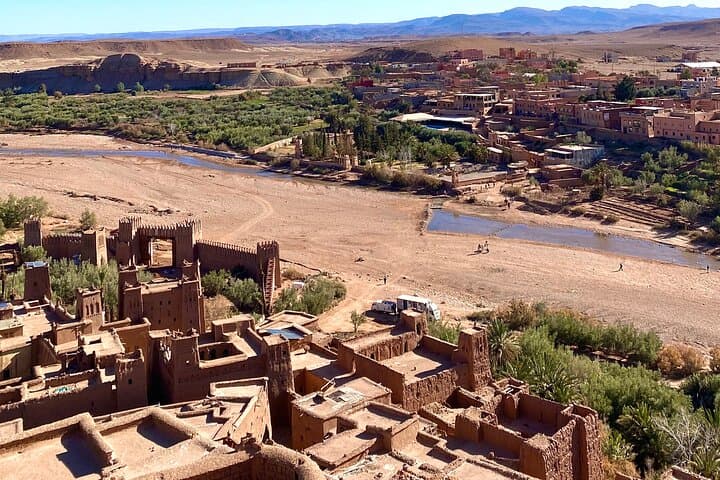
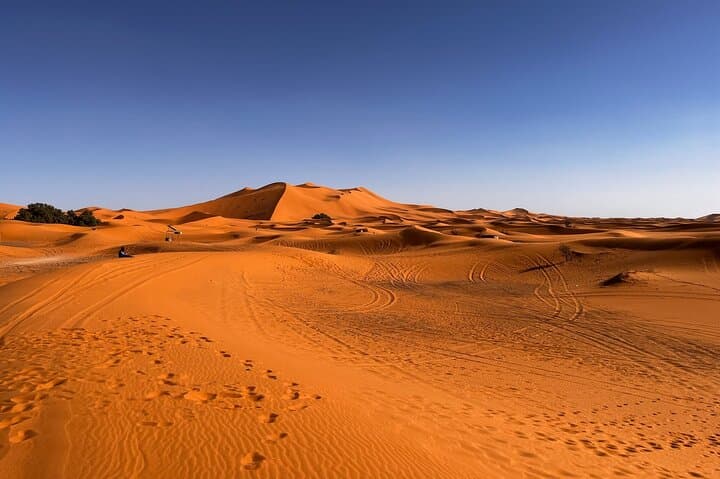
Geology and history shape every turn. The Tizi n’Tichka pass cuts across ancient folded rock, while the Sahara’s dunes are wind-sculpted ridges that push the horizon outward. Kasbahs like Ait Ben Haddou record Berber and Saadian strategies of defense and trade; Fes preserves medieval craft routes and the world’s oldest continually operating university.
Cultural threads run close: shared mint tea ceremonies, Gnawa rhythms in Khamlia, and nights under desert skies where the dunes seem to breathe. Local guides translate not just language but lineage — household visits open private histories tied to the landscape.
Practical precision matters. Expect long drives (multiple 4–6 hour legs), short hikes through gorges, a two- to three-hour camel trek at sunset, and one overnight in a desert camp. Pack layered clothing for hot days and cool evenings, bring sturdy shoes for uneven kasbah alleys and gorge trails, and carry at least 2–3 liters of water on excursions. Timing is simple: start early in mountain passes to avoid afternoon heat, and allow buffer time for photography and market stops. This itinerary balances immersive culture with outdoor movement — it’s an accessible, active way to experience Morocco’s geographic and human diversity.
moderate.
9 days.
Suitable for travelers in good general health who can handle multiple long drives, short hikes, and a camel trek; minimal sustained aerobic effort required.
Meet at Jamaa el Fna near Café France where the driver will hold a reservation sign; specific pickup details are confirmed at booking.
Desert camps provide tented beds, blankets and communal meals; expect simple comforts and cooler night temperatures—sleeping outdoors is optional.
No technical climbs: walks include short gorge hikes and village explorations; the tour is designed to be accessible to most active travelers.
Arabic and French are common; guides speak English. Carry Moroccan dirhams for local purchases and small tips.
Routes follow ancient trans-Saharan and caravan lines; kasbahs and ksours reflect centuries of Berber settlement and trade organization.
Stick to established paths in dunes and gorges to limit erosion; support locally run lodgings and guides to keep economic benefits in communities.
Morocco Hidden Spots operates guided outdoor trips and adventures with an emphasis on safety, stewardship, and memorable experiences.

At dawn in Jamaa el Fna the square hums like a living map: coffee steam rises, snake-charmers gather their coils, and a driver awaits with a placard. On this nine-day private route travelers move from Marrakech’s ochre alleys into the High Atlas, down to the satin dunes of Merzouga, then north through cedar forests to the blue lanes of Chefchaouen and the medinas of Fes and Casablanca.
At dawn in Jamaa el Fna the square hums like a living map: coffee steam rises, snake-charmers gather their coils, and a driver awaits with a placard. On this nine-day private route travelers move from Marrakech’s ochre alleys into the High Atlas, down to the satin dunes of Merzouga, then north through cedar forests to the blue lanes of Chefchaouen and the medinas of Fes and Casablanca.
Geology and history shape every turn. The Tizi n’Tichka pass cuts across ancient folded rock, while the Sahara’s dunes are wind-sculpted ridges that push the horizon outward. Kasbahs like Ait Ben Haddou record Berber and Saadian strategies of defense and trade; Fes preserves medieval craft routes and the world’s oldest continually operating university.
Cultural threads run close: shared mint tea ceremonies, Gnawa rhythms in Khamlia, and nights under desert skies where the dunes seem to breathe. Local guides translate not just language but lineage — household visits open private histories tied to the landscape.
Practical precision matters. Expect long drives (multiple 4–6 hour legs), short hikes through gorges, a two- to three-hour camel trek at sunset, and one overnight in a desert camp. Pack layered clothing for hot days and cool evenings, bring sturdy shoes for uneven kasbah alleys and gorge trails, and carry at least 2–3 liters of water on excursions. Timing is simple: start early in mountain passes to avoid afternoon heat, and allow buffer time for photography and market stops. This itinerary balances immersive culture with outdoor movement — it’s an accessible, active way to experience Morocco’s geographic and human diversity.