THE ADVENTURE COLLECTIVE® · Independent discovery and booking for outdoor travel

An 11‑day circuit from Marrakech that moves from High Atlas passes and UNESCO kasbahs to a night in the Merzouga dunes and finishes on the Atlantic coast. Expect long drives, short hikes, cultural immersion and a desert sleep under the stars.
An 11‑day circuit from Marrakech that moves from High Atlas passes and UNESCO kasbahs to a night in the Merzouga dunes and finishes on the Atlantic coast. Expect long drives, short hikes, cultural immersion and a desert sleep under the stars.
You step out of Marrakech’s dry heat into a kaleidoscope of alleys, spices and the call to prayer — the starting stanza of an 11‑day route that threads High Atlas passes, ksars, deep gorges and a night under desert stars.
Verified experiences and guided adventures in the surrounding area.
Operated by Tilila Travel · Marrakech, Marrakech-Safi
You step out of Marrakech’s dry heat into a kaleidoscope of alleys, spices and the call to prayer — the starting stanza of an 11‑day route that threads High Atlas passes, ksars, deep gorges and a night under desert stars.
The road climbs Tizi n’Tichka (~2,260 m) where ancient Berber villages cling to sunbaked slopes, then drops toward the earthen ramparts of Aït Ben Haddou, a UNESCO kasbah that once watched caravan traffic and later movie crews. Geology flips from volcanic and folded Atlas ranges to the wind‑sculpted sands of Erg Chebbi; Todra’s limestone walls rise 200–300 m, forcing intimate canyon treks and climbers’ routes. Cultural layers are visible everywhere: Berber hospitality, Fes’ medieval medina and the bluewashed alleys of Chefchaouen in the Rif.
Expect practical rhythms—early departures for long driving days (several 3–6 hour segments), short on‑foot explorations in medinas and gorges, and a 90–120 minute sunset camel transfer to a bivouac in Merzouga. Nights vary from riads and hotels to nomad tents where temperature swings demand layers.
Plan for dusty tracks, loose sand and uneven cobbles; pack a headlamp, sturdy footwear and cash for souks. Time your desert stay for sunrise and sunset—those hours flatten distances and sharpen colors. Respect fragile desert vegetation and local customs: ask before photographing people and tip guides who manage logistics across towns and remote roads. This itinerary delivers Morocco’s contrasts—mountain passes, sculpted gorges, palm‑lined valleys and the Atlantic’s wind—framed by travel that’s more expedition than cruise.
moderate.
11 days.
Suitable for travelers in good general health who can handle multiple consecutive travel days, short hikes on uneven terrain, and a camel ride of 90–120 minutes.
Most breakfasts (10) and two dinners are included; accommodations for 10 nights plus one bivouac night in Merzouga are provided—confirm specifics before booking.
The tour involves long vehicle transfers with short walks and a camel transfer; basic mobility and ability to handle uneven ground is required.
Yes—there is a 90–120 minute camel ride to a bivouac and one overnight in a nomadic tent or under the stars at Erg Chebbi.
Not recommended for pregnant travelers or those with serious back or heart conditions; infants may be accommodated but check transfer details and safety provisions.
Aït Ben Haddou stands on ancient caravan and trade routes linking the Sahara to Marrakech; Berber communities and kasbah architecture shaped the region’s settlement patterns.
The Sahara’s dunes and Atlas ecosystems are sensitive—avoid driving on stabilizing vegetation, minimize water waste, and support local guides who practice low‑impact camping.
Tilila Travel operates guided outdoor trips and adventures with an emphasis on safety, stewardship, and memorable experiences.
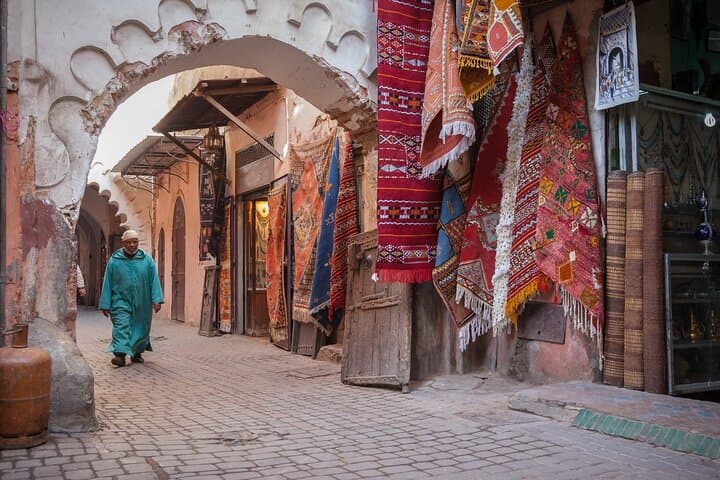
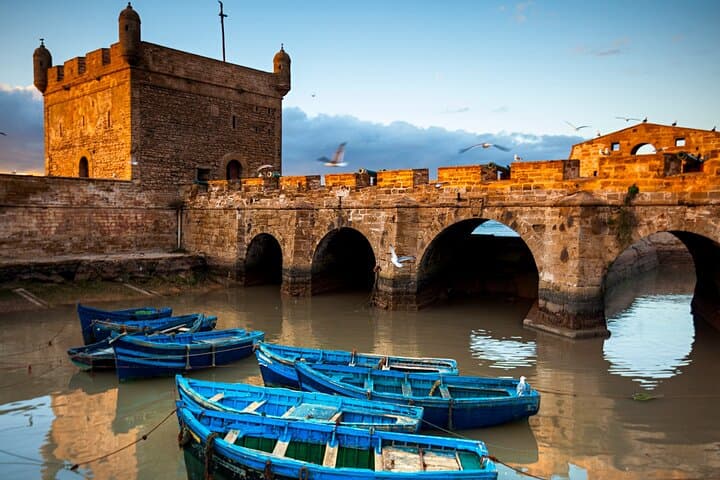
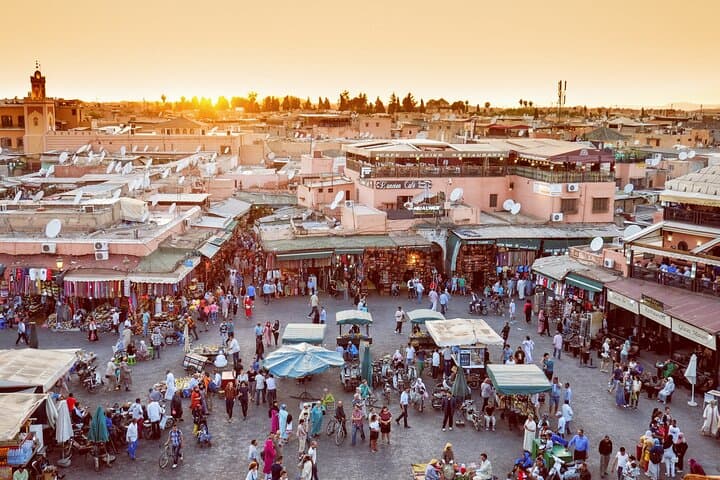
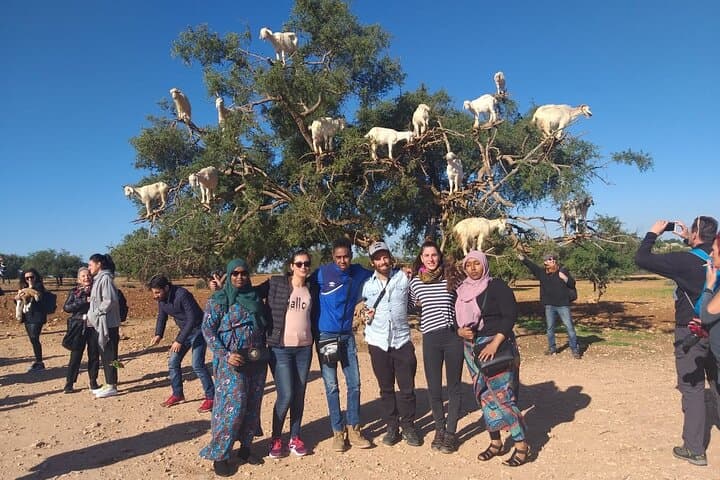
You step out of Marrakech’s dry heat into a kaleidoscope of alleys, spices and the call to prayer — the starting stanza of an 11‑day route that threads High Atlas passes, ksars, deep gorges and a night under desert stars.
You step out of Marrakech’s dry heat into a kaleidoscope of alleys, spices and the call to prayer — the starting stanza of an 11‑day route that threads High Atlas passes, ksars, deep gorges and a night under desert stars.
The road climbs Tizi n’Tichka (~2,260 m) where ancient Berber villages cling to sunbaked slopes, then drops toward the earthen ramparts of Aït Ben Haddou, a UNESCO kasbah that once watched caravan traffic and later movie crews. Geology flips from volcanic and folded Atlas ranges to the wind‑sculpted sands of Erg Chebbi; Todra’s limestone walls rise 200–300 m, forcing intimate canyon treks and climbers’ routes. Cultural layers are visible everywhere: Berber hospitality, Fes’ medieval medina and the bluewashed alleys of Chefchaouen in the Rif.
Expect practical rhythms—early departures for long driving days (several 3–6 hour segments), short on‑foot explorations in medinas and gorges, and a 90–120 minute sunset camel transfer to a bivouac in Merzouga. Nights vary from riads and hotels to nomad tents where temperature swings demand layers.
Plan for dusty tracks, loose sand and uneven cobbles; pack a headlamp, sturdy footwear and cash for souks. Time your desert stay for sunrise and sunset—those hours flatten distances and sharpen colors. Respect fragile desert vegetation and local customs: ask before photographing people and tip guides who manage logistics across towns and remote roads. This itinerary delivers Morocco’s contrasts—mountain passes, sculpted gorges, palm‑lined valleys and the Atlantic’s wind—framed by travel that’s more expedition than cruise.