THE ADVENTURE COLLECTIVE® · Independent discovery and booking for outdoor travel

Cross Morocco in six days: from Tangier’s Atlantic edge and Chefchaouen’s blue alleys to Roman Volubilis, the imperial cities of Fes and Meknes, Rabat and Casablanca, and the vibrant medina of Marrakech. Expect driven days, short hikes, and richly textured city exploration.
Cross Morocco in six days: from Tangier’s Atlantic edge and Chefchaouen’s blue alleys to Roman Volubilis, the imperial cities of Fes and Meknes, Rabat and Casablanca, and the vibrant medina of Marrakech. Expect driven days, short hikes, and richly textured city exploration.
Morning light in Tangier falls flat across the Strait of Gibraltar; ferries cough into the harbor and the medina hums awake. This six-day corridor across northern Morocco moves you from coastal promenades into Rif-blue alleyways, through Roman stone and imperial gates, and finally into the ochre pulse of Marrakech.
Verified experiences and guided adventures in the surrounding area.
Operated by Morocco Tour Marrakech · Marrakech, Marrakesh-Safi
Morning light in Tangier falls flat across the Strait of Gibraltar; ferries cough into the harbor and the medina hums awake. This six-day corridor across northern Morocco moves you from coastal promenades into Rif-blue alleyways, through Roman stone and imperial gates, and finally into the ochre pulse of Marrakech.
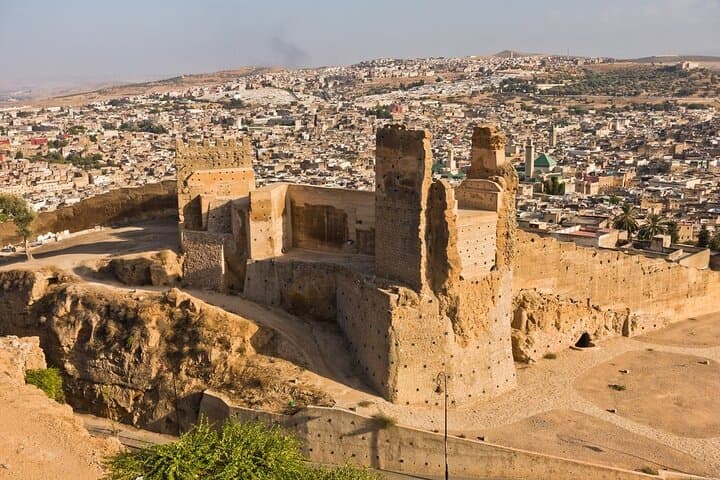
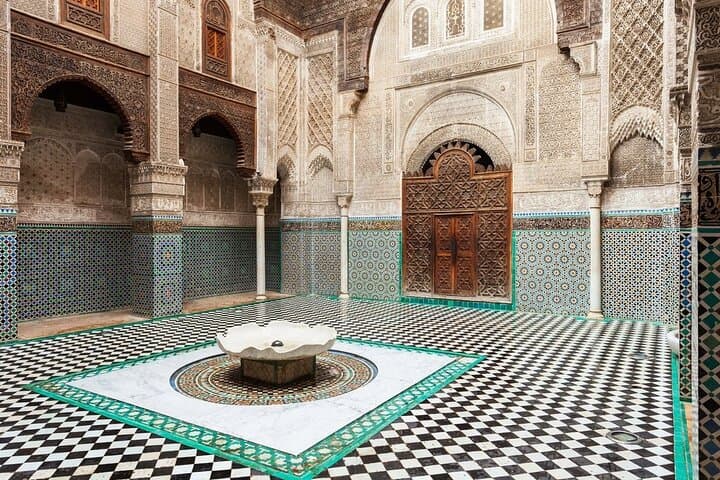
History is visible at every turn: Volubilis’ mosaics mark Rome’s southern reach, Meknes’ Bab al-Mansour heralds 17th-century ambition, and Fes preserves medieval craft traditions in lanes unchanged for centuries. Geology shifts from Atlantic cliffs to the folded Rif Mountains and the gentle plains surrounding Meknes; the Cascades d’Akchour hike (2–3 hours round-trip) threads limestone canyons and cool pools that dare you to pause.
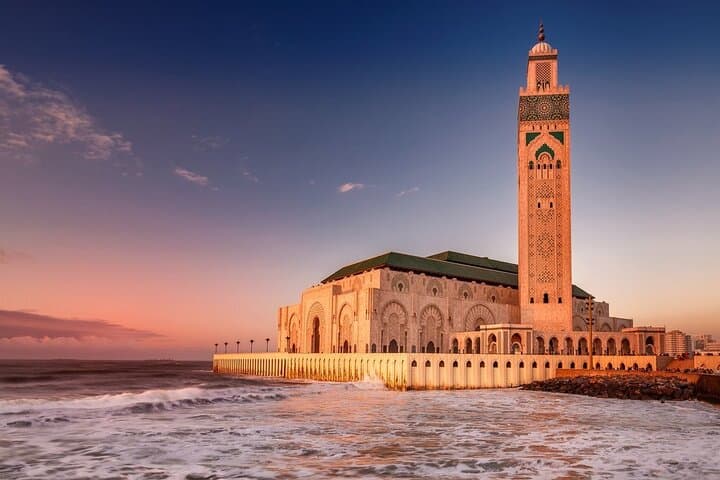
Culture here is tactile — tanneries emitting sharp, honest smells, souks where spices and copperware jostle, and riads where courtyards collect late-afternoon light. Casablanca’s Hassan II Mosque rises over the sea with a 210 m minaret; Marrakech answers with the 77 m Koutoubia and the frenetic energy of Jemaa el-Fna.
Practical guidance: expect multiple 3–5 hour road transfers between cities and several short, walkable excursions daily. Travel light but bring closed-toe shoes for medina cobbles, a hat and sun protection for open sites, and a reusable water bottle — water is scarce outside urban centers. Start major sightseeing early to avoid heat and crowds, and budget local dirhams for market purchases and small tips. With basic mobility and curiosity, this route delivers Morocco’s layered past and immediate sensory presence in a compact, well-paced package.
easy.
6 days.
Suitable for travelers in average condition who can walk 1–3 hours on several days and manage short hikes with modest elevation change.
Visa requirements depend on your nationality; many countries receive visa-free entry for short stays—check Morocco’s official consular guidance before travel.
No — the itinerary is paced with driven transfers, short urban walking sessions, and a few easy hikes; basic mobility is sufficient.
The Moroccan dirham (MAD) is used; cards are accepted in hotels and larger restaurants, but carry cash for markets, taxis, and small vendors.
This private multi-day tour includes guided visits at key sites and some admissions where noted, but verify which specific entries are covered at booking.
The route traces layers of Morocco’s past: Roman Volubilis, medieval Fes (a center of learning since the 9th century), and imperial-era Meknes and Marrakech reflecting different dynastic eras.
Water scarcity and fragile archaeological sites mean visitors should minimize plastic use, stick to marked paths, and support local guides and businesses to help preserve sites.
Morocco Tour Marrakech operates guided outdoor trips and adventures with an emphasis on safety, stewardship, and memorable experiences.
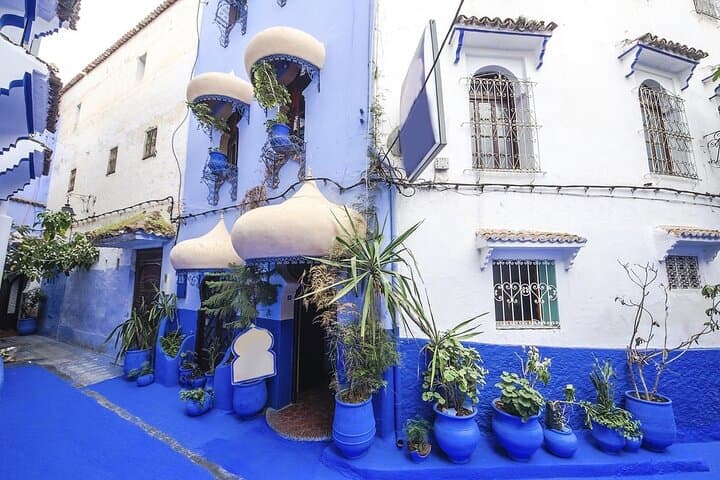
Morning light in Tangier falls flat across the Strait of Gibraltar; ferries cough into the harbor and the medina hums awake. This six-day corridor across northern Morocco moves you from coastal promenades into Rif-blue alleyways, through Roman stone and imperial gates, and finally into the ochre pulse of Marrakech.
Morning light in Tangier falls flat across the Strait of Gibraltar; ferries cough into the harbor and the medina hums awake. This six-day corridor across northern Morocco moves you from coastal promenades into Rif-blue alleyways, through Roman stone and imperial gates, and finally into the ochre pulse of Marrakech.
History is visible at every turn: Volubilis’ mosaics mark Rome’s southern reach, Meknes’ Bab al-Mansour heralds 17th-century ambition, and Fes preserves medieval craft traditions in lanes unchanged for centuries. Geology shifts from Atlantic cliffs to the folded Rif Mountains and the gentle plains surrounding Meknes; the Cascades d’Akchour hike (2–3 hours round-trip) threads limestone canyons and cool pools that dare you to pause.
Culture here is tactile — tanneries emitting sharp, honest smells, souks where spices and copperware jostle, and riads where courtyards collect late-afternoon light. Casablanca’s Hassan II Mosque rises over the sea with a 210 m minaret; Marrakech answers with the 77 m Koutoubia and the frenetic energy of Jemaa el-Fna.
Practical guidance: expect multiple 3–5 hour road transfers between cities and several short, walkable excursions daily. Travel light but bring closed-toe shoes for medina cobbles, a hat and sun protection for open sites, and a reusable water bottle — water is scarce outside urban centers. Start major sightseeing early to avoid heat and crowds, and budget local dirhams for market purchases and small tips. With basic mobility and curiosity, this route delivers Morocco’s layered past and immediate sensory presence in a compact, well-paced package.