THE ADVENTURE COLLECTIVE® · Independent discovery and booking for outdoor travel

Travel from Marrakech’s bustling medina to High Atlas foothills, Erg Chebbi’s dunes, and Essaouira’s Atlantic ramparts on a 9-day mix of hiking, cultural immersion, and desert camping. Expect long drives, varied terrain, and a deep dive into Berber life and Saharan landscapes.
Travel from Marrakech’s bustling medina to High Atlas foothills, Erg Chebbi’s dunes, and Essaouira’s Atlantic ramparts on a 9-day mix of hiking, cultural immersion, and desert camping. Expect long drives, varied terrain, and a deep dive into Berber life and Saharan landscapes.
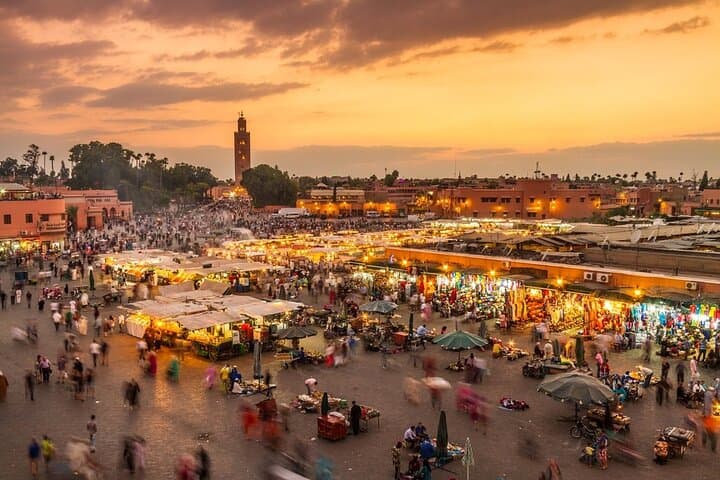
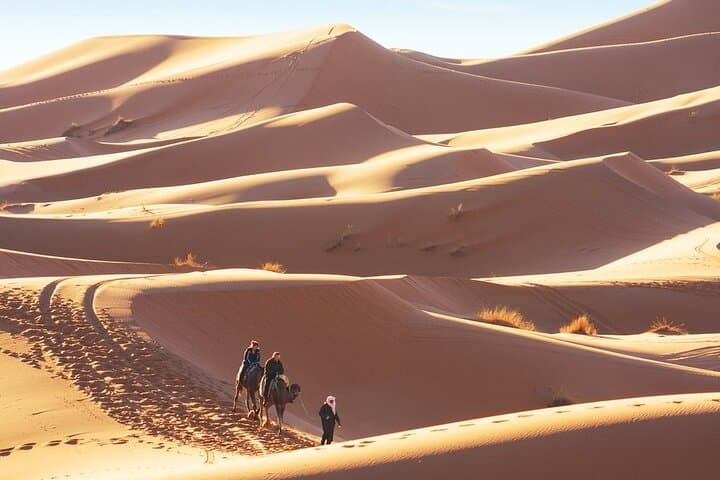
A wind-scoured dune ridge glows orange as the sun climbs, and a caravan of camels rocks quietly across Erg Chebbi — this is where the trip’s desert chapter begins. From Marrakech’s frenetic Jemaa el-Fna to the narrow kasbah alleys of Aït Benhaddou and the Atlantic breeze at Essaouira, the itinerary threads cities, mountains, and sand into a single route that’s as varied as Morocco’s terrain.
Verified experiences and guided adventures in the surrounding area.
Operated by Desertbrise Travel · Marrakech, Marrakech-Safi
A wind-scoured dune ridge glows orange as the sun climbs, and a caravan of camels rocks quietly across Erg Chebbi — this is where the trip’s desert chapter begins. From Marrakech’s frenetic Jemaa el-Fna to the narrow kasbah alleys of Aït Benhaddou and the Atlantic breeze at Essaouira, the itinerary threads cities, mountains, and sand into a single route that’s as varied as Morocco’s terrain.
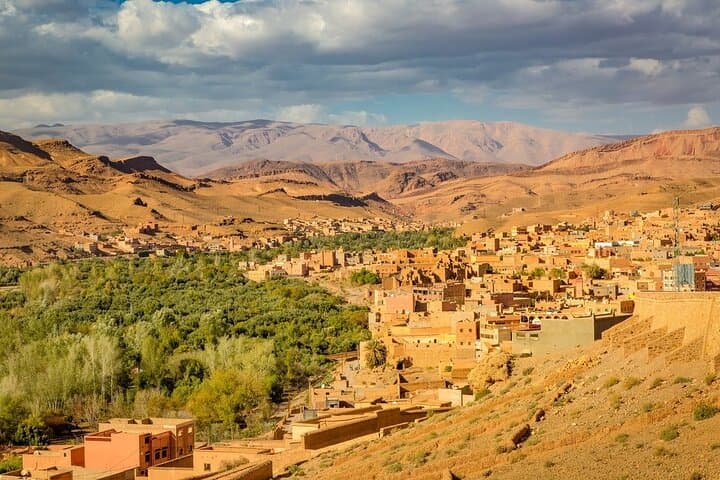
History and geology surface in quick succession: red sandstone walls and 1,000-year-old medina quarters in Marrakech, the volcanic and sedimentary passes of the High Atlas carved by millennia of uplift, and the Saharan erg whose dunes are wind-built, ever-shifting sculptures. Cultural notes come alive too — Berber villages clinging to terraced slopes, argan cooperatives crafted by generations of local women, and the trans-Saharan trade legacy visible in fortified kasbahs.
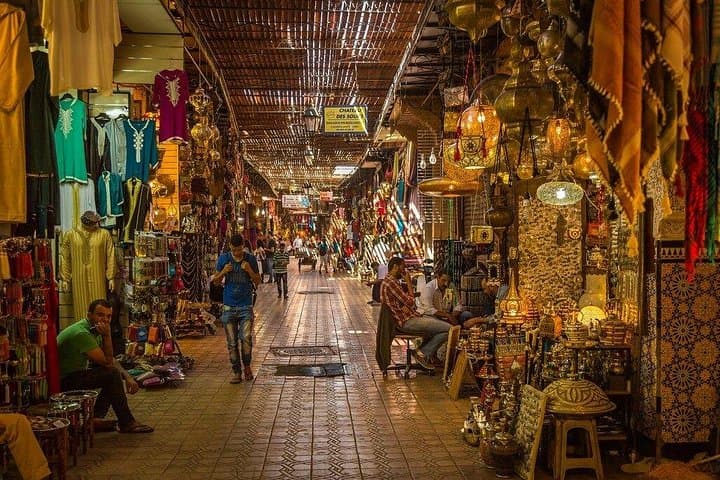
Practically, expect long drives broken by short hikes and market stops, a camel-led transfer into an Erg Chebbi camp, an overnight in a local Berber guesthouse, and time on the Atlantic for kitesurfing or seafood in Essaouira. Terrain varies from paved mountain passes (Tizi n’Tichka) to rocky mule tracks and soft sand; elevation tops near 2,260 m at the High Atlas passes and drops to near sea level on the coast.
Pack layered clothing, sun protection, and a sense of patience for traffic and market pace. Hydrate in the heat, move slowly on loose surfaces, and allow time to absorb both the landscape and the local rhythms — it’s an itinerary built for contrast and discovery.
moderate.
9 days.
Suitable for travelers in good general fitness; able to manage several hours of walking on uneven terrain and long drives.
Most walks are moderate, following mule tracks and rural roads; you'll encounter short climbs and uneven surfaces rather than technical scrambling.
Accommodations range from hotels in Marrakech and Essaouira to a desert camp (traditional tents) and a night in a Berber guesthouse; expect basic comforts in remote areas.
The itinerary is described as suitable for all fitness levels, but desert sand, uneven trails, and some walking make it less ideal for limited mobility; check specific accessibility needs with the operator.
Tipping is customary; consider budgeting modest tips for guides, drivers, and camp staff — roughly a few euros per person per day depending on service.
Marrakech grew as a Berber-founded trading capital and the route through Aït Benhaddou once linked trans-Saharan caravans; many kasbahs date to that trade era.
Water scarcity and erosion are local concerns; choose operators that limit off-track driving in dunes and support local cooperatives to ensure economic benefits remain with communities.
Desertbrise Travel operates guided outdoor trips and adventures with an emphasis on safety, stewardship, and memorable experiences.
A wind-scoured dune ridge glows orange as the sun climbs, and a caravan of camels rocks quietly across Erg Chebbi — this is where the trip’s desert chapter begins. From Marrakech’s frenetic Jemaa el-Fna to the narrow kasbah alleys of Aït Benhaddou and the Atlantic breeze at Essaouira, the itinerary threads cities, mountains, and sand into a single route that’s as varied as Morocco’s terrain.
A wind-scoured dune ridge glows orange as the sun climbs, and a caravan of camels rocks quietly across Erg Chebbi — this is where the trip’s desert chapter begins. From Marrakech’s frenetic Jemaa el-Fna to the narrow kasbah alleys of Aït Benhaddou and the Atlantic breeze at Essaouira, the itinerary threads cities, mountains, and sand into a single route that’s as varied as Morocco’s terrain.
History and geology surface in quick succession: red sandstone walls and 1,000-year-old medina quarters in Marrakech, the volcanic and sedimentary passes of the High Atlas carved by millennia of uplift, and the Saharan erg whose dunes are wind-built, ever-shifting sculptures. Cultural notes come alive too — Berber villages clinging to terraced slopes, argan cooperatives crafted by generations of local women, and the trans-Saharan trade legacy visible in fortified kasbahs.
Practically, expect long drives broken by short hikes and market stops, a camel-led transfer into an Erg Chebbi camp, an overnight in a local Berber guesthouse, and time on the Atlantic for kitesurfing or seafood in Essaouira. Terrain varies from paved mountain passes (Tizi n’Tichka) to rocky mule tracks and soft sand; elevation tops near 2,260 m at the High Atlas passes and drops to near sea level on the coast.
Pack layered clothing, sun protection, and a sense of patience for traffic and market pace. Hydrate in the heat, move slowly on loose surfaces, and allow time to absorb both the landscape and the local rhythms — it’s an itinerary built for contrast and discovery.