THE ADVENTURE COLLECTIVE® · Independent discovery and booking for outdoor travel

Begin your day with a 75-minute English-led yoga flow along Kyoto’s Kamo River. This beginner-friendly morning class combines gentle movement, local insight from instructor-guides, and open-air calm beside one of the city’s oldest public spaces.
Begin your day with a 75-minute English-led yoga flow along Kyoto’s Kamo River. This beginner-friendly morning class combines gentle movement, local insight from instructor-guides, and open-air calm beside one of the city’s oldest public spaces.
The river moves with deliberate patience, water brushing stones as the city wakes. You unroll a mat on a grassy bank beside the Kamo River, ankle-deep in morning light and the distant echo of bicycle bells. Instructors guide an easy flow in English while gulls wheel and a heron watches from the shallows — the practice feels both intimate and public, a shared breath with Kyoto.
Verified experiences and guided adventures in the surrounding area.
Operated by Aska · Kyoto, Kyoto Prefecture
The river moves with deliberate patience, water brushing stones as the city wakes. You unroll a mat on a grassy bank beside the Kamo River, ankle-deep in morning light and the distant echo of bicycle bells. Instructors guide an easy flow in English while gulls wheel and a heron watches from the shallows — the practice feels both intimate and public, a shared breath with Kyoto.
The Kamo River has shaped Kyoto for centuries: its banks once marked agricultural plots and civic life, later framed Edo- and Meiji-era promenades. Geologically, the plain is alluvial — a broad, flat river corridor that permits wide views and gentle slopes rather than steep mountain drama. Culturally, riverside practice mirrors local habits of outdoor exercise and quiet socializing; nearby lanes lead to shrines, wooden machiya, and narrow alley cafés.
This class is beginner-friendly and designed to refresh travelers’ bodies and minds after travel days. Expect a 75-minute session on grass or, if weather forces a change, in a covered indoor space. The instructor often shares practical tips about local sights and transport links, so the session doubles as a low-key orientation to Kyoto.
Practical guidance: arrive 10–15 minutes early to claim a spot and set up your mat (mats are provided). Dress in breathable layers — mornings can be cool even in summer. Bring water and a small towel; avoid strong scents out of respect for public space. If rain or cold arrives, the operator moves indoors and will notify you; cancellations require 24-hour notice for a full refund. This is an accessible way to start a Kyoto day: restorative, social, and quietly connected to the river’s steady pace.
easy.
1–1.5 hours.
Suitable for all fitness levels; basic mobility and ability to move between standing and floor positions recommended
Yes — the operator supplies yoga mats, but many participants bring their own for personal fit and hygiene.
Yes — the session is designed for all levels and includes modifications; you won’t need prior experience.
The meeting point is on the Kamo River bank near a designated grassy stretch in central Kyoto; the operator provides specific directions after booking and via confirmation message.
If rain or cold makes outdoor practice impractical, the class moves to a nearby indoor space and participants are notified; cancel at least 24 hours in advance for a full refund.
The Kamo River corridor has been central to Kyoto’s daily life for centuries, used historically for irrigation, festivals, and as a social promenade that shaped neighborhood development.
Respect riverbank rules, pack out any trash, and avoid stepping into sensitive riparian vegetation; small actions preserve the public space and local wildlife.
Aska operates guided outdoor trips and adventures with an emphasis on safety, stewardship, and memorable experiences.
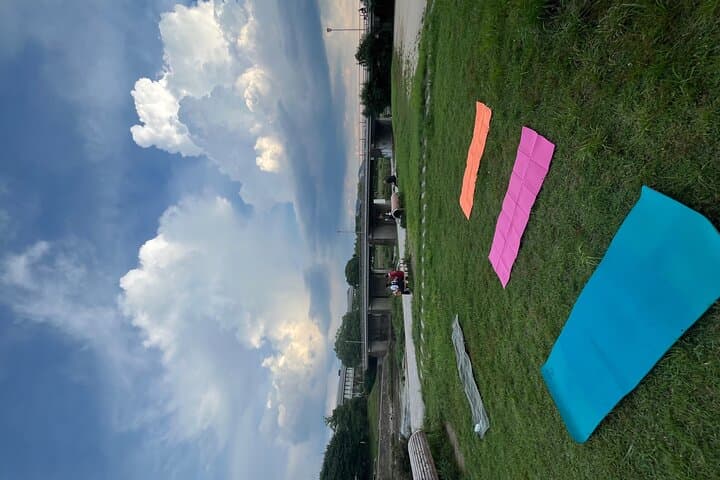
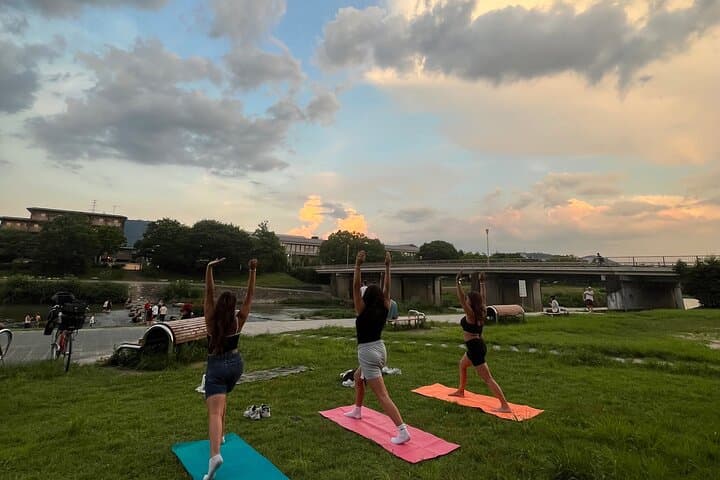
The river moves with deliberate patience, water brushing stones as the city wakes. You unroll a mat on a grassy bank beside the Kamo River, ankle-deep in morning light and the distant echo of bicycle bells. Instructors guide an easy flow in English while gulls wheel and a heron watches from the shallows — the practice feels both intimate and public, a shared breath with Kyoto.
The river moves with deliberate patience, water brushing stones as the city wakes. You unroll a mat on a grassy bank beside the Kamo River, ankle-deep in morning light and the distant echo of bicycle bells. Instructors guide an easy flow in English while gulls wheel and a heron watches from the shallows — the practice feels both intimate and public, a shared breath with Kyoto.
The Kamo River has shaped Kyoto for centuries: its banks once marked agricultural plots and civic life, later framed Edo- and Meiji-era promenades. Geologically, the plain is alluvial — a broad, flat river corridor that permits wide views and gentle slopes rather than steep mountain drama. Culturally, riverside practice mirrors local habits of outdoor exercise and quiet socializing; nearby lanes lead to shrines, wooden machiya, and narrow alley cafés.
This class is beginner-friendly and designed to refresh travelers’ bodies and minds after travel days. Expect a 75-minute session on grass or, if weather forces a change, in a covered indoor space. The instructor often shares practical tips about local sights and transport links, so the session doubles as a low-key orientation to Kyoto.
Practical guidance: arrive 10–15 minutes early to claim a spot and set up your mat (mats are provided). Dress in breathable layers — mornings can be cool even in summer. Bring water and a small towel; avoid strong scents out of respect for public space. If rain or cold arrives, the operator moves indoors and will notify you; cancellations require 24-hour notice for a full refund. This is an accessible way to start a Kyoto day: restorative, social, and quietly connected to the river’s steady pace.