THE ADVENTURE COLLECTIVE® · Independent discovery and booking for outdoor travel

Spend a calm 90 minutes with the Jabulani Herd at HERD in Kapama Private Reserve. This educational morning encounter offers close observation of rescued elephants, expert interpretation, and a chance to support rehabilitation work.
Spend a calm 90 minutes with the Jabulani Herd at HERD in Kapama Private Reserve. This educational morning encounter offers close observation of rescued elephants, expert interpretation, and a chance to support rehabilitation work.
The morning arrives cool and gauzy over the Kapama reserve; a low mist lifts from the river and the Jabulani herd’s trunks pick at the air like curiosity itself. Visitors gather at the stables with a cup of coffee and rusks, the handlers moving calmly, and the elephants—two to three bulls at a respectful partition—pose a living lesson in size, behavior and social repair.
Verified experiences and guided adventures in the surrounding area.
Operated by Elephant Moments · Hoedspruit, Limpopo
The morning arrives cool and gauzy over the Kapama reserve; a low mist lifts from the river and the Jabulani herd’s trunks pick at the air like curiosity itself. Visitors gather at the stables with a cup of coffee and rusks, the handlers moving calmly, and the elephants—two to three bulls at a respectful partition—pose a living lesson in size, behavior and social repair.
The Hoedspruit Elephant Rehabilitation and Development (HERD) project grew from efforts to rescue orphaned calves caught in human–elephant conflict. The Jabulani Herd is notable for adopting orphaned youngsters and living semi-wild within Kapama Private Reserve, where granite outcrops and riverine thickets shape grazing routes and shade. Culturally, the experience links wildlife rehabilitation with local conservation economies; proceeds support HERD Trust and community outreach.
Practically, the 90-minute program is an educational, up-close observation rather than a hands-on encounter—elephants remain behind low barriers and handlers interpret behavior and ecology. Expect discussion on elephant social structure, foraging, and threats such as habitat loss and conflict. Photography is welcome; morning light favors warm tones and active behavior.
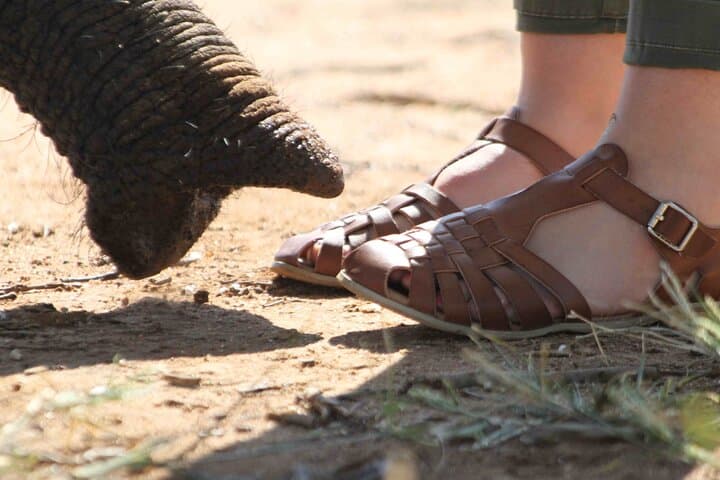
Timing: early morning visits maximize elephant activity and cooler conditions. Dress in neutral colors, wear closed-toe shoes for compact bush surfaces, and bring water and a small binocular for distant sights. The site is wheelchair and stroller accessible and suitable for most ages and fitness levels. Visitors should respect distance rules, follow guides’ instructions, and consider a modest donation or souvenir purchase to support ongoing rehabilitation work.
easy.
1.5 hours.
Accessible to most visitors; minimal walking and no strenuous activity required.
The program runs approximately 90 minutes and usually takes place early in the morning when elephants are most active.
No—elephants remain behind a low partition and the experience is observational; handlers ensure a respectful distance for safety and animal welfare.
Yes—sessions are stroller- and wheelchair-accessible and suitable for most ages and fitness levels; ask about specific assistance when booking.
Yes—souvenir sales and visitor contributions support the HERD Trust and ongoing rehabilitation and community programs.
HERD formed to rescue orphaned elephants affected by human–elephant conflict; the Jabulani Herd is a unique group of rehabilitated animals living semi-wild in Kapama.
Visits fund rehabilitation and educational programs; follow site rules and avoid single-use plastics to minimize disturbance and waste.
Elephant Moments operates guided outdoor trips and adventures with an emphasis on safety, stewardship, and memorable experiences.
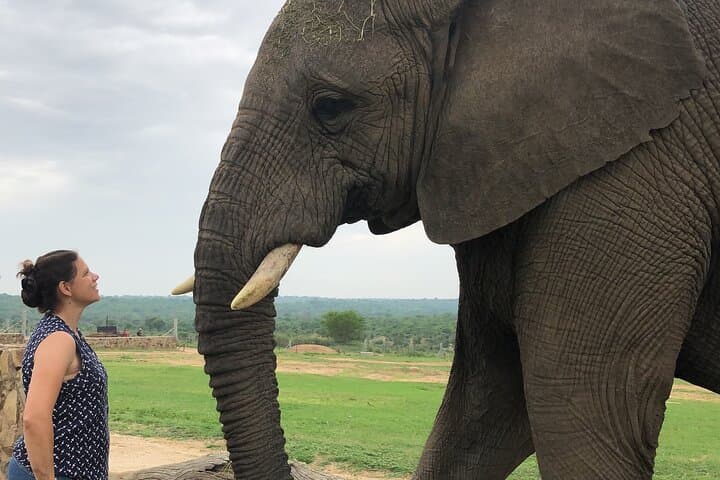
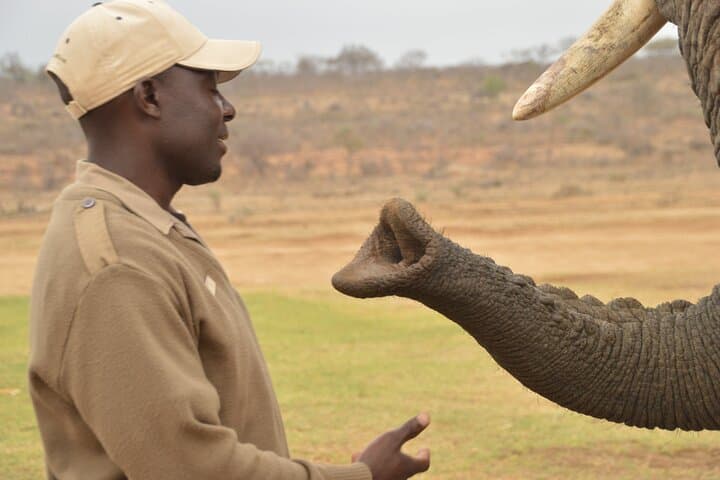
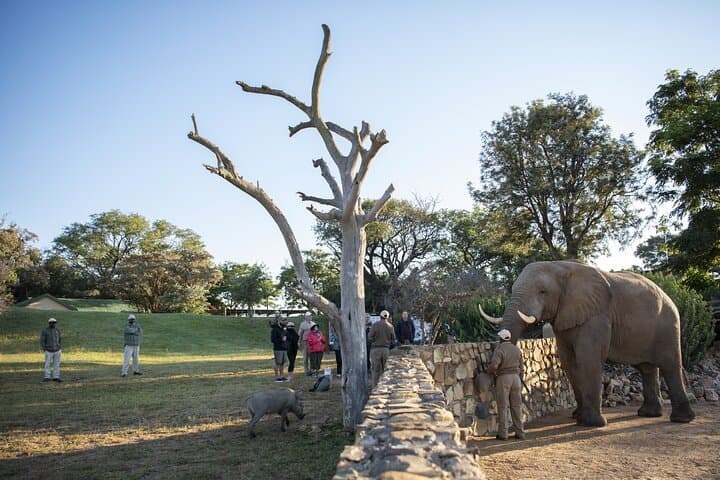
The morning arrives cool and gauzy over the Kapama reserve; a low mist lifts from the river and the Jabulani herd’s trunks pick at the air like curiosity itself. Visitors gather at the stables with a cup of coffee and rusks, the handlers moving calmly, and the elephants—two to three bulls at a respectful partition—pose a living lesson in size, behavior and social repair.
The morning arrives cool and gauzy over the Kapama reserve; a low mist lifts from the river and the Jabulani herd’s trunks pick at the air like curiosity itself. Visitors gather at the stables with a cup of coffee and rusks, the handlers moving calmly, and the elephants—two to three bulls at a respectful partition—pose a living lesson in size, behavior and social repair.
The Hoedspruit Elephant Rehabilitation and Development (HERD) project grew from efforts to rescue orphaned calves caught in human–elephant conflict. The Jabulani Herd is notable for adopting orphaned youngsters and living semi-wild within Kapama Private Reserve, where granite outcrops and riverine thickets shape grazing routes and shade. Culturally, the experience links wildlife rehabilitation with local conservation economies; proceeds support HERD Trust and community outreach.
Practically, the 90-minute program is an educational, up-close observation rather than a hands-on encounter—elephants remain behind low barriers and handlers interpret behavior and ecology. Expect discussion on elephant social structure, foraging, and threats such as habitat loss and conflict. Photography is welcome; morning light favors warm tones and active behavior.
Timing: early morning visits maximize elephant activity and cooler conditions. Dress in neutral colors, wear closed-toe shoes for compact bush surfaces, and bring water and a small binocular for distant sights. The site is wheelchair and stroller accessible and suitable for most ages and fitness levels. Visitors should respect distance rules, follow guides’ instructions, and consider a modest donation or souvenir purchase to support ongoing rehabilitation work.