THE ADVENTURE COLLECTIVE® · Independent discovery and booking for outdoor travel

Experience the cool stillness of Bali’s rice fields at dawn. This 2.5-hour guided walk blends hands-on farming insight, shallow river crossings, and a visit to an ancient village temple.
Experience the cool stillness of Bali’s rice fields at dawn. This 2.5-hour guided walk blends hands-on farming insight, shallow river crossings, and a visit to an ancient village temple.
Before the sun clears the ridge, you meet at a family compound — wood carvings catching pale light, a cup of tea in hand — and step out into the cool, green hush of Bali’s rice country.
Verified experiences and guided adventures in the surrounding area.
Operated by Itrip Bali · Ubud, Bali
Before the sun clears the ridge, you meet at a family compound — wood carvings catching pale light, a cup of tea in hand — and step out into the cool, green hush of Bali’s rice country.
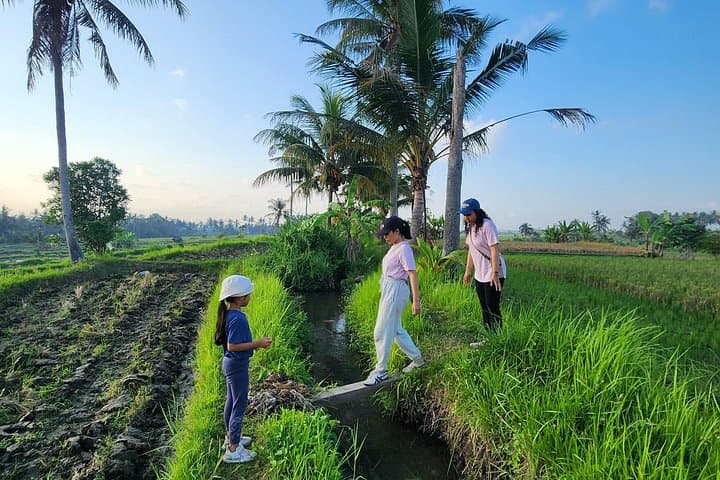
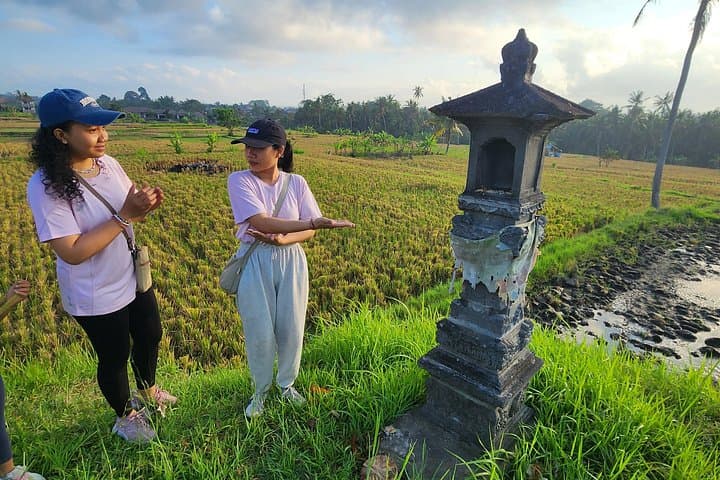
The path threads between paddies and coconut palms, water channels ticking quietly as they shepherd life. Farmers bend to the soil; ducks and small fish move through irrigation ditches as if rehearsing their morning roles. Midway the route, the trail crosses a shallow river that dares you forward and leads up to an archaeological temple whose carved stones hint at centuries of ritual and rural continuity.
Geologically, these terraces ride on volcanic soils: fertile, dark, and easily sculpted into the shallow steps that make intensive wet-rice farming possible. Culturally, rice is both staple and ceremony in Balinese Hindu practice — offerings at field shrines and irrigation cooperatives (subak) link agriculture to communal life.
Expect about 2.5 hours of walking over packed earth, narrow ledges, occasional muddy sections and short river crossings. Interaction with local farmers is part of the program: learn planting practices, see chili and flower plots, and hear how irrigation is managed. Trekking poles are provided and a welcome drink plus cookies are served before you set off.
Plan for early light, steady footwear, insect repellent and a lightweight rain layer in wet months. Photography is rewarding but respect working villagers and temple spaces. The walk balances gentle exertion with cultural insight — a compact, sensory way to experience the rhythms that shape Bali’s countryside.
moderate.
2–3 hours.
Moderate fitness: steady walking on uneven terrain, short stream crossings, and some uphill sections.
The tour is about 2.5 hours and rated moderate — mostly easy walking on packed earth with occasional muddy sections and short stream crossings.
Yes — trekking poles are included, useful on muddy slopes and narrow field edges.
Yes — the experience includes conversations with villagers about planting and a short visit to an archaeological temple site; please be respectful of rituals and dress modestly for temple access.
This is a walking activity that meets at a local family compound; check the booking page for optional pickup arrangements.
The terraces and nearby temple reflect centuries of subak irrigation and Balinese Hindu practices linking water management to community ritual.
Stick to established paths to avoid damaging fragile terrace edges; small tourism groups help limit wear and provide income that supports traditional farming.
Itrip Bali operates guided outdoor trips and adventures with an emphasis on safety, stewardship, and memorable experiences.
Before the sun clears the ridge, you meet at a family compound — wood carvings catching pale light, a cup of tea in hand — and step out into the cool, green hush of Bali’s rice country.
Before the sun clears the ridge, you meet at a family compound — wood carvings catching pale light, a cup of tea in hand — and step out into the cool, green hush of Bali’s rice country.
The path threads between paddies and coconut palms, water channels ticking quietly as they shepherd life. Farmers bend to the soil; ducks and small fish move through irrigation ditches as if rehearsing their morning roles. Midway the route, the trail crosses a shallow river that dares you forward and leads up to an archaeological temple whose carved stones hint at centuries of ritual and rural continuity.
Geologically, these terraces ride on volcanic soils: fertile, dark, and easily sculpted into the shallow steps that make intensive wet-rice farming possible. Culturally, rice is both staple and ceremony in Balinese Hindu practice — offerings at field shrines and irrigation cooperatives (subak) link agriculture to communal life.
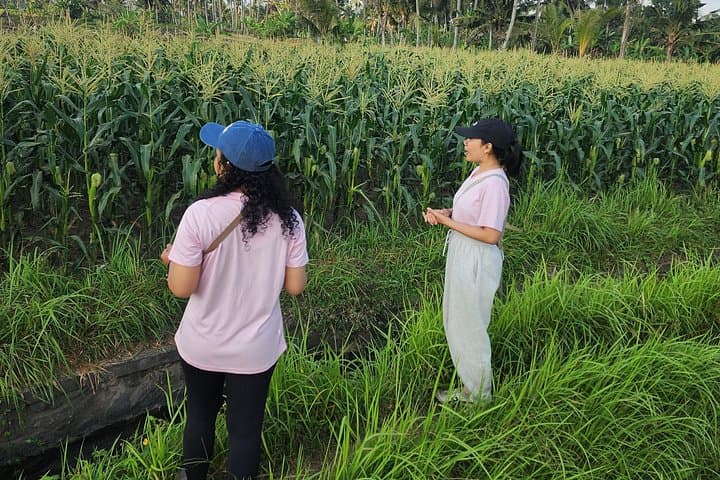
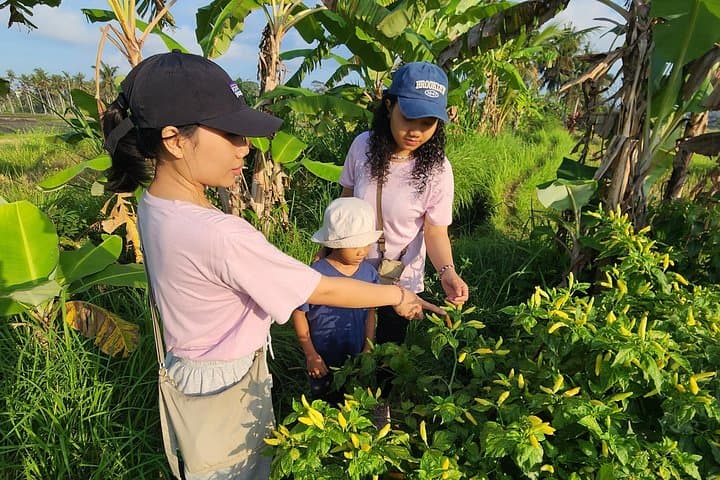
Expect about 2.5 hours of walking over packed earth, narrow ledges, occasional muddy sections and short river crossings. Interaction with local farmers is part of the program: learn planting practices, see chili and flower plots, and hear how irrigation is managed. Trekking poles are provided and a welcome drink plus cookies are served before you set off.
Plan for early light, steady footwear, insect repellent and a lightweight rain layer in wet months. Photography is rewarding but respect working villagers and temple spaces. The walk balances gentle exertion with cultural insight — a compact, sensory way to experience the rhythms that shape Bali’s countryside.