THE ADVENTURE COLLECTIVE® · Independent discovery and booking for outdoor travel

Walk the old lanes of Farsa to Mussia, learn regional Greek dances from a professional instructor and return to share traditional meze — a compact cultural outing that blends light hiking with hands-on folklore.
Walk the old lanes of Farsa to Mussia, learn regional Greek dances from a professional instructor and return to share traditional meze — a compact cultural outing that blends light hiking with hands-on folklore.
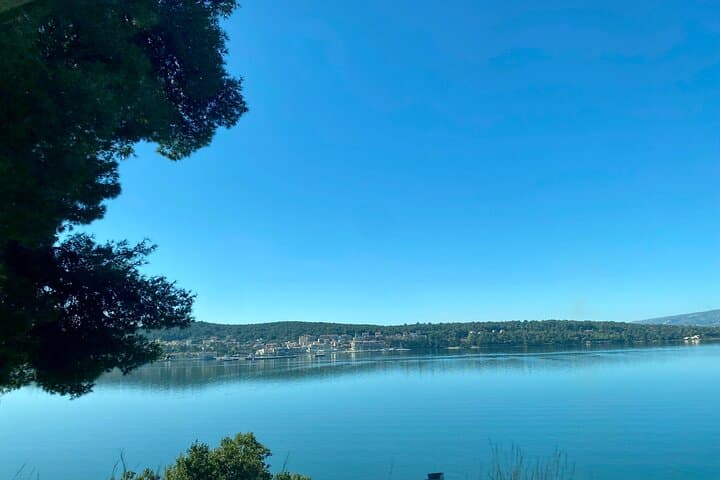
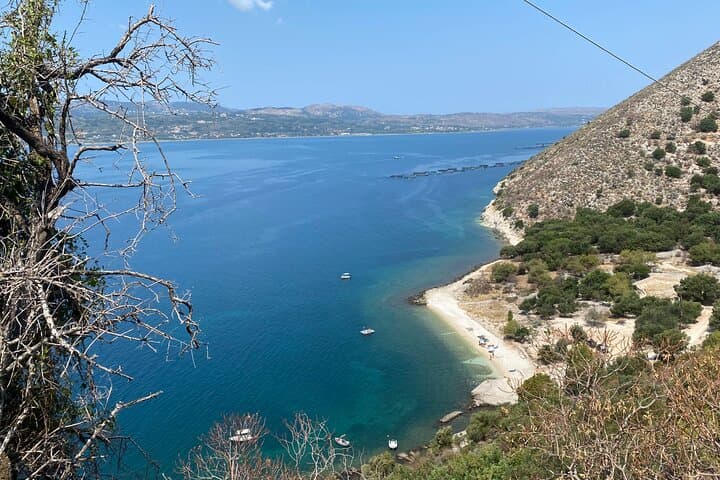
The sun is low over slate roofs as the group gathers at Astrolavos Tavern in Farsa, the village’s stone alleys still holding the cool of night. A local guide leads you through narrow lanes toward Mussia, where an open space waits for music and movement. Olive trees edge the path like old companions; the sea is a distant blue that seems to encourage step and breath.
Verified experiences and guided adventures in the surrounding area.
Operated by Kefalonia Active Dance · Farsa, Kefalonia
The sun is low over slate roofs as the group gathers at Astrolavos Tavern in Farsa, the village’s stone alleys still holding the cool of night. A local guide leads you through narrow lanes toward Mussia, where an open space waits for music and movement. Olive trees edge the path like old companions; the sea is a distant blue that seems to encourage step and breath.
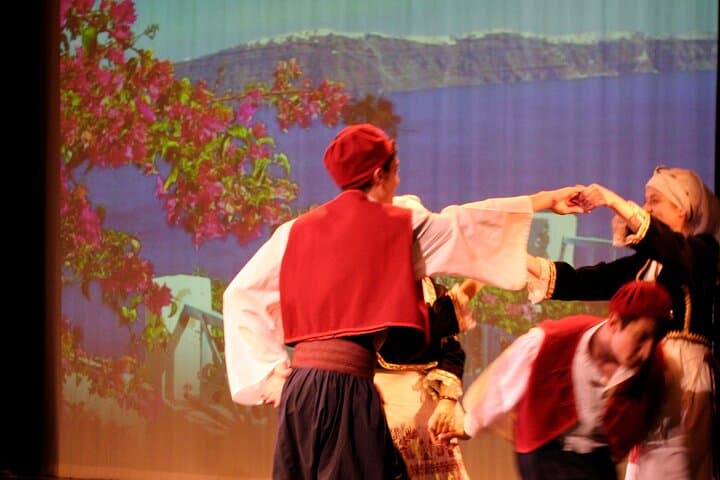
This is a short cultural loop that pairs a guided walk through historic Farsa with an hour-long traditional dance lesson led by choreographer Maria. Greek dance here is both ritual and social history — regional steps, rhythms and formations passed down through generations that reflect Kefalonian identity, seasonal festivals and agricultural cycles. The island’s limestone geology has shaped its villages: stone houses, narrow drainage channels and panoramic terraces that demanded communal gatherings to mark the year’s high points.
Expect about an hour’s walk to Mussia and an hour back, mostly on village tracks and compacted dirt with occasional steps. The dance session uses live or recorded Greek music; movements are taught progressively so newcomers can join. Afterward, traditional drinks and meze are shared at the starting point — a compact cultural exchange that leaves space for questions.
Practical notes: start time is 09:00; wear sturdy, closed-toe shoes and bring water, sun protection and a light layer. Not recommended for children under 10 or those with significant mobility or cardiovascular limitations. Plan to arrive a few minutes early to check in; the experience runs in English, Greek and Swedish when available.
moderate.
2 hours.
Light to moderate fitness — able to walk on uneven village paths for two 1-hour stretches and participate in an hour of low-impact dance movements.
About one hour each way at a moderate pace; total experience is roughly two hours including the one-hour dance session.
Yes — the instructor teaches steps progressively so newcomers can participate; movements are adapted for different fitness levels.
Meeting point is Astrolavos Tavern in the middle of Farsa; there is limited village parking and some public transport options to nearby towns like Argostoli.
Not recommended for children under 10 because of walking and dance pacing, though older children who can keep up are welcome.
Dance in Kefalonia preserves regional steps tied to harvest cycles, weddings and island identity; villages like Farsa maintain small communal spaces used for generations.
Stick to marked paths, take all litter home and avoid disturbing dry-stone walls and private property — small villages are sensitive to visitor impact.
Kefalonia Active Dance operates guided outdoor trips and adventures with an emphasis on safety, stewardship, and memorable experiences.
The sun is low over slate roofs as the group gathers at Astrolavos Tavern in Farsa, the village’s stone alleys still holding the cool of night. A local guide leads you through narrow lanes toward Mussia, where an open space waits for music and movement. Olive trees edge the path like old companions; the sea is a distant blue that seems to encourage step and breath.
The sun is low over slate roofs as the group gathers at Astrolavos Tavern in Farsa, the village’s stone alleys still holding the cool of night. A local guide leads you through narrow lanes toward Mussia, where an open space waits for music and movement. Olive trees edge the path like old companions; the sea is a distant blue that seems to encourage step and breath.
This is a short cultural loop that pairs a guided walk through historic Farsa with an hour-long traditional dance lesson led by choreographer Maria. Greek dance here is both ritual and social history — regional steps, rhythms and formations passed down through generations that reflect Kefalonian identity, seasonal festivals and agricultural cycles. The island’s limestone geology has shaped its villages: stone houses, narrow drainage channels and panoramic terraces that demanded communal gatherings to mark the year’s high points.
Expect about an hour’s walk to Mussia and an hour back, mostly on village tracks and compacted dirt with occasional steps. The dance session uses live or recorded Greek music; movements are taught progressively so newcomers can join. Afterward, traditional drinks and meze are shared at the starting point — a compact cultural exchange that leaves space for questions.
Practical notes: start time is 09:00; wear sturdy, closed-toe shoes and bring water, sun protection and a light layer. Not recommended for children under 10 or those with significant mobility or cardiovascular limitations. Plan to arrive a few minutes early to check in; the experience runs in English, Greek and Swedish when available.