THE ADVENTURE COLLECTIVE® · Independent discovery and booking for outdoor travel

Start before mid-morning on a small dive boat and experience two guided dives around Nusa Penida’s nutrient-rich reefs. Expect drift-friendly walls, possible manta encounters, and a focused, four-hour outing for certified divers.
Start before mid-morning on a small dive boat and experience two guided dives around Nusa Penida’s nutrient-rich reefs. Expect drift-friendly walls, possible manta encounters, and a focused, four-hour outing for certified divers.
The boat slices away from Toyapakeh as the sun rises over limestone cliffs, the engine’s steady thrum a metronome for the morning’s rhythm. In the cool pre-noon light a group of four certified divers rigs their gear, checks buddies, and looks toward reefs that drop into blue almost too clean to be real. Descending here feels immediate — coral walls and bommies appear as if the island itself is rolling back its sleeves to show what it protects.
Verified experiences and guided adventures in the surrounding area.
The boat slices away from Toyapakeh as the sun rises over limestone cliffs, the engine’s steady thrum a metronome for the morning’s rhythm. In the cool pre-noon light a group of four certified divers rigs their gear, checks buddies, and looks toward reefs that drop into blue almost too clean to be real. Descending here feels immediate — coral walls and bommies appear as if the island itself is rolling back its sleeves to show what it protects.
Nusa Penida is a volcanic remnant on Bali’s southeast flank; its steep drop-offs and strong currents foster nutrient-rich upwellings that attract manta rays, pelagic fish, and colorful reef communities. The island’s small villages retain strong Balinese cultural ties — local temples and fishing traditions still mark daily life — while marine-protection efforts around key sites have been growing to protect mantas and reef habitats.
Practical guidance: this is a boat-based, two-dive morning for certified divers only — expect 4 hours aboard with possible surface intervals at anchor. Current is the constant variable: divemasters pick sites to match conditions, but divers should be comfortable with drift and boat entries. Bring a dive computer, SMB, filled tanks, and a logbook/cert card. Hydrate before boarding, secure loose items on the boat, and plan for 3–5 mm exposure protection; water temps commonly range 25–28°C. Snorkelers on deck should respect the brief surface intervals; photographers should use wide-angle housings for mantas and macro for the reef life. With attention to buoyancy and local briefings, a morning off Nusa Penida is high-energy, marine-rich, and compact enough for a single morning to feel like a full trip.
moderate.
4–5 hours.
Should be comfortable swimming and able to perform standard scuba tasks; moderate cardio fitness helps with currents and boat transfers.
Yes — this trip is for certified divers only; you’ll typically need to show your certification card and a logbook for recent dives.
Sites vary, but dives often range 18–30 meters with drift or wall profiles; divemasters choose sites based on conditions and group experience.
Yes, currents are common around Nusa Penida; the operator will brief appropriate safety and often choose sheltered or drift-friendly sites for the group.
Some boats have limited charging; bring portable power or confirm before your trip. Waterproof storage and dry bags are recommended.
Nusa Penida is part of Bali’s Klungkung regency; the island’s steep coasts and offshore reefs shaped local fishing and temple-siting traditions over centuries.
Many dive sites around Nusa Penida are in marine-protected zones and manta sanctuaries; follow local guidance and use reef-safe products to reduce impact.
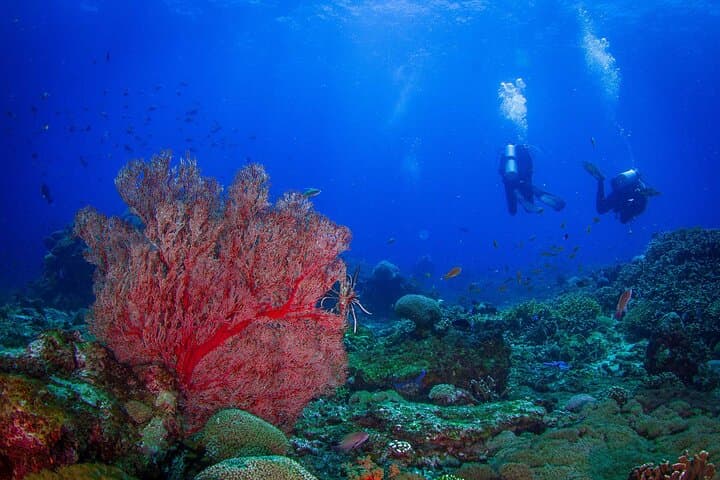
The boat slices away from Toyapakeh as the sun rises over limestone cliffs, the engine’s steady thrum a metronome for the morning’s rhythm. In the cool pre-noon light a group of four certified divers rigs their gear, checks buddies, and looks toward reefs that drop into blue almost too clean to be real. Descending here feels immediate — coral walls and bommies appear as if the island itself is rolling back its sleeves to show what it protects.
The boat slices away from Toyapakeh as the sun rises over limestone cliffs, the engine’s steady thrum a metronome for the morning’s rhythm. In the cool pre-noon light a group of four certified divers rigs their gear, checks buddies, and looks toward reefs that drop into blue almost too clean to be real. Descending here feels immediate — coral walls and bommies appear as if the island itself is rolling back its sleeves to show what it protects.
Nusa Penida is a volcanic remnant on Bali’s southeast flank; its steep drop-offs and strong currents foster nutrient-rich upwellings that attract manta rays, pelagic fish, and colorful reef communities. The island’s small villages retain strong Balinese cultural ties — local temples and fishing traditions still mark daily life — while marine-protection efforts around key sites have been growing to protect mantas and reef habitats.
Practical guidance: this is a boat-based, two-dive morning for certified divers only — expect 4 hours aboard with possible surface intervals at anchor. Current is the constant variable: divemasters pick sites to match conditions, but divers should be comfortable with drift and boat entries. Bring a dive computer, SMB, filled tanks, and a logbook/cert card. Hydrate before boarding, secure loose items on the boat, and plan for 3–5 mm exposure protection; water temps commonly range 25–28°C. Snorkelers on deck should respect the brief surface intervals; photographers should use wide-angle housings for mantas and macro for the reef life. With attention to buoyancy and local briefings, a morning off Nusa Penida is high-energy, marine-rich, and compact enough for a single morning to feel like a full trip.