THE ADVENTURE COLLECTIVE® · Independent discovery and booking for outdoor travel

Start your morning at Teotihuacan with a certified guide and a compact 1–2 hour route that covers the Pyramids of the Sun and Moon, the Avenue of the Dead and the Palace of Quetzalpapalotl. Expect panoramic viewpoints, preserved murals and a tasting of local spirits.
Start your morning at Teotihuacan with a certified guide and a compact 1–2 hour route that covers the Pyramids of the Sun and Moon, the Avenue of the Dead and the Palace of Quetzalpapalotl. Expect panoramic viewpoints, preserved murals and a tasting of local spirits.
Morning light slices across the Avenue of the Dead and the stones seem to hold the day’s first heat. You meet your bilingual guide at the ticket office, step through the gate and the scale of Teotihuacan unfolds — broad causeways, stepped masses of stone, and the pyramid faces angled toward Cerro Gordo as if in conversation with the landscape.
Verified experiences and guided adventures in the surrounding area.
Operated by Guias De Turismo MX · San Juan Teotihuacán, State of Mexico
Morning light slices across the Avenue of the Dead and the stones seem to hold the day’s first heat. You meet your bilingual guide at the ticket office, step through the gate and the scale of Teotihuacan unfolds — broad causeways, stepped masses of stone, and the pyramid faces angled toward Cerro Gordo as if in conversation with the landscape.
This site rose between roughly 100–700 CE as one of Mesoamerica’s largest cities. Volcanic ash and local limestone built its monuments; obsidian from nearby quarries financed trade and ritual. Key stops — the Pyramid of the Sun, the Pyramid of the Moon, the Palace of Quetzalpapalotl and the Patio of Jaguars and Snails — reveal architectural planning, preserved murals and a civic-religious geography oriented to mountains and sky.
Practically: the shared tour runs about 1–2 hours with entrance included and groups capped at 12. Expect paved walkways and short stair climbs; the Pyramid of the Sun offers viewpoints but check current access rules. Altitude near 2,300 m sharpens the sun and makes hydration essential. Your guide will explain symbolism, point out surviving pigments and bring you to the site’s small museum and the Obsidian House for a tasting of tequila, mezcal and pulque.
Plan for sun protection, comfortable walking shoes and an early start to avoid heat and crowds. Stay on marked paths to help protect fragile murals and stonework; photogenic moments are plentiful but leave artifacts in place. The morning tour gives a focused, contextual introduction that’s both historical and tactile — an efficient way to feel the scale and meaning of Teotihuacan.
easy.
1–2 hours.
Light walking on mostly flat, paved archaeological pathways with short climbs; suitable for most fitness levels.
Yes — the tour price includes the site's admission ticket; confirm meeting point and bring ID if required.
The listing notes wheelchair accessible areas and surfaces, but some elevated viewpoints and stairs are not accessible—check with the operator about specific needs.
Access policies can change; the guide will indicate which structures are open for climbing on the day of your visit—always follow signage and staff directions.
The itinerary includes a visit to the Obsidian House with a tasting of tequila, mezcal and pulque as described — notify the operator about dietary or health restrictions when booking.
Teotihuacan emerged as a major urban center from about the 1st to 7th centuries CE, known for its planned avenues, monumental pyramids and wide obsidian trade network.
The site is actively managed to protect murals and stonework—stay on marked trails, avoid touching painted surfaces and follow guide instructions to limit impact.
Guias De Turismo MX operates guided outdoor trips and adventures with an emphasis on safety, stewardship, and memorable experiences.


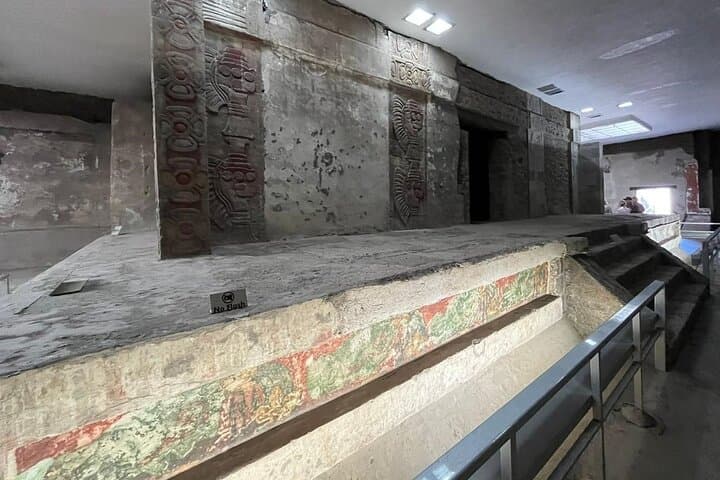

Morning light slices across the Avenue of the Dead and the stones seem to hold the day’s first heat. You meet your bilingual guide at the ticket office, step through the gate and the scale of Teotihuacan unfolds — broad causeways, stepped masses of stone, and the pyramid faces angled toward Cerro Gordo as if in conversation with the landscape.
Morning light slices across the Avenue of the Dead and the stones seem to hold the day’s first heat. You meet your bilingual guide at the ticket office, step through the gate and the scale of Teotihuacan unfolds — broad causeways, stepped masses of stone, and the pyramid faces angled toward Cerro Gordo as if in conversation with the landscape.
This site rose between roughly 100–700 CE as one of Mesoamerica’s largest cities. Volcanic ash and local limestone built its monuments; obsidian from nearby quarries financed trade and ritual. Key stops — the Pyramid of the Sun, the Pyramid of the Moon, the Palace of Quetzalpapalotl and the Patio of Jaguars and Snails — reveal architectural planning, preserved murals and a civic-religious geography oriented to mountains and sky.
Practically: the shared tour runs about 1–2 hours with entrance included and groups capped at 12. Expect paved walkways and short stair climbs; the Pyramid of the Sun offers viewpoints but check current access rules. Altitude near 2,300 m sharpens the sun and makes hydration essential. Your guide will explain symbolism, point out surviving pigments and bring you to the site’s small museum and the Obsidian House for a tasting of tequila, mezcal and pulque.
Plan for sun protection, comfortable walking shoes and an early start to avoid heat and crowds. Stay on marked paths to help protect fragile murals and stonework; photogenic moments are plentiful but leave artifacts in place. The morning tour gives a focused, contextual introduction that’s both historical and tactile — an efficient way to feel the scale and meaning of Teotihuacan.