THE ADVENTURE COLLECTIVE® · Independent discovery and booking for outdoor travel

Start your day in Al Marmoom with a Vintage G‑Class ride, a short camel caravan, and a Bedouin breakfast at a restored desert village. This morning safari blends hands‑on cultural moments with easy desert roaming—ideal for travelers who want a gentle, immersive taste of the Emirates.
Start your day in Al Marmoom with a Vintage G‑Class ride, a short camel caravan, and a Bedouin breakfast at a restored desert village. This morning safari blends hands‑on cultural moments with easy desert roaming—ideal for travelers who want a gentle, immersive taste of the Emirates.
The sun is still low when the Vintage G‑Class idles at the edge of Al Marmoom Desert Reserve, engine purring against a landscape of rippling dunes and scattered ghaf trees. You ride open‑air in a 1980s Mercedes G‑230, wind pulling the cool of morning across your face as a camel caravan ambles ahead—slow, patient, purposeful. The reserve’s flat salt flats and sandy hummocks give way to a green pocket where the Bedouin Village sits: tents, a restored well, and low cooking fires.
Verified experiences and guided adventures in the surrounding area.
Operated by Al Marmoom Bedouin Experience · Dubai, Dubai
The sun is still low when the Vintage G‑Class idles at the edge of Al Marmoom Desert Reserve, engine purring against a landscape of rippling dunes and scattered ghaf trees. You ride open‑air in a 1980s Mercedes G‑230, wind pulling the cool of morning across your face as a camel caravan ambles ahead—slow, patient, purposeful. The reserve’s flat salt flats and sandy hummocks give way to a green pocket where the Bedouin Village sits: tents, a restored well, and low cooking fires.
Al Marmoom holds modern conservation history and older desert culture: this area was designated to protect Emirati desert habitat and to reintroduce native species while preserving Bedouin traditions. Geologically the terrain is recent coastal and aeolian sands shaped by southerly winds; the oasis exists where groundwater nears the surface and where palms and acacia take root. Culturally the morning tour is designed around hospitality—gahwa (Arabic coffee), dates, and a simple Bedouin breakfast—paired with falconry demonstrations and traditional dress.
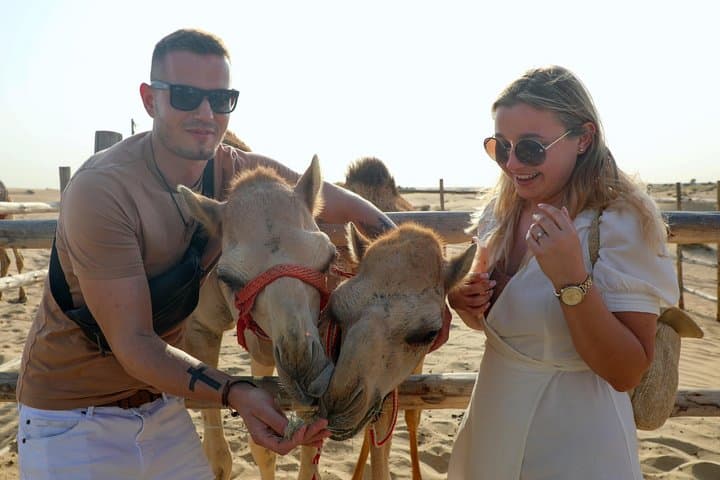
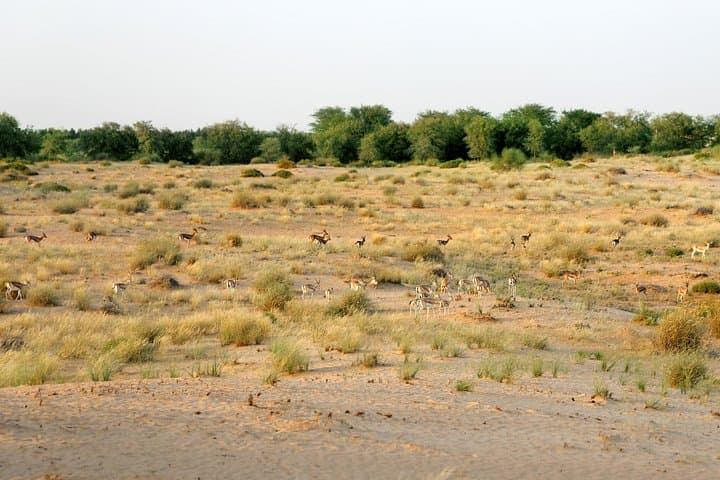
Practically, expect light walking on packed sand, brief seated camel rides (10–12 minutes), and photo stops. The experience is family‑friendly but not suitable for those with serious neck or back issues. Bring sun protection, a light jacket for the early breeze, and comfortable closed‑toe shoes for moving between tents and soft sand. Timing matters: mornings offer cooler temperatures and better light for photos; avoid the heat of midday. The trip balances cultural immersion, gentle wildlife viewing, and the tactile calm of desert space—an accessible intro to Dubai’s wild side.
easy.
4 hours.
Suitable for most fitness levels—minimal walking and short camel rides; not recommended for people with neck/back issues.
Children over 5 may ride; under‑5s typically stay with an adult at the village for safety—child seats are available for vehicle transfers.
Yes; pickup and drop‑off from Dubai hotels are included and a confirmation will list your exact pickup time.
Yes—Kandura and Abaya are offered for photos and are to be returned after use; modest dress is appreciated otherwise.
The standard group tour is not wheelchair accessible, though private, customizable trips may be arranged—contact the operator in advance.
Al Marmoom combines recent conservation efforts with centuries of Bedouin desert culture; the reserve was established to protect dunes, aquifers, and reintroduce native species while preserving traditional practices.
The reserve focuses on habitat protection and sustainable tourism—follow guide instructions, avoid littering, and use designated paths to minimize impact.
Al Marmoom Bedouin Experience operates guided outdoor trips and adventures with an emphasis on safety, stewardship, and memorable experiences.
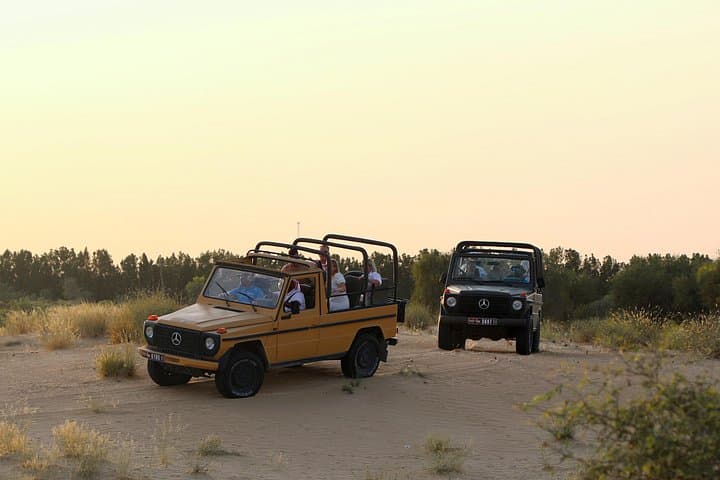
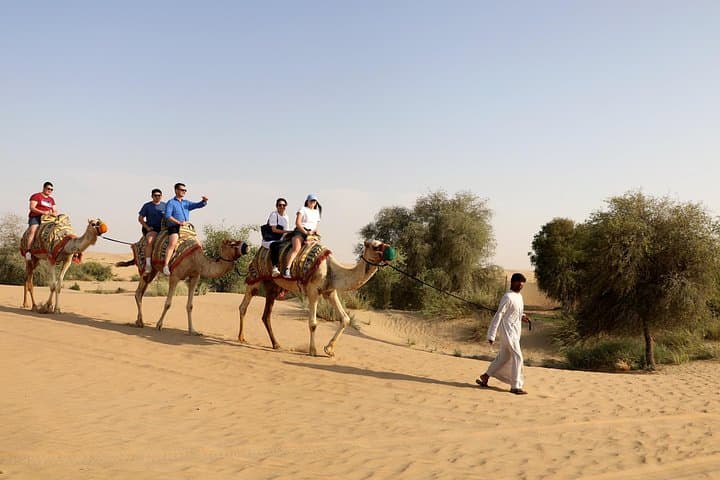
The sun is still low when the Vintage G‑Class idles at the edge of Al Marmoom Desert Reserve, engine purring against a landscape of rippling dunes and scattered ghaf trees. You ride open‑air in a 1980s Mercedes G‑230, wind pulling the cool of morning across your face as a camel caravan ambles ahead—slow, patient, purposeful. The reserve’s flat salt flats and sandy hummocks give way to a green pocket where the Bedouin Village sits: tents, a restored well, and low cooking fires.
The sun is still low when the Vintage G‑Class idles at the edge of Al Marmoom Desert Reserve, engine purring against a landscape of rippling dunes and scattered ghaf trees. You ride open‑air in a 1980s Mercedes G‑230, wind pulling the cool of morning across your face as a camel caravan ambles ahead—slow, patient, purposeful. The reserve’s flat salt flats and sandy hummocks give way to a green pocket where the Bedouin Village sits: tents, a restored well, and low cooking fires.
Al Marmoom holds modern conservation history and older desert culture: this area was designated to protect Emirati desert habitat and to reintroduce native species while preserving Bedouin traditions. Geologically the terrain is recent coastal and aeolian sands shaped by southerly winds; the oasis exists where groundwater nears the surface and where palms and acacia take root. Culturally the morning tour is designed around hospitality—gahwa (Arabic coffee), dates, and a simple Bedouin breakfast—paired with falconry demonstrations and traditional dress.
Practically, expect light walking on packed sand, brief seated camel rides (10–12 minutes), and photo stops. The experience is family‑friendly but not suitable for those with serious neck or back issues. Bring sun protection, a light jacket for the early breeze, and comfortable closed‑toe shoes for moving between tents and soft sand. Timing matters: mornings offer cooler temperatures and better light for photos; avoid the heat of midday. The trip balances cultural immersion, gentle wildlife viewing, and the tactile calm of desert space—an accessible intro to Dubai’s wild side.