THE ADVENTURE COLLECTIVE® · Independent discovery and booking for outdoor travel

Step onto the Giza Plateau for a private half-day sweep of the Great Pyramid, the Sphinx and the Valley Temple. This guided tour pairs close-up history with practical tips for visiting one of the world’s oldest monumental sites.
Step onto the Giza Plateau for a private half-day sweep of the Great Pyramid, the Sphinx and the Valley Temple. This guided tour pairs close-up history with practical tips for visiting one of the world’s oldest monumental sites.
The sun slices across a low desert sky as you step onto the Giza Plateau, the air dry and stung with dust. Shadows of three massive stone triangles fall long on sand and rubble, and the Great Pyramid looms so close it fills your vision—an object that seems to both resist and measure time. Your private Egyptology guide sets the rhythm: a measured walk toward Khufu’s tomb, a pause for photos where the three pyramids line up, then the Sphinx, its face wind-smoothed and inscrutable.
Verified experiences and guided adventures in the surrounding area.
Operated by Egypt Lifetime Tours · Giza, Giza Governorate
The sun slices across a low desert sky as you step onto the Giza Plateau, the air dry and stung with dust. Shadows of three massive stone triangles fall long on sand and rubble, and the Great Pyramid looms so close it fills your vision—an object that seems to both resist and measure time. Your private Egyptology guide sets the rhythm: a measured walk toward Khufu’s tomb, a pause for photos where the three pyramids line up, then the Sphinx, its face wind-smoothed and inscrutable.
The plateau is geology and human will in one frame—Miocene limestone bedrock capped by quarried casing stones laid more than 4,500 years ago to build Khufu, Khafre and Menkaure’s tombs. The Sphinx, tied by scholars to Khafre, guards a landscape that held funerary processions and mummification rituals in the nearby Valley Temple. Later visitors will point out the 1954 discovery of the cedar Sun Boat, now conserved in a nearby museum.
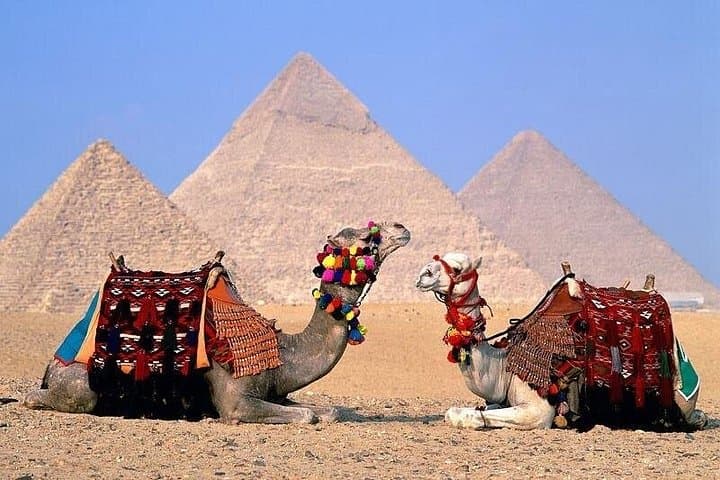
Practically: the half-day runs about 3–4 hours with door-to-door transfer from Cairo or Giza. Expect 1–2 km of walking over compacted sand, stone walkways and uneven surfaces; elevation gain is negligible but footing can be loose. Entrance fees are generally paid on site (card accepted); camel rides and museum entries are optional extras. Bring sun protection, a refillable water bottle, and a camera with extra batteries—mornings are coolest and least crowded. Respect restricted areas (no climbing) and follow your guide for a safer, richer visit.
easy.
3–4 hours.
Suitable for most fitness levels; should be able to walk 1–2 km on uneven sandy/stone surfaces.
No—entrance fees are typically paid on site; many operators accept card payments but confirm with your guide in advance.
No—the camel rides on the plateau are optional and paid separately to local handlers.
The tour is listed as wheelchair accessible but note that the plateau has uneven surfaces and some areas require assistance; check specific accessibility needs with the operator prior to booking.
Early morning is best for cooler temperatures, softer light and fewer visitors; late afternoon is also pleasant but can be crowded near sunset.
The Great Pyramid was built for Pharaoh Khufu (Cheops) around 2560 BCE; the Sphinx is conventionally linked to Khafre and the surrounding temples served funerary rites and mummification.
Visitor impact is managed through restricted zones and entrance fees; avoid touching ancient stone, follow designated paths, and support local conservation initiatives by using licensed guides.
Egypt Lifetime Tours operates guided outdoor trips and adventures with an emphasis on safety, stewardship, and memorable experiences.
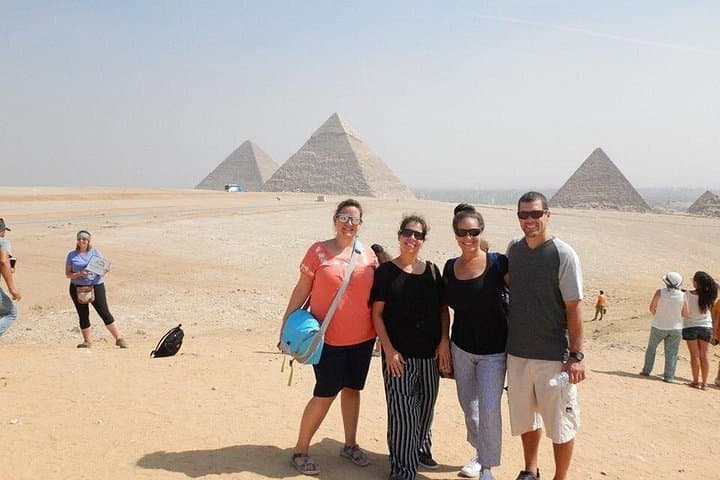


The sun slices across a low desert sky as you step onto the Giza Plateau, the air dry and stung with dust. Shadows of three massive stone triangles fall long on sand and rubble, and the Great Pyramid looms so close it fills your vision—an object that seems to both resist and measure time. Your private Egyptology guide sets the rhythm: a measured walk toward Khufu’s tomb, a pause for photos where the three pyramids line up, then the Sphinx, its face wind-smoothed and inscrutable.
The sun slices across a low desert sky as you step onto the Giza Plateau, the air dry and stung with dust. Shadows of three massive stone triangles fall long on sand and rubble, and the Great Pyramid looms so close it fills your vision—an object that seems to both resist and measure time. Your private Egyptology guide sets the rhythm: a measured walk toward Khufu’s tomb, a pause for photos where the three pyramids line up, then the Sphinx, its face wind-smoothed and inscrutable.
The plateau is geology and human will in one frame—Miocene limestone bedrock capped by quarried casing stones laid more than 4,500 years ago to build Khufu, Khafre and Menkaure’s tombs. The Sphinx, tied by scholars to Khafre, guards a landscape that held funerary processions and mummification rituals in the nearby Valley Temple. Later visitors will point out the 1954 discovery of the cedar Sun Boat, now conserved in a nearby museum.
Practically: the half-day runs about 3–4 hours with door-to-door transfer from Cairo or Giza. Expect 1–2 km of walking over compacted sand, stone walkways and uneven surfaces; elevation gain is negligible but footing can be loose. Entrance fees are generally paid on site (card accepted); camel rides and museum entries are optional extras. Bring sun protection, a refillable water bottle, and a camera with extra batteries—mornings are coolest and least crowded. Respect restricted areas (no climbing) and follow your guide for a safer, richer visit.